
- +91 96773 55555
- Toll Free: 1800 123 2255
 English
 Chinese (Simplified)
 Dutch
Dutch French
 German
 Hebrew
 Italian
 Portuguese (Brazil)
 Russian
 Spanish
 Arabic
EnglishChinese (Simplified)DutchFrenchGermanHebrewItalianPortuguese (Brazil)RussianSpanishArabicMore than eighty holy stone ghats to the Ganges; each represents the universal realm of devotion, history, spirituality, stories, and cultures.
In Varanasi, the Ganga River is the city's lifeline and its ghats are the places where eternal rhythms open up.
Situated on the western bank of the revered Ganga River, Varanasi ghats have witnessed devotion, tradition, and daily life for centuries. As the sun rises, devotees come to the ghats in Varanasi for holy dips. As the sun comes to set and darkness starts falling, the sacred Ganga Aarti fills the air with brass lamps, incense, and chants. At the ghats of Varanasi, moments of traditional celebration and farewell seem woven into the river's eternal flow.
Every ghat of Banaras has its own history and character. Some Varanasi ghats are marked by grand riverside palaces, while others are known for sacred fires, famous poets, and observatories. Explore the collection of the ghats of Varanasi and let us curate a private cruise for you.
From the grand holy Ganga Aarti to ancient temples and palaces, enjoy the journey of the sacred city of Varanasi (also known as Banaras and Kashi).
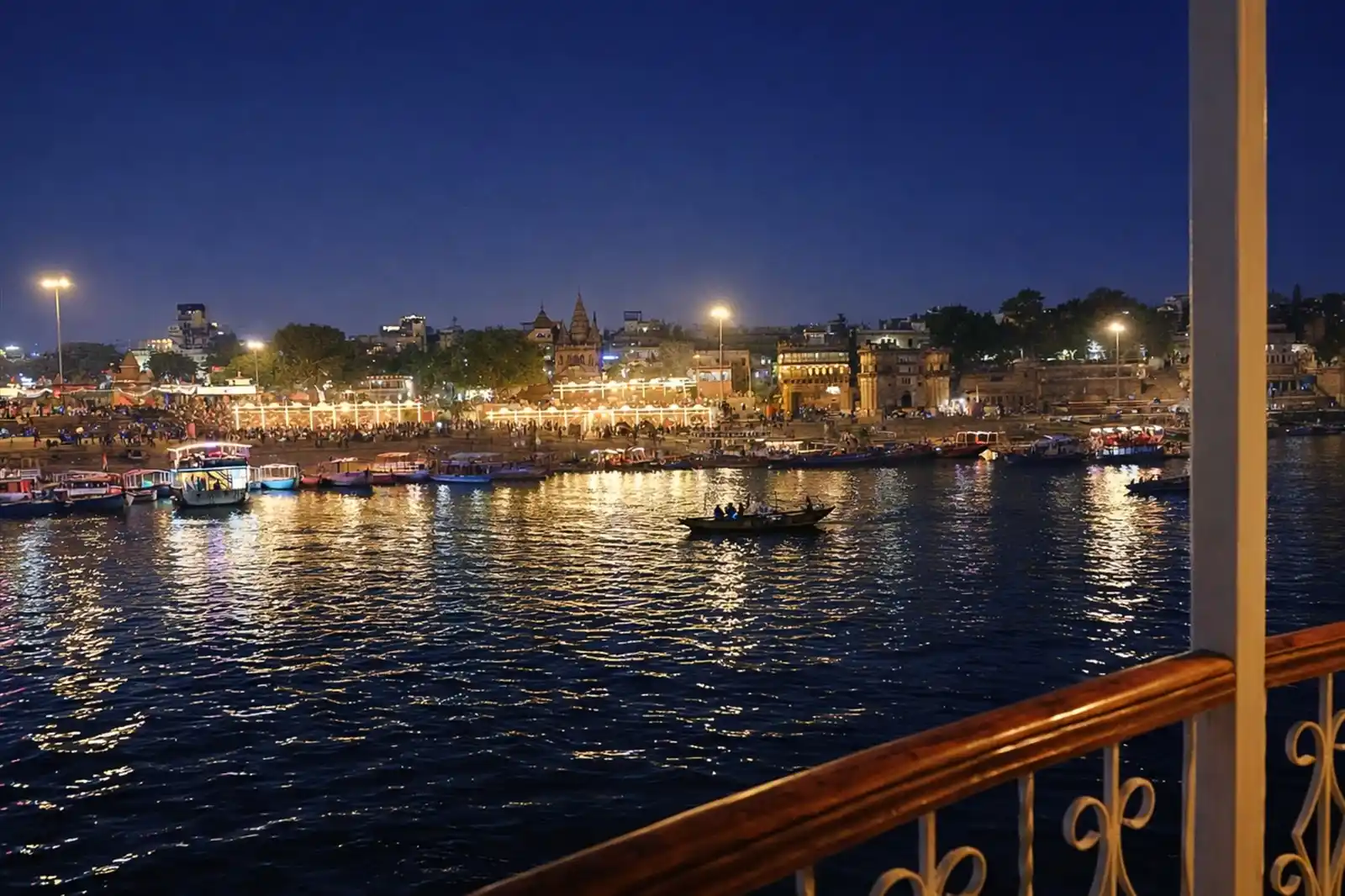 Sunrise & Yoga01
At the quieter southern tip of the riverfront, Assi Ghat is where students, sadhus and travellers gather for Subah-e-Banaras - a daily dawn celebration of Vedic chanting, classical ragas and collective yoga on the steps.
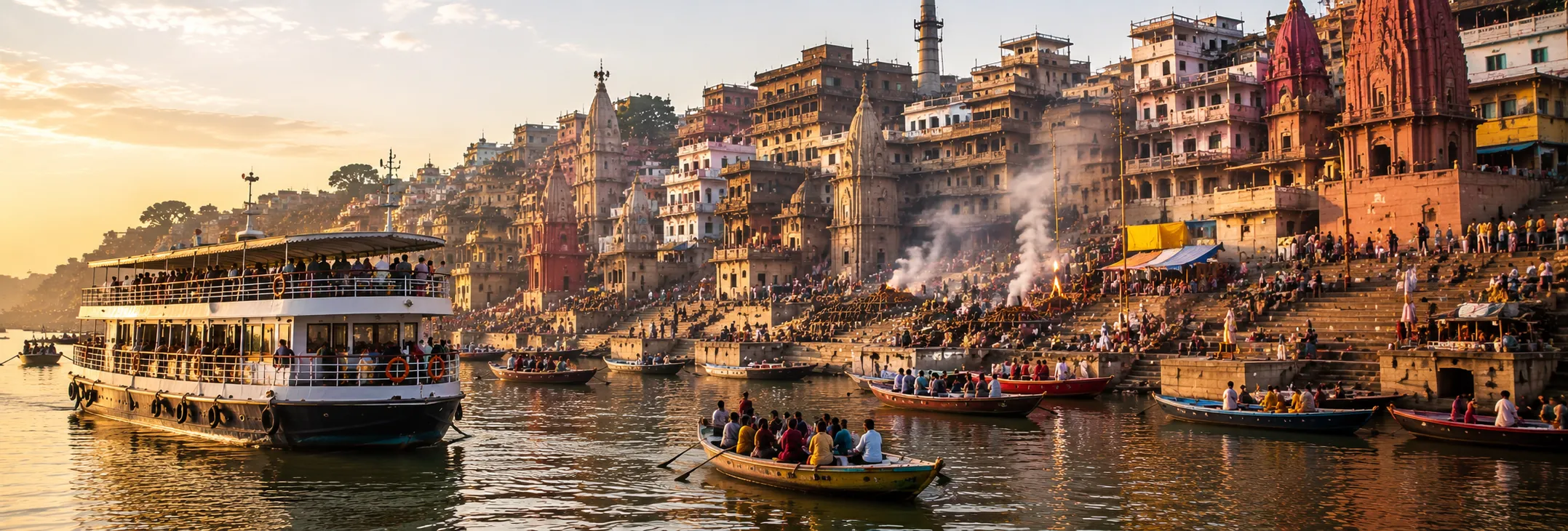 DIVINE AARTI02
Whether you visit for cultural experiences, spiritual reasons, or sightseeing, Dashashwamedh Ghat Varanasi offers you a memorable glimpse of one of India's oldest living cities.
Highly famous for its spiritual atmosphere and Ganga Aarti, Dashashwamedh Ghat rightly presents Varanasi's ancient traditions. Every moment spent here, from sunrise boat rides to sacred evening rituals, reveals a different side of Varanasi's rich heritage. If you are planning a Varanasi tour, it deserves the top slot in your itinerary.
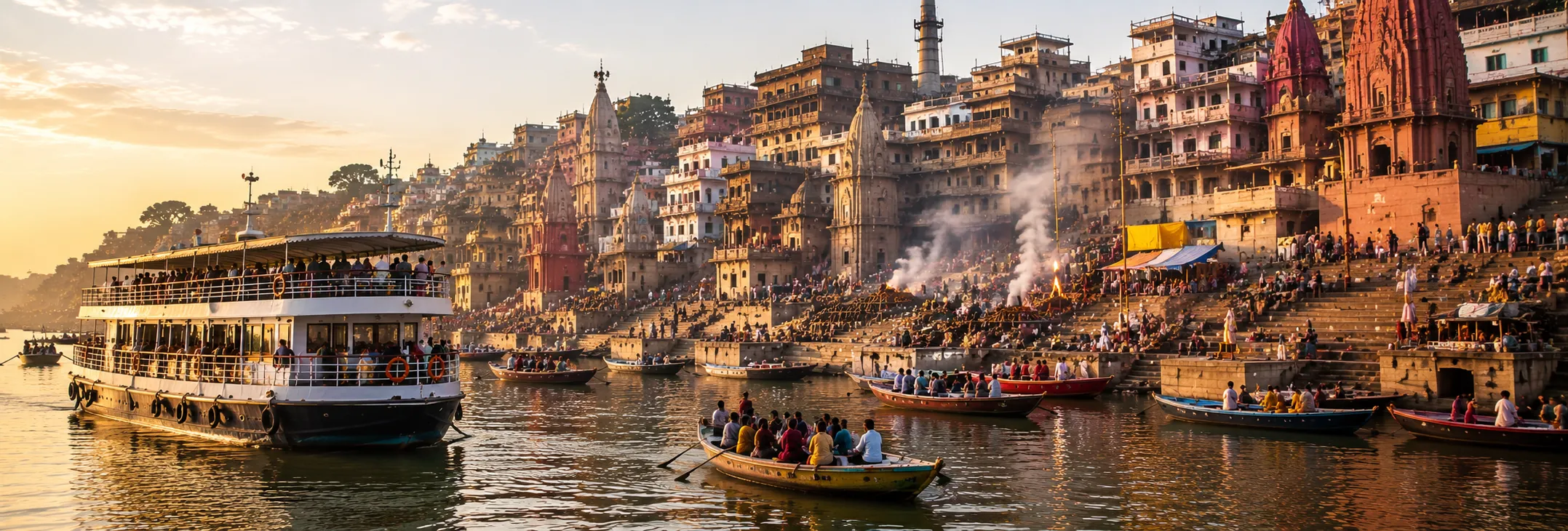 ETERNAL FLAMES03
At the core of Varanasi’s sacred sphere, Manikarnika Ghat is one of the holiest spots, uniting the sacred rites, death ceremonies, and ancient lore on the banks of the Holy Ganga.