

- +91 96773 55555
- Toll Free: 1800 123 2255
 English
 Chinese (Simplified)
 Dutch
Dutch French
 German
 Hebrew
 Italian
 Portuguese (Brazil)
 Russian
 Spanish
 Arabic
EnglishChinese (Simplified)DutchFrenchGermanHebrewItalianPortuguese (Brazil)RussianSpanishArabic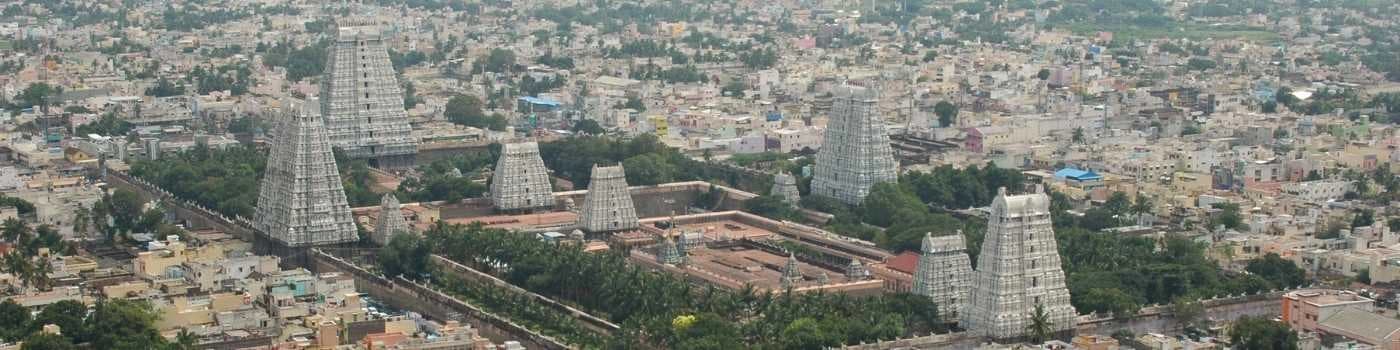
Tiruvannamalai is a revered spiritual hub in Hinduism, home to the majestic Shiva temple. Here, Lord Shiva is worshipped as Arunachaleshwar and is symbolised by an enormous mountain. This temple is celebrated as one of the five cosmic elements, representing ‘Fire’.
The origin of Tiruvannamalai stretches back to ancient times, with legends declaring it a sacred site. It has served as a retreat for numerous saints, referred to in Hindu mythology as "Siddhas." Scientifically speaking, local herbs found in the mountains possess healing properties. However, it’s the spiritual act of worshipping at this mountain and temple that's considered a truly divine experience.
Tiruvannamalai draws a large crowd of tourists & devotees for several reasons. On every full moon day, hundreds of thousands gather to walk the 14-kilometre path around the base of the mountain. The path is well-lit and lined with refreshment stalls, attracting more visitors each year.
The Karthigai Deepam festival, held annually during October-November, stands out with its unique religious importance. Celebrated widely across temples and homes, it's particularly special here. A large cauldron filled with ghee is illuminated atop the hill on the festival day; its light, seen for miles around, symbolises Lord Shiva in the form of fire and draws worshippers from nearby regions.
Wandering through Tiruvannamalai’s streets reveals numerous ashrams; among them are key sites like Ramana Maharishi Ashram & Yogi Ram Surath Kumar Ashram. Many foreigners have made their homes here, pursuing various spiritual quests.
Visiting Tiruvannamalai promises an unparalleled experience unlike typical tourist spots it’s a journey into spiritual enlightenment.
The winter season is best for visiting Tiruvanamalai; November is the most recommended time of year. The temperature remains around 23-31 degrees Celsius, so it's moderately pleasant. It enhances the sightseeing and temple walk experience. However, it can be slightly humid.
Avoid planning your visit around the summer, which runs from March to June. It is because of the extreme heat, with temperatures rising to 35-40 degrees. It is not advisable to visit during this time if you want to avoid the scorching heat.
Monsoon season, which spans from July to October, is the rainy season. You can experience warm rains, which will disrupt the itinerary and planned visits to tourist attractions. The temperature remains around 25-36 degree Celcius, which can drop to 20-40 degrees on rainy days.
However, the scenery changes from dry and humid to lush, tranquil, and serene surroundings. Hiking won’t be possible due to slippery paths, and a weather forecast check is recommended.