Solan is a picturesque hill town in Himachal Pradesh, situated along the Kalka–Shimla route amid the lower Himalayan ranges. Known as the “Mushroom City of India” for its significant mushroom cultivation and research activities, Solan combines a cool mountain climate with a growing urban centre. The town is also widely associated with tomato production, earning it the nickname “City of Red Gold.”
Solan’s history reflects the influence of several hill states and the colonial period. The nearby region of Kasauli and the historic cantonment settlements preserve traces of British-era architecture, while Solan itself has developed as an important centre for education, commerce and agriculture. The town takes its name from Goddess Shoolini, the presiding deity of the area, whose annual fair remains an important cultural event.
The surrounding hills offer a mix of religious landmarks, forested slopes and scenic viewpoints. Mohan Shakti Heritage Park, Jatoli Shiv Temple and the Shoolini Mata Temple are among the notable attractions in and around Solan. The nearby Chail and Kasauli areas also make the town a convenient base for exploring the wider landscape of Himachal Pradesh.
Solan is home to horticultural and agricultural institutions that contribute to the region’s reputation for specialised farming. Its markets, local eateries and roadside viewpoints provide a taste of everyday life in the hills. With its mountain setting, distinctive agricultural identity, religious traditions and access to nearby hill destinations, Solan offers a varied introduction to Himachal Pradesh.
Places to Visit in Solan
- Shoolini Mata Temple: Dedicated to Goddess Shoolini, the presiding deity of Solan, this temple is one of the town’s most important religious landmarks. Devotees visit throughout the year to offer prayers, while the annual Shoolini Fair in June brings the town alive with religious ceremonies, cultural programmes and local festivities. The temple is closely connected with Solan’s name and cultural identity.
- Jatoli Shiv Temple: Located on the Rajgarh Road, around 8 km from Solan, Jatoli Shiv Temple is a prominent Hindu shrine dedicated to Lord Shiva. Its elaborate stonework, tall spires and detailed carvings distinguish it from many other temples in the region. The temple attracts devotees throughout the year and is particularly lively during Mahashivratri, when special prayers and celebrations take place.
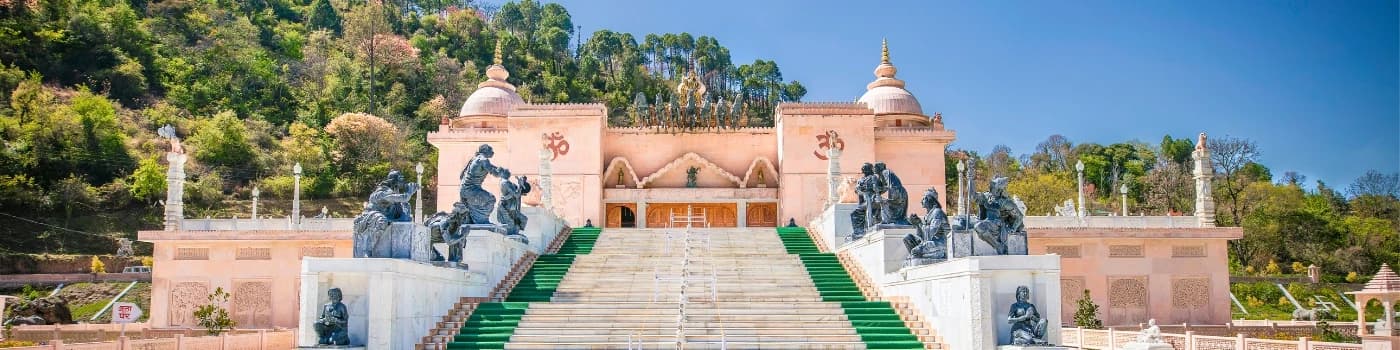
- Mohan Shakti Heritage Park: Situated at Hart village, approximately 15 km from Solan, Mohan Shakti Heritage Park combines landscaped gardens with an extensive temple complex dedicated to Indian spiritual and cultural traditions. The grounds feature large sculptures of deities, figures from Hindu epics and representations of Vedic sages.
- Dolanji Bon Monastery: Located near Ochghat, around 18 km from Solan, Dolanji Bon Monastery is an important centre of the Bon religious tradition, which predates the spread of Buddhism in Tibet. The complex houses a monastic community and features Tibetan-style architecture, colourful religious motifs and peaceful surroundings. It offers an opportunity to learn about a lesser-known Himalayan spiritual tradition and its continuing practices.
- Barog: Barog is a small hill settlement approximately 7 km from Solan, surrounded by pine-covered slopes and mountain scenery. It is known for its historic railway station and the Barog Tunnel on the Kalka–Shimla railway line, a remarkable feat of colonial-era railway engineering. The area’s forest trails, viewpoints and quiet atmosphere make it suitable for relaxed walks and short excursions.
- Karol Tibba: Karol Tibba is a mountain peak near Solan that attracts hikers looking for a more active outdoor experience. The route passes through forested terrain and offers views of the surrounding hills as the elevation increases. The area is also associated with Pandava legends and a cave known locally as Pandava Cave. Visitors should allow sufficient time for the hike and check trail conditions before setting out.
- Kasauli: Located around 27 km from Solan, Kasauli is a hill station known for its colonial-era buildings, wooded slopes and winding walking paths. Christ Church, the Mall Road area, Sunset Point and Monkey Point are among its recognised attractions. The town’s combination of heritage architecture, pine forests and views towards the plains makes it a popular excursion from Solan.
- Chail: Chail lies in the hills east of Solan and is known for its former royal palace, forest surroundings and high-altitude cricket ground. The Chail Palace was developed as a summer retreat by the Maharaja of Patiala, and its architecture recalls the region’s princely past. Nearby Kali Tibba Temple offers broad views of the surrounding mountains, while Chail Wildlife Sanctuary is of interest to nature enthusiasts.
- Dagshai Cantonment: Dagshai is a historic cantonment town located near the Kalka–Shimla highway. Established during British rule, it retains an old military character, with colonial-era structures and quiet streets set among the hills. The Dagshai Jail Museum preserves aspects of the settlement’s past and its association with the British military and prison system. Its heritage and elevated setting make it a distinctive stop in the Solan district.
- Kuthar Fort: Kuthar Fort is a historic fort complex in the wider Solan region, surrounded by forested hills and mountain scenery. Its traditional architecture, courtyards and old structures reflect the history of the former hill states. The fort is of interest to visitors who enjoy heritage buildings and quieter locations away from the main hill-station centres. Opening arrangements should be checked before visiting.
- Arki Fort and Palace: Located in Arki, approximately 53 km from Solan, this fort-palace dates to the period when Arki served as the capital of the former Baghal princely state. Its interiors are known for traditional wall paintings, including Kangra-style miniature art depicting religious themes, mythology and scenes of everyday life. The complex offers a look at the artistic traditions and political history of Himachal Pradesh’s former hill kingdoms.
- Chail Wildlife Sanctuary: Surrounding the hill town of Chail, this sanctuary protects forest habitats that support animals such as sambar, goral and barking deer, along with a variety of bird species. The wooded landscape also provides a great space for nature walks and trekking on designated routes. Wildlife sightings are not guaranteed, but the sanctuary is a worthwhile destination for those interested in the natural environment of the lower Himalayas.
Major Festivals of Solan
- Shoolini Fair: The Shoolini Fair is Solan’s most prominent annual festival, celebrated in June in honour of Goddess Shoolini, the town’s presiding deity. The celebrations centre on the Shoolini Mata Temple and include religious processions, prayers, cultural performances and a lively fairground atmosphere. Devotees gather to pay homage to the goddess, while local markets and community events add to the festive spirit. The fair is an important expression of Solan’s religious traditions and regional identity.
- Sair Festival: Sair is a traditional harvest festival celebrated in parts of Himachal Pradesh, including the Solan region, usually in September. It marks the transition towards autumn and is associated with prayers for prosperity, good health and a successful harvest. Families prepare seasonal dishes, visit temples and participate in local customs. The festival reflects the close relationship between the region’s agricultural communities and the changing seasons.
- Dussehra: Dussehra is observed in Solan with religious ceremonies and community celebrations marking the victory of good over evil. Temples hold special prayers, and local gatherings may feature cultural programmes and the burning of effigies of Ravana. The scale and style of celebrations vary across the town and nearby villages, reflecting local customs and traditions.
- Diwali: Diwali, the festival of lights, is celebrated across Solan with illuminated homes and shops, prayers to Goddess Lakshmi, family gatherings and festive food. Markets become particularly active in the days leading up to the festival, with people purchasing sweets, gifts and decorative items. The celebration brings a festive atmosphere to the town as residents mark the occasion with traditional customs.
- Mahashivratri: Mahashivratri is observed at Shiva temples in and around Solan, particularly at Jatoli Shiv Temple. Devotees offer prayers, perform rituals and participate in night-long worship dedicated to Lord Shiva. The occasion attracts pilgrims from neighbouring areas and is an important event in the region’s religious calendar.
- Baisakhi: Baisakhi, celebrated in April, marks the harvest season and holds special significance in Sikh tradition as the founding of the Khalsa in 1699. Gurdwaras in Solan and nearby communities organise prayers and devotional gatherings, while cultural events may include Punjabi folk music and traditional dances.
Best Time to Visit Solan
The best time to visit Solan is from March to June and September to November, when the weather is generally pleasant for exploring its temples, heritage sites and surrounding hills. Summer is particularly appealing for visitors seeking a break from the heat of the plains, while autumn offers comfortable conditions for sightseeing and outdoor activities.
- Summer (March to June): Solan enjoys comparatively mild weather during much of this period, making it suitable for visiting local attractions, walking through the hills and taking excursions to nearby destinations such as Kasauli and Chail. Temperatures rise in May and June, but conditions are generally more comfortable than in many lowland cities.
- Monsoon (July to September): The monsoon brings frequent rainfall, lush vegetation and mist-covered mountain scenery. However, heavy showers may lead to slippery roads, reduced visibility and occasional travel disruptions. Visitors should check local weather and road conditions before planning outdoor excursions.
- Autumn and Early Winter (October to November): These months offer cool, mostly comfortable weather and good conditions for exploring Solan’s religious and historical attractions. The surrounding hills are particularly appealing for scenic drives and nature walks.
- Winter (December to February): Winters are cold, especially during the mornings and evenings, though snowfall is uncommon in Solan town itself. The season suits visitors who enjoy crisp mountain weather and quieter sightseeing. Warm clothing is recommended, and temperatures can drop considerably during cold spells.
How to Reach Solan
- By Air: Chandigarh International Airport is the nearest major airport, located approximately 65–70 km from Solan by road. From the airport, taxis and private vehicles are available for the onward journey. Shimla Airport is another option, although flight services are limited and schedules may vary.
- By Rail: Solan has its own railway station on the historic Kalka–Shimla narrow-gauge railway line, known for its scenic mountain route. Travellers can also reach Kalka Railway Station, which connects with the broader Indian rail network, and continue to Solan by the heritage train or road transport.
- By Road: Solan is well connected to Chandigarh, Shimla and other towns in Himachal Pradesh through National Highway 5 and the surrounding road network. Regular buses operated by Himachal Road Transport Corporation and private operators run on routes linking Solan with Chandigarh, Kalka and Shimla.


 English
 Chinese (Simplified)
 Dutch
Dutch French
 German
 Hebrew
 Italian
 Portuguese (Brazil)
 Russian
 Spanish
 Arabic