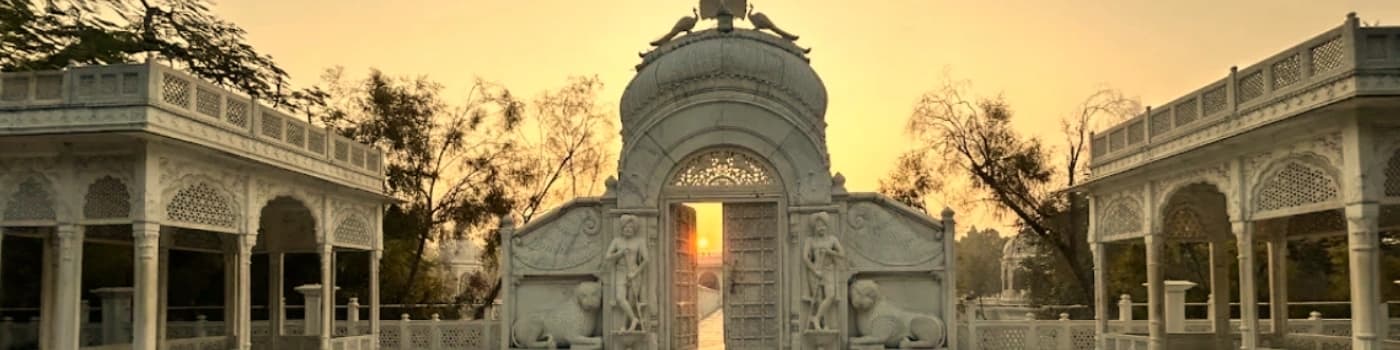
Sangrur, situated in the Malwa region of Punjab, is known for its historical landmarks, religious institutions and strong connection with the cultural traditions of the state. Once an important princely centre, the city retains traces of its royal past through historic buildings, gardens and monuments. Today, it serves as an administrative and commercial hub for the surrounding agricultural communities.
The city’s history is closely associated with the former princely state of Jind, whose rulers contributed to the development of the region. Sangrur’s heritage can be seen in landmarks such as the Banasar Garden, a historic garden complex known for its landscaped grounds and water features, and other sites that reflect the area’s architectural and cultural evolution. These places offer a sense of the city’s past and its former importance as a seat of regional power.
Religion also plays a significant role in Sangrur’s identity. Gurdwaras, temples and other places of worship serve as centres of devotion and community gatherings. The wider district includes destinations such as Mastuana Sahib, an important Sikh religious complex, which attracts devotees from across Punjab. Local fairs and festivals further preserve the region’s customs, folk traditions and community spirit.
Agriculture remains central to Sangrur’s economy, with the fertile plains of Punjab supporting extensive cultivation and related trade. Traditional Punjabi cuisine, local markets and village life contribute to the character of the area. Combining royal history, religious heritage and the everyday rhythms of the Malwa countryside, Sangrur offers a distinctive perspective on Punjab’s cultural landscape.
Places to Visit in Sangrur
- Banasar Bagh and Marble Baradari: Banasar Bagh is one of Sangrur’s best-known historical landmarks, dating to the era of the Jind princely state. The garden features a marble pavilion called the Baradari, set amid water tanks and landscaped grounds. The complex once served as a summer retreat for the ruling family and remains a popular place to appreciate the city’s royal past and enjoy a quiet walk.
- Diwankhana Museum: Located near Banasar Bagh, the historic Diwankhana was used by the rulers of Jind for official court gatherings. The building now houses displays of weapons and objects associated with the princely period. It offers a closer look at the administration, material culture and royal traditions that shaped Sangrur’s history.
- Gurdwara Nankiana Sahib: Situated on the outskirts of Sangrur, Gurdwara Nankiana Sahib is an important Sikh pilgrimage site associated with visits by Guru Nanak Dev Ji, Guru Hargobind Sahib Ji and Guru Tegh Bahadur Ji, according to local tradition. The shrine draws devotees who come to pray and learn about the Sikh Gurus’ connections with the region.
- Kali Mata Temple: Dedicated to Goddess Kali, this temple is a significant Hindu place of worship in Sangrur. Devotees visit to offer prayers throughout the year, with religious gatherings becoming particularly lively during festival periods. The temple forms an important part of the city’s spiritual life and local traditions.
- Gurdwara Mastuana Sahib: Located on the Sangrur–Barnala Road, Mastuana Sahib is a prominent Sikh religious complex established by Sant Attar Singh. The site includes a gurdwara and a sacred water tank, and it has also developed as a centre for education. Its annual religious gatherings attract devotees from Sangrur and neighbouring areas.
- Gurdwara Akoi Sahib: Located in Akoi village, a short distance from Sangrur, this gurdwara is associated with visits by several Sikh Gurus, including Guru Nanak Dev Ji and Guru Hargobind Sahib Ji. The shrine is an important place of worship for the surrounding community and reflects the region’s longstanding links with Sikh history.
- Gurdwara Janam Asthan, Cheema: Situated in Cheema village, this gurdwara commemorates Sant Baba Attar Singh, who was born in the village. The prominent multi-storey building and its sacred tank make the complex a recognised local pilgrimage destination. An annual gathering is held here, bringing devotees together for prayers and remembrance.
- Gurdwara Jandsar Sahib: Gurdwara Jandsar Sahib is associated with the travels of Guru Gobind Singh Ji and local traditions surrounding his stay in the area. The shrine’s history connects it with the Sikh community’s memory of the Guru’s journey and the events preserved through oral tradition. It remains a place of worship for devotees exploring the religious heritage of the district.
- Gurdwara Patshahi IX, Bhawanigarh: Located in Bhawanigarh, along the Sangrur–Patiala route, this gurdwara is dedicated to the memory of Guru Tegh Bahadur Ji. The shrine attracts devotees who come to pay their respects and reflects the wider network of religious sites linked to the Sikh Gurus across Punjab.
- Bir Aishwan Wildlife Sanctuary: Bir Aishwan is a protected natural area in Sangrur district, offering a contrast to the region’s historic and religious sites. Its landscape supports local wildlife and vegetation characteristic of the Punjab plains. Nature enthusiasts may find it of interest, although access and visitor facilities should be checked locally before travelling.
- The Historic Gates of Sangrur: Sangrur’s traditional city gates—Sunami Gate, Patiala Gate, Dhuri Gate and Nabha Gate—are associated with the historic layout of the town. Their names refer to neighbouring towns and routes, reflecting the city’s earlier role as a regional centre. The surrounding market areas also provide a sense of everyday commercial life in Sangrur.
- Longowal: Longowal, a town in Sangrur district, has historical and religious associations with Sikh heritage. It is linked with Bhai Mani Singh, a revered Sikh martyr, and Giani Gian Singh, a noted Sikh historian. The town’s gurdwaras and local commemorations preserve memories of people who played a role in Sikh religious and cultural history.
Best Time to Visit Sangrur
Sangrur is best visited between October and March, when the mild weather is ideal for discovering its historic sites, religious landmarks and bustling local markets. This period is also suitable for visiting nearby villages and experiencing the cultural traditions of Punjab.
- Summer (April to June): Summers in Sangrur are hot and dry, with temperatures often rising considerably during May and June. Outdoor sightseeing can be tiring in the afternoon, so visits to historical and religious sites are best planned for the early morning or evening.
- Monsoon (July to September): The monsoon brings rainfall and some relief from the summer heat. The surrounding agricultural landscape becomes greener, although humidity and occasional heavy showers may affect outdoor plans and road journeys.
- Winter (October to March): Winter offers pleasant daytime conditions for sightseeing and exploring Sangrur’s heritage sites. December and January can be particularly cold, with fog sometimes affecting early-morning travel. Warm clothing is recommended, especially for visitors planning to travel between nearby towns and villages.
How to Reach Sangrur
- By Air: The nearest major airport options include Chandigarh International Airport and Sri Guru Ram Dass Jee International Airport in Amritsar. From either airport, Sangrur can be reached by road, with journey times varying according to the route and traffic conditions.
- By Rail: Sangrur has its own railway station, connecting the city with selected destinations. Travellers can also use nearby railway hubs such as Dhuri Junction, which offers additional train connections. Taxis and local transport are available for the onward journey.
- By Road: Sangrur is well connected to other parts of Punjab through a network of state highways and regional roads. Regular bus services and private vehicles link the city with Patiala, Ludhiana, Barnala, Bathinda and Chandigarh. Taxis are also available for convenient travel to Sangrur and nearby attractions.


 English
 Chinese (Simplified)
 Dutch
Dutch French
 German
 Hebrew
 Italian
 Portuguese (Brazil)
 Russian
 Spanish
 Arabic