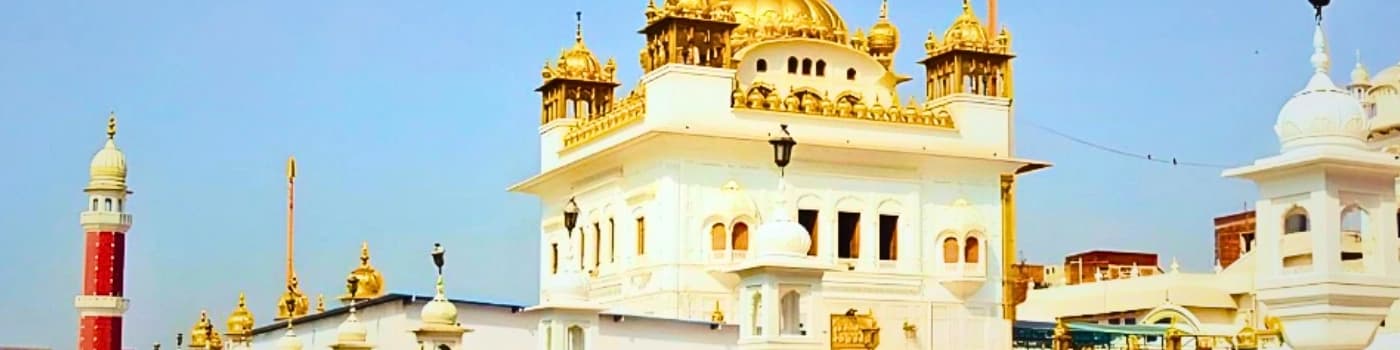
Tarn Taran, located in the Majha region of Punjab, is a historic city best known for its deep association with Sikhism and its prominent religious landmarks. Founded by Guru Arjan Dev Ji, the fifth Sikh Guru, in the late 16th century, the city developed around a spiritual centre that continues to draw devotees from across India and abroad. Its religious importance has shaped the town’s identity and traditions over several centuries.
The city’s most recognised landmark is Sri Darbar Sahib Tarn Taran, a revered Sikh shrine distinguished by its large sacred tank, or sarovar. The complex holds an important place in Sikh religious life and attracts pilgrims throughout the year. The surrounding area reflects the city’s longstanding spiritual character, with gurdwaras and other religious institutions serving local communities and visitors.
Tarn Taran district also preserves memories of Punjab’s historical and cultural development. Its villages contain old gurdwaras and sites connected with Sikh Gurus, while traditional Punjabi customs remain an important part of everyday life. The region’s agricultural landscape, shaped by fertile fields and farming communities, adds to its rural character.
With its historic gurdwaras, strong religious traditions and connections to Sikh history, Tarn Taran offers a meaningful opportunity to explore the spiritual heritage of Punjab. The city’s atmosphere is shaped by pilgrimage, community life and the enduring significance of its sacred places.
Places to Visit in Tarn Taran
- Sri Darbar Sahib Tarn Taran: Sri Darbar Sahib is the city’s most prominent Sikh shrine, established by Guru Arjan Dev Ji in 1596. The complex is renowned for its expansive sacred sarovar, one of the largest among Sikh gurdwaras. Its architecture, prayer halls and surrounding walkways create a setting for worship and reflection. The shrine attracts especially large gatherings on Amavasya, the new-moon day, when devotees come to offer prayers and bathe in the holy tank.
- Gurudwara Goindwal Sahib: Situated in Thatha village of Tarn Taran district, this sacred gurdwara commemorates Baba Buddha Ji, who held an important place in Sikh history and served under several Sikh Gurus. It became an important centre for the growth of Sikhism during his time. The complex is particularly known for the Goindwal Baoli, a stepwell with 84 steps leading down towards the water. The site remains significant for its religious traditions and connection with the early development of the Sikh community.
- Gurudwara Khadur Sahib: Situated in Khadur Sahib, approximately 20 km from Tarn Taran, this important pilgrimage centre is associated with Guru Angad Dev Ji, the second Sikh Guru, who spent a significant part of his Guruship here. The town contains several historic gurdwaras linked to the Sikh Gurus and their followers. Gurdwara Khadur Sahib is also connected with the promotion of the Gurmukhi script and the preservation of Sikh teachings.
- Gurudwara Baba Budha Sahib: This gurdwara in Thatha village, Tarn Taran district, is dedicated to Baba Buddha Ji, a highly respected personality remembered for his devotion and service to the Sikh Gurus. He played an important role in the early Sikh community and is remembered for his wisdom, devotion and service. Devotees visit the gurdwara to pay their respects and learn about his contribution to Sikh religious tradition.
- Gurudwara Lakeer Sahib: Situated in Thatha village of Tarn Taran district, this sacred gurdwara commemorates Baba Buddha Ji, who held an important place in Sikh history and served under several Sikh Gurus. According to Sikh tradition, Baba Deep Singh Ji marked a line on the ground with his sword and called upon those prepared to join the struggle to cross it. The shrine preserves the memory of this moment of resolve before the campaign to restore the sanctity of Sri Harmandir Sahib in Amritsar. It is an important site for devotees interested in Sikh history.
- Gurudwara Takkar Sahib: Gurudwara Takkar Sahib is among the historic Sikh religious sites in Tarn Taran. It is associated with the memory of Sikh devotees who lost their lives in a train accident, and serves as a place of prayer and remembrance. The shrine reflects the region’s strong tradition of commemorating people and events that hold significance for the Sikh community.
- St. Thomas Church: St. Thomas Church is a historic Christian landmark in Tarn Taran, built in 1836 under the supervision of the Bishop of the Lahore Diocese. Its long history reflects the presence and development of Christian institutions in the region during the nineteenth century. The church adds an architectural and cultural dimension to the city’s predominantly pilgrimage-oriented attractions.
- Patti Qila: Patti Qila is a historic fort associated with the Sikh Misls period in Punjab. The fort recalls a time when regional Sikh chiefs exercised authority over different territories before the consolidation of the Sikh Empire. Its historical associations make it a point of interest for those exploring the political and military history of the region.
- Nishan-e-Sikhi, Khadur Sahib: Nishan-e-Sikhi is a prominent multi-storey tower in Khadur Sahib, designed as a centre for religious learning, education and community development. The complex reflects efforts to connect Sikh heritage with educational and cultural activities. Its distinctive height makes it a notable landmark in the town and a point of interest for visitors exploring the wider Khadur Sahib Pilgrimage area.
- Harike Wetland: Harike Wetland, also known as Hari-ke-Pattan, lies near the confluence of the Beas and Sutlej rivers, on the edge of Tarn Taran district. This extensive wetland supports diverse aquatic habitats and attracts many migratory birds during winter. It is an important location for birdwatching, nature photography and observing wetland ecosystems. Visitors should follow local conservation rules and check access conditions before travelling.
- Gurudwara Chohla Sahib: Located in Chohla Sahib Village, around 25–30 km from Tarn Taran, this gurdwara is associated with Guru Arjan Dev Ji, who is believed to have stayed in the village for an extended period. Local tradition connects the village’s name with an incident involving a robe offered to the Guru. The shrine draws devotees throughout the year, with notable gatherings on Amavasya and Sankranti and a fair around Baisakhi.
- Shivala Mandir: Shivala Mandir is a Hindu place of worship in Tarn Taran, dedicated to Lord Shiva. It serves local devotees who visit for prayer and religious observances, particularly on auspicious days associated with the deity. The temple reflects the diverse religious life of the city and offers a contrast to its well-known Sikh pilgrimage landmarks.
Major Festivals and Fairs in Tarn Taran
- Amavasya Mela at Sri Darbar Sahib: Amavasya, the new-moon day in the Hindu lunar calendar, is one of the most significant recurring religious gatherings in Tarn Taran. Devotees visit Sri Darbar Sahib every month to offer prayers and take a dip in its sacred sarovar. The occasion is marked by devotional singing, religious observances and community langar. The gathering reflects the shrine’s longstanding importance as a major Sikh pilgrimage centre.
- Baisakhi: Celebrated in April, Baisakhi is an important festival in Tarn Taran, combining the joy of the harvest season with deep significance in Sikh history. The festival commemorates the establishment of the Khalsa by Guru Gobind Singh Ji in 1699. Gurdwaras hold special prayers and kirtan, while devotees gather for religious ceremonies and community meals. The occasion brings a festive atmosphere to the city’s important Sikh shrines.
- Diwali and Bandi Chhor Divas: Diwali coincides with Bandi Chhor Divas, a significant occasion in Sikh tradition associated with the release of Guru Hargobind Sahib Ji from imprisonment at Gwalior Fort. Gurdwaras are illuminated with lights, and special prayers and kirtan are held. At Sri Darbar Sahib, the illuminated surroundings of the sacred sarovar create a memorable setting for the celebrations.
- Jor Mela at Bir Baba Buddha Sahib, Thatha: The annual fair at Bir Baba Buddha Sahib in Thatha village honours Baba Buddha Ji, one of the most respected figures in Sikh history. Devotees gather at the shrine to pay their respects, attend religious services and participate in community activities. The fair draws pilgrims from across Punjab and nearby regions, reflecting Baba Buddha Ji’s enduring place in Sikh tradition. The event is generally held around October, but dates should be confirmed locally each year.
- Mela at Khadur Sahib: Khadur Sahib, an important Sikh pilgrimage town in Tarn Taran district, hosts religious gatherings connected with Guru Angad Dev Ji, the second Sikh Guru. Devotees visit the historic gurdwaras to offer prayers and remember the Guru’s contributions to Sikhism, including the promotion of the Gurmukhi script. The town’s fairs and commemorative occasions bring together pilgrims and local communities.
Best Time to Visit Tarn Taran
The best time to visit Tarn Taran is generally from October to March, when cooler weather makes it more comfortable to explore the city’s historic gurdwaras, religious landmarks and nearby attractions. Visitors planning their trip around Sikh festivals or monthly gatherings at Sri Darbar Sahib should also check the relevant dates in advance.
- Summer (April to June): Summers are hot, with temperatures rising considerably during May and June. Visiting religious sites is more comfortable in the early morning or evening, while outdoor sightseeing during the afternoon may be tiring.
- Monsoon (July to September): Rainfall brings some relief from the summer heat and adds greenery to the surrounding agricultural landscape. However, humidity and occasional heavy showers may affect travel plans and visits to outdoor attractions.
- Winter (October to March): The cooler months are well suited to exploring Tarn Taran’s religious and historical sites. October and November generally offer pleasant conditions, while December and January can bring cold mornings and evenings. This season is also suitable for visiting nearby Harike Wetland, particularly for observing migratory birds. Warm clothing is recommended during the coldest months.
How to Reach Tarn Taran
- By Air: Sri Guru Ram Dass Jee International Airport in Amritsar is the nearest major airport, located approximately 30–35 km from Tarn Taran. The airport offers domestic and international connections, with taxis and other road transport options available for the onward journey to the city.
- By Rail: Tarn Taran Railway Station connects the town with selected destinations in Punjab. Amritsar Junction, approximately 25–30 km away, is another convenient option, offering a wider range of train services to major cities across India. Taxis, buses and other local transport are available for reaching Tarn Taran from either station.
- By Road: Tarn Taran is well connected by road to Amritsar, Patti and other towns in Punjab. Regular bus services and taxis operate on regional routes, while private vehicles provide a convenient way to reach the city. Its proximity to Amritsar also makes it accessible as part of a wider journey through the Majha region.


 English
 Chinese (Simplified)
 Dutch
Dutch French
 German
 Hebrew
 Italian
 Portuguese (Brazil)
 Russian
 Spanish
 Arabic