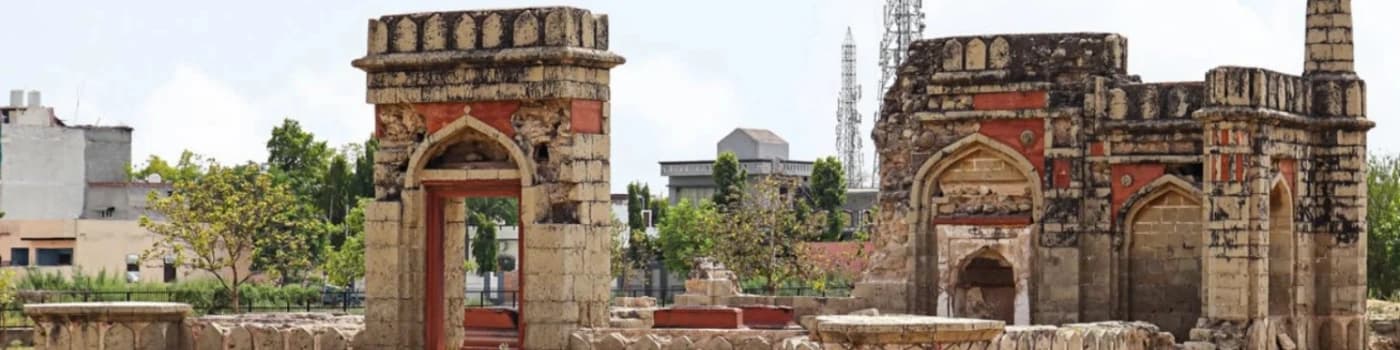
Located in eastern Haryana, Jhajjar is a historic town known for its medieval monuments, religious landmarks and traditional Haryanvi culture. Situated within convenient reach of Delhi, the town has a distinctive identity shaped by centuries of regional history and its connections with the surrounding areas of Haryana.
Jhajjar’s history reflects the influence of several ruling dynasties, including the Mughals and the British. The town’s heritage can be seen in its historic tombs and mosques, some of which reflect architectural influences from the Mughal period. Religious sites across the district also draw devotees, particularly the revered Mata Bhimeshwari Devi Temple in Beri, which is associated with local traditions connected to the Mahabharata. The Gurukul Jhajjar Museum adds another dimension to the region’s heritage, displaying antique coins, sculptures and other historical objects.
Beyond its historical attractions, Jhajjar offers opportunities to experience rural Haryana through destinations such as Pratapgarh Farms and Joygaon Picnic Park. The district’s cultural life reflects a blend of Haryanvi and Punjabi traditions, expressed through local festivals, folk music, and dance and community celebrations. Today, Jhajjar brings together historic architecture, religious traditions, museum collections and rural experiences, offering an insight into the cultural and historical character of Haryana.
Places to Visit in Jhajjar
- Mata Bhimeshwari Devi Temple, Beri: Located in Beri town, Mata Bhimeshwari Devi Temple is one of the most revered pilgrimage sites in Jhajjar district. The goddess is popularly known as Beri Mata, and the shrine is associated with a legend from the Mahabharata in which Bhima, one of the Pandavas, is believed to have installed the deity’s idol. The temple complex has two shrines, an inner and an outer temple, and follows a distinctive ritual in which the idol is moved between them at specific times of the day. The temple draws large numbers of devotees during Navratri, when religious ceremonies and fairs are held.
- Bhindawas Bird Sanctuary: Located in Jhajjar district, Bhindawas Bird Sanctuary is a major wetland known for its rich birdlife, providing a habitat for numerous resident and migratory species throughout the year. The wetland attracts numerous species during the winter migration season, including ducks, geese, waders and birds of prey. Species such as the greater flamingo, bar-headed goose, northern pintail and osprey have been recorded here. The sanctuary also supports other wildlife, including nilgai and jackals. It is an appealing destination for birdwatching, nature photography and observing the ecological importance of Haryana’s wetlands.
- Gurukul Jhajjar Museum: Established in 1959 through the efforts of Swami Omanand Saraswati, Gurukul Jhajjar Museum houses a wide-ranging collection of historical and cultural artefacts gathered from different parts of India. Its exhibits include antique coins, sculptures, religious idols and objects that illustrate aspects of India’s artistic and material heritage. Notable displays include figures of Lord Vishnu and Lord Ganesha, a wooden chain crafted without joints, and an unusual flexible stone. The museum offers an opportunity to explore the region’s interest in archaeology, history and traditional craftsmanship.
- Group of Tombs and Mosques: These tombs and mosques reflect the town’s architectural heritage, particularly from the Mughal period. Several structures are associated with the reigns of emperors such as Akbar and Jahangir, illustrating the influence of Islamic architecture in the region. Their domes, masonry details and traditional layouts provide insight into the religious and funerary architecture of earlier centuries. These monuments form an important part of Jhajjar’s built heritage, although individual structures may vary in condition and accessibility.
- Bua Wala Talab: Bua Wala Talab is a historic water body in Jhajjar associated with local accounts of Mustafa Kalol, who is said to have held important administrative positions. Traditional ponds like this served as important water sources, collecting rainwater for use during the region’s hot, dry periods. The site also reflects the historical relationship between water management and settlement life in Haryana.
- Pratapgarh Farms: Pratapgarh Farms is a rural tourism destination designed to introduce visitors to traditional village life in Haryana. Set amid green fields, the property features mud huts, farm animals, rural-style surroundings and activities inspired by village customs. Visitors can experience traditional food, folk entertainment and recreational activities that reflect aspects of rural culture.
- Joygaon Picnic Park: Located on the Jhajjar–Bahadurgarh road, Joygaon Picnic Park is a village-themed leisure destination offering a range of recreational and cultural activities. Visitors can take part in traditional experiences such as pottery-making, camel and tractor rides, and folk performances, alongside adventure activities and indoor entertainment. The park also offers village-style food and facilities for family outings, school groups and organised gatherings. Its combination of rural-themed activities and modern recreation makes it a popular option for a day trip.
- Rattan Garh Farm: Rattan Garh Farm offers a countryside setting for visitors interested in farm-based leisure. Rural farms in this region provide a contrast to the urban environment, with open spaces and opportunities to experience aspects of village surroundings. Visitors should confirm current activities, facilities and access arrangements before planning a visit.
- Baghawali Kothi, Dujana:. The historic building forms part of the architectural legacy of the Jhajjar region and reflects the presence of older residential or estate structures in the area. It is of interest to those exploring the district’s lesser-known built heritage. As access and conservation conditions may vary, checking locally before visiting is advisable.
Best Time to Visit Jhajjar
The best time to visit Jhajjar is October to March, when the weather is generally more comfortable for exploring the town’s historical monuments, temples, museums and countryside attractions. The region experiences hot summers, a monsoon season with moderate rainfall and cold winters.
- Summer (April to June): Summers are hot and dry, with temperatures sometimes reaching around 45°C. Outdoor sightseeing can be uncomfortable during the afternoon, so early mornings and evenings are more suitable for exploring the town.
- Monsoon (July to September): Jhajjar receives most of its annual rainfall during these months, particularly in July and August. The surrounding countryside becomes greener, although occasional heavy showers may affect outdoor activities.
- Winter (October to March): Cooler weather makes this period suitable for visiting Jhajjar’s heritage sites and religious landmarks. November to February is generally favourable for sightseeing, though December and January can bring chilly mornings and nights. Warm clothing is advisable during the colder months.
How to Reach Jhajjar
- By Air: Indira Gandhi International Airport (IGI) in New Delhi is the nearest major airport which is about 55–60 km from Jhajjar. From the airport, taxis and other road transport options are available to reach the town.
- By Rail: Jhajjar has its own railway station, with rail connections to major cities in North India. Travellers from cities without direct services can connect through nearby railway hubs such as Rohtak or Rewari before continuing to Jhajjar.
By Road: Jhajjar is well connected to Delhi, Gurugram, Rohtak, Bahadurgarh and other nearby towns through state highways and regional roads. Regular bus services operate from neighbouring cities, while taxis and private vehicles offer convenient alternatives. Its proximity to Delhi also makes Jhajjar accessible for a road trip from the national capital.


 English
 Chinese (Simplified)
 Dutch
Dutch French
 German
 Hebrew
 Italian
 Portuguese (Brazil)
 Russian
 Spanish
 Arabic