- +91 96773 55555
- Toll Free: 1800 123 2255
 English
 Chinese (Simplified)
 Dutch
Dutch French
 German
 Hebrew
 Italian
 Portuguese (Brazil)
 Russian
 Spanish
 Arabic
EnglishChinese (Simplified)DutchFrenchGermanHebrewItalianPortuguese (Brazil)RussianSpanishArabic
Located on the banks of the Yamuna River in Uttar Pradesh, Agra is one of India's most celebrated heritage destinations and a city synonymous with the grandeur of the Mughal era. Best known as the home of the Taj Mahal, Agra preserves an extraordinary collection of forts, tombs, gardens and architectural landmarks that reflect centuries of imperial history. The city forms an important part of India's Golden Triangle, together with Delhi and Jaipur.
Agra's historical importance goes far beyond the Taj Mahal. The city rose to prominence under the Lodis and reached its architectural and cultural zenith during the Mughal period, when it served as an imperial capital under rulers including Akbar, Jahangir and Shah Jahan. Monuments such as Agra Fort, Akbar's Tomb at Sikandra and the Tomb of Itimad-ud-Daulah stand as enduring examples of the artistic and architectural traditions that flourished during this period.
The city's cultural identity is also shaped by its traditional craftsmanship. Agra is renowned for marble inlay or Pietra Dura work, leather goods, carpets, handicrafts and Zari Zardozi embroidery. Its culinary traditions add another dimension to its character, with the famous Agra Petha being closely associated with the city. From the monumental beauty of the Taj Mahal to the imposing walls of Agra Fort and the elegant Mughal gardens along the Yamuna, the city offers a remarkable glimpse into one of the most influential chapters of India's history.
Places to Visit:
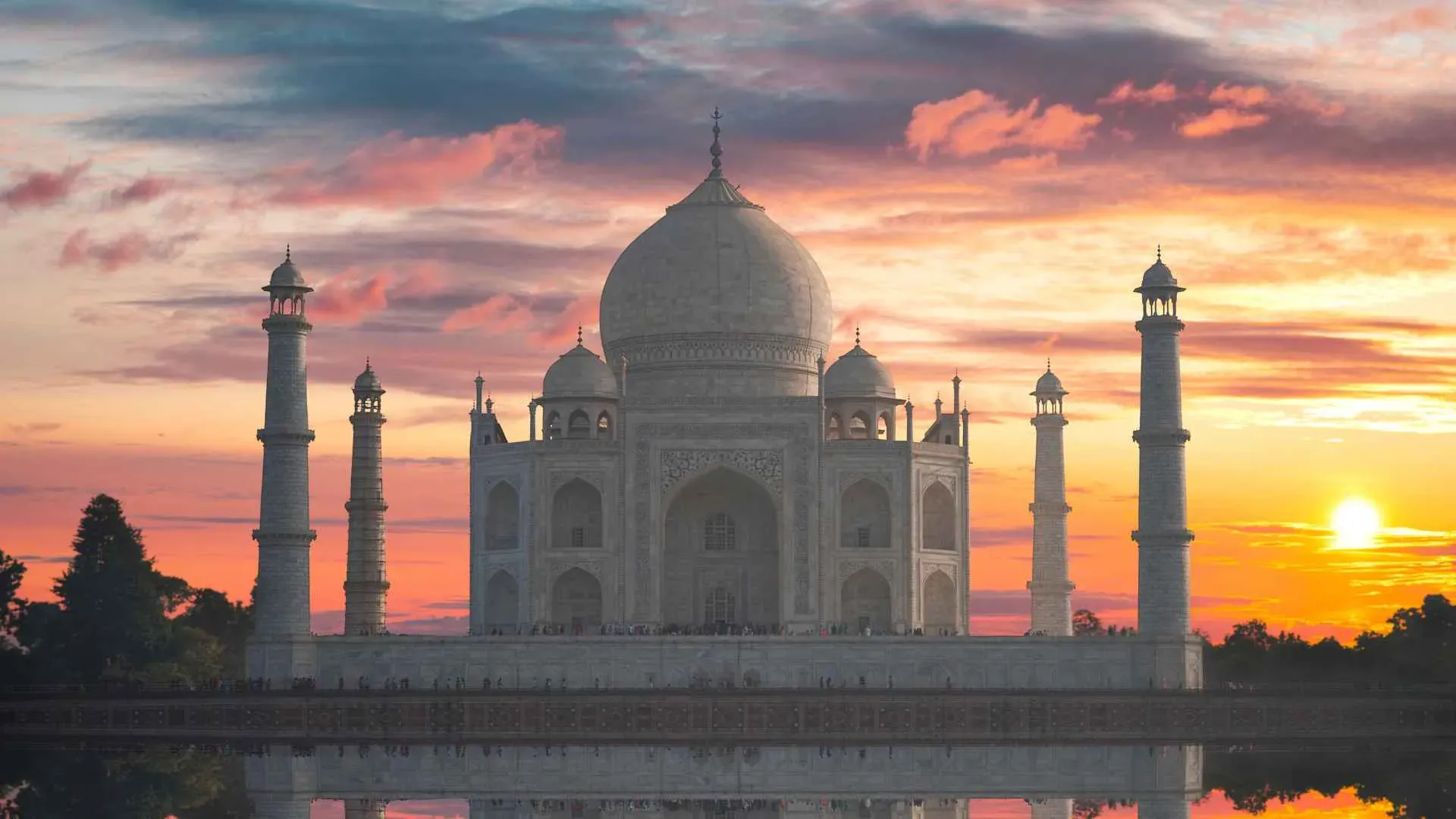
Taj Mahal: The Taj Mahal is Agra's most iconic landmark and one of the world's most celebrated monuments. Standing on the southern bank of the Yamuna River, this magnificent ivory-white marble mausoleum was commissioned by Mughal Emperor Shah Jahan in memory of his wife, Mumtaz Mahal. Construction began in 1631 and the principal complex was completed over a period of about 17 years, involving thousands of artisans and craftsmen. The monument is recognised as a UNESCO World Heritage Site and is celebrated as one of the finest achievements of Mughal architecture. The monument is admired for its remarkable symmetry, large central dome, four slender minarets and intricate marble decoration.
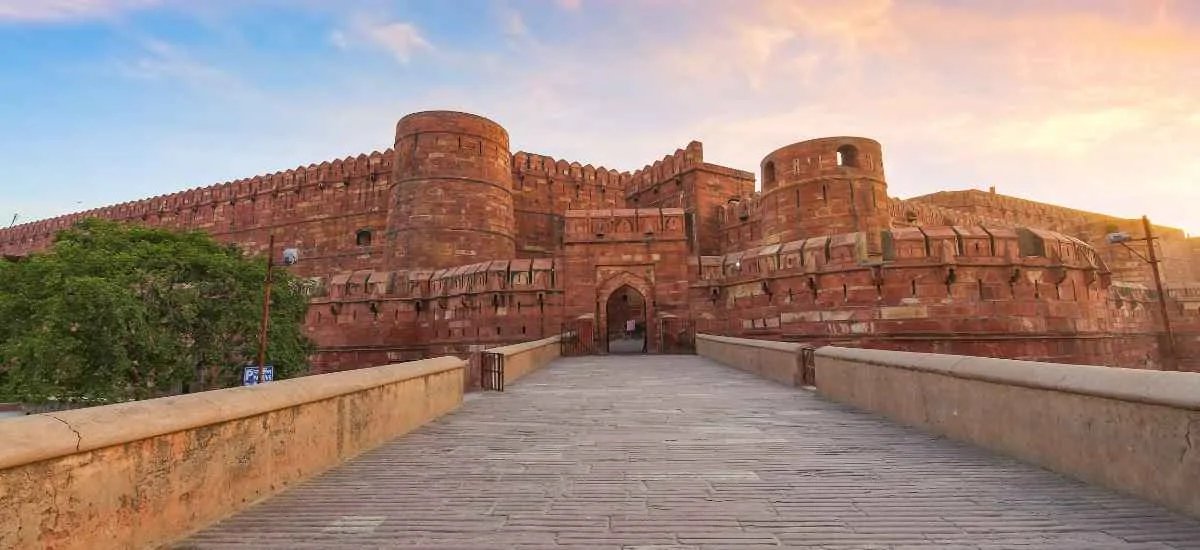
Agra Fort: The Agra Fort is one of the most important monuments of the Mughal Empire and a UNESCO World Heritage Site. The massive red sandstone fortress was rebuilt on a grand scale by Emperor Akbar from 1565 onwards and subsequently transformed by later Mughal rulers, particularly Shah Jahan, who introduced extensive white marble structures within the fort. Spread across a vast fortified complex, its imposing walls reflect the military strength and imperial grandeur of Mughal Agra. Within its massive ramparts are a remarkable collection of palaces, audience halls, mosques and private chambers.
Fatehpur Sikri: Located around 36–40 kilometres from Agra, Fatehpur Sikri is a magnificent historic city established by Emperor Akbar in 1571. It served as the capital of the Mughal Empire for approximately 14 years and remains one of the most complete examples of a planned Mughal city. Built primarily in red sandstone, the complex demonstrates the architectural vision of Akbar's reign and the cultural influences that shaped the Mughal court. The city contains an extraordinary collection of structures, including the monumental Buland Darwaza, Jama Masjid, Panch Mahal, Diwan-i-Khas, Jodha Bai's Palace and the Tomb of Sheikh Salim Chishti. The architecture brings together Persian, Islamic, Hindu and Jain influences, creating a distinctive visual character. The white marble tomb of Sheikh Salim Chishti stands in striking contrast to the surrounding red sandstone buildings and remains an important spiritual landmark within the complex.
Akbar's Tomb, Sikandra: Akbar's Tomb at Sikandra is the final resting place of Emperor Akbar and is set within an expansive 119-acre charbagh garden on the Agra–Mathura road. Unlike many later Mughal tombs, the monument displays a distinctive combination of architectural influences, reflecting Akbar's interest in cultural and religious synthesis. The tomb is characterised by its five-storeyed pyramidal form, red sandstone construction, white marble details and an ornate gateway known as Buland Darwaza. Decorative elements incorporate Hindu, Islamic and Persian motifs, creating an architectural style that is distinctly different from the later Mughal monuments of Agra. The surrounding gardens add to the monument's grandeur, with the expansive landscape also known for blackbuck that can sometimes be seen within the grounds.
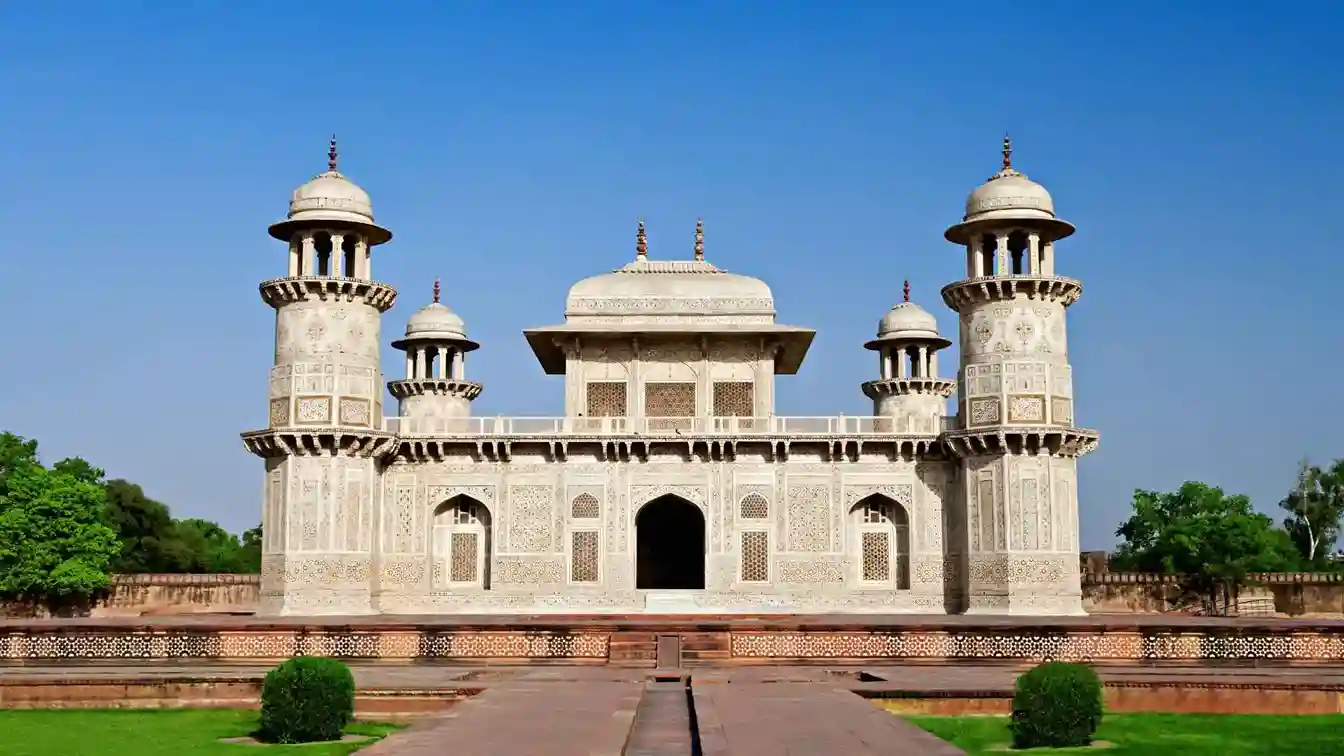
Tomb of Itimad-ud-Daulah: The Tomb of Itimad-ud-Daulah is an elegant marble mausoleum situated on the banks of the Yamuna. The monument occupies an important position in the evolution of Mughal architecture. It is widely regarded as the first Mughal monument built entirely of white marble and one of the earliest monuments to make extensive use of pietra dura decoration. Often referred to as the Baby Taj, the monument is notable for its delicate scale and exceptional craftsmanship. Intricate stone inlay, finely carved marble jail screens and colourful decorative patterns cover much of its exterior and interior surfaces. The riverside setting, formal gardens and intricate detailing give the monument a refined character, while its architectural innovations are considered an important precursor to the design of the Taj Mahal.
Mehtab Bagh: Mehtab Bagh, meaning “Moonlight Garden”, is a historic Mughal garden situated on the opposite bank of the Yamuna, directly facing the Taj Mahal. Originally associated with Emperor Babur and later aligned with the Taj Mahal's architectural axis during Shah Jahan's reign, the garden forms an important part of Agra's riverside Mughal landscape. The garden follows the traditional charbagh concept, with landscaped sections, pathways and greenery arranged around a carefully planned layout. Its position across the river provides an unobstructed perspective of the Taj Mahal and has made it particularly popular for viewing the monument in the softer evening light. The combination of Mughal garden design, Yamuna views and the Taj Mahal creates one of Agra's most distinctive heritage landscapes.
Tomb of Mariam-uz-Zamani: The Tomb of Mariam-uz-Zamani at Sikandra is the final resting place of Mariam-uz-Zamani, the Rajput consort of Emperor Akbar and mother of Emperor Jahangir. The monument reflects the cultural interaction between Mughal and Rajput traditions that characterised Akbar's reign and the development of imperial architecture during the period. The structure incorporates elements of both Islamic and Hindu architectural traditions, visible in its arches, ornamental details, balconies and decorative features. Its relatively restrained appearance and historic setting distinguish it from the more monumental tombs associated with Akbar and the later Mughal emperors. The monument provides an important perspective on the royal women of the Mughal court and the diverse cultural influences within the empire.
Guru Ka Taal: Guru Ka Taal is an important Sikh religious and heritage site located near Sikandra in Agra. The site is associated with **Guru Tegh Bahadur Ji, the ninth Sikh Guru**, and commemorates his connection with the area. The present historic structure represents an important part of Agra's multi-religious heritage and reflects the city's long history of different faith traditions existing alongside its Mughal monuments. The structure is known for its distinctive architectural character, with carved stonework, domes, arches and decorative details typical of historic North Indian religious architecture. The Gurudwara remains an active place of worship and carries particular significance for Sikh devotees. Its peaceful religious atmosphere and historic setting make it an important cultural landmark within Agra.
Best time to visit:
The best time to visit Agra is from October to March, when the weather is relatively pleasant and comfortable for exploring the city's magnificent monuments, historic sites, gardens and cultural attractions. The cooler season is particularly suitable for spending time outdoors at places such as the Taj Mahal, Agra Fort, Fatehpur Sikri and Mehtab Bagh.
How to Reach Agra
By Bus: Regular bus services connect Agra with Delhi, Jaipur, Gwalior, Lucknow, Kanpur and other cities. The city has two major interstate bus terminals—Idgah Bus Stand and ISBT—serving different routes across the region.