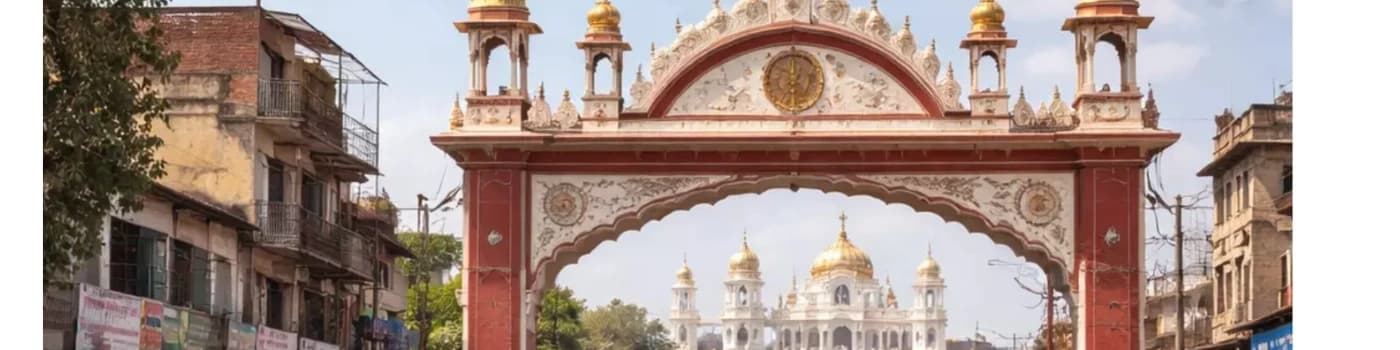
Moga, located in the Malwa region of Punjab, is an important agricultural and commercial centre known for its fertile farmland, Punjabi traditions and religious landmarks. The city serves as a hub for the surrounding rural communities, with agriculture and dairy farming playing a major role in the local economy. Its markets and trading centres reflect the close relationship between the city and the farming communities of the region.
Moga’s identity is closely linked to Punjab’s rural culture and agricultural heritage. The surrounding countryside is characterised by extensive fields, traditional villages and farming activity, while the city itself has grown into a centre for commerce, education and local services. Dairy production and the processing of agricultural goods also contribute to the district’s economic activity.
The region has several religious sites that attract devotees throughout the year. Gurdwaras associated with Sikh traditions, along with Hindu temples and other places of worship, form an important part of local community life. The district is also connected with the legacy of freedom fighter Lala Lajpat Rai, who was born in Dhudike village near Moga, adding historical significance to the surrounding area.
Moga offers a perspective on everyday life in Punjab beyond its larger urban centres. Its religious landmarks, village heritage, agricultural surroundings and traditional food culture make it a useful destination for understanding the social and cultural character of the Malwa region.
Places to Visit in Moga
- Geeta Bhawan Temple: Located in Vedant Nagar in Moga, Geeta Bhawan Temple is a well-known Hindu shrine dedicated to religious worship and community gatherings. The temple is visited by devotees throughout the week, with regular aarti ceremonies and special prayers on auspicious days. Its peaceful atmosphere makes it an important spiritual landmark within the city.
- Shahidi Park: Shahidi Park is a memorial park in Moga associated with a tragic terrorist attack in which 25 people lost their lives. The site serves as a place of remembrance and reflects the importance of preserving the memory of those affected by violence. It is one of the city’s notable public landmarks.
- Gurudwara Shri Mehdiana Sahib: Situated near the village of Mehdiana in Moga district, this historic gurdwara is widely known for its striking sculptures and displays depicting episodes from Sikh history. The complex is often described as a school of Sikh history because its artistic installations portray the lives, struggles and sacrifices of Sikh figures. The shrine is an important place of pilgrimage and attracts devotees interested in Sikh heritage.
- Gurudwara Nanaksar Sahib, Takhtupura: Located in Takhtupura village, this revered gurdwara is associated with visits by Guru Nanak Dev Ji, Guru Hargobind Sahib Ji and Guru Gobind Singh Ji, according to local Sikh tradition. The complex includes separate shrines commemorating these connections. Its religious importance draws devotees from Moga and neighbouring districts, particularly during major Sikh observances.
- Gurudwara Lohgarh Sahib, Dina: Gurudwara Lohgarh Sahib in Dina village is connected with Guru Gobind Singh Ji and events from the period following the Battle of Chamkaur. Local tradition remembers the assistance provided to the Guru during his journey towards the Malwa region. The gurdwara preserves this history and remains a place of prayer and remembrance for Sikh devotees.
- Lala Lajpat Rai Memorial, Dhudike: Dhudike village, near Moga, is the birthplace of Lala Lajpat Rai, a prominent leader in India’s independence movement who was popularly known as Punjab Kesari. A memorial in the village honours his contribution to the national struggle against British rule. Visiting the site offers an opportunity to learn about his life, political work and role in inspiring the freedom movement.
- Gurudwara Daroli Bhai: Gurudwara Daroli Bhai is a significant Sikh religious site in Moga district, known for its devotional atmosphere and connection with local Sikh traditions. Devotees visit the complex for prayers and kirtan, while its community activities reflect the central role of gurdwaras in religious and social life across rural Punjab.
- Gurudwara Gurusar Sahib, Bazidpur: Located in Bazidpur village, this historic gurdwara is associated with Guru Gobind Singh Ji, who is believed to have rested here after the Battle of Muktsar. Local tradition also preserves the memory of a jand tree connected with the Guru’s visit. The shrine is a place of worship and an important reminder of Sikh history in the Moga–Firozpur region.
- Kashmiri Park: Kashmiri Park is one of Moga’s public green spaces, offering an open area for relaxation and recreation within the city. It provides a change of pace from busy commercial streets and is used by local residents for casual walks and leisure. The park is part of the city’s network of neighbourhood recreational spaces.
- Nehru Park: Nehru Park is another public park in Moga that provides space for outdoor relaxation amid the urban setting. It is primarily a local recreational area where residents can spend time outdoors. Along with other parks in the city, it contributes to Moga’s public green spaces.
- Gurudwara Sahib Patshahi Dasvin, Lappon: Associated with Guru Gobind Singh Ji, Gurudwara Sahib Patshahi Dasvin in Lappon is a Sikh shrine of religious importance in the wider region. The complex includes a sarovar, or sacred water tank, connected with local tradition about the Guru’s visit. Devotees come here to offer prayers and reflect on the history preserved by the shrine.
- Lakhdata Shrine, Langiana: Langiana village in Moga district is known for a shrine dedicated to Lakhdata, a folk deity revered in parts of Punjab. Such shrines hold an important place in local devotional culture, bringing together religious practices and village traditions. The site offers a perspective on the folk beliefs that continue to shape the region’s cultural life.
Best Time to Visit Moga
The most comfortable time to visit Moga is from October to March, when cooler temperatures are favourable for exploring the city’s religious landmarks, memorials and nearby villages. The region experiences hot summers, a monsoon season with periodic rainfall and cold winter conditions.
- Summer (April to June): Summers in Moga can be intensely hot, particularly in May and June. Daytime temperatures often rise considerably, making outdoor sightseeing less comfortable during the afternoon. Early mornings and evenings are better suited for visiting temples, gurdwaras and other open-air attractions.
- Monsoon (July to September): Rainfall brings relief from the summer heat and adds greenery to the surrounding agricultural landscape. However, humidity and occasional heavy showers may affect road travel and outdoor activities.
- Winter (October to March): Winter is generally the most pleasant season for exploring Moga and its surrounding villages. The cooler weather is suitable for visiting historical memorials and religious sites. December and January are often marked by cold mornings, low evening temperatures and occasional fog, making warm layers useful during this period.
How to Reach Moga
- By Air: Sri Guru Ram Dass Jee International Airport in Amritsar is one of the main airport options for reaching Moga, approximately 110–120 km away by road. Ludhiana Airport may also be considered, although flight services are limited. From either location, taxis or other road transport can be arranged for the onward journey.
- By Rail: Moga Railway Station connects the city with selected destinations in Punjab and other parts of northern India. For additional train connections, travellers can consider Ludhiana Junction, which offers a wider range of services to major cities. Taxis, auto-rickshaws and other local transport are available for reaching different parts of Moga from the railway station.
- By Road: Moga is well connected to Ludhiana, Jalandhar, Faridkot, Firozpur and other cities in Punjab through the state and regional road network. Regular bus services operate between Moga and nearby urban centres, while taxis and private vehicles provide flexible travel options. Its central location in the Malwa region also makes it accessible from several surrounding districts.


 English
 Chinese (Simplified)
 Dutch
Dutch French
 German
 Hebrew
 Italian
 Portuguese (Brazil)
 Russian
 Spanish
 Arabic