- +91 96773 55555
- Toll Free: 1800 123 2255
 English
 Chinese (Simplified)
 Dutch
Dutch French
 German
 Hebrew
 Italian
 Portuguese (Brazil)
 Russian
 Spanish
 Arabic
EnglishChinese (Simplified)DutchFrenchGermanHebrewItalianPortuguese (Brazil)RussianSpanishArabicManikarnika is alive with the shimmer of sacred flames and hymns and chants of liberation.
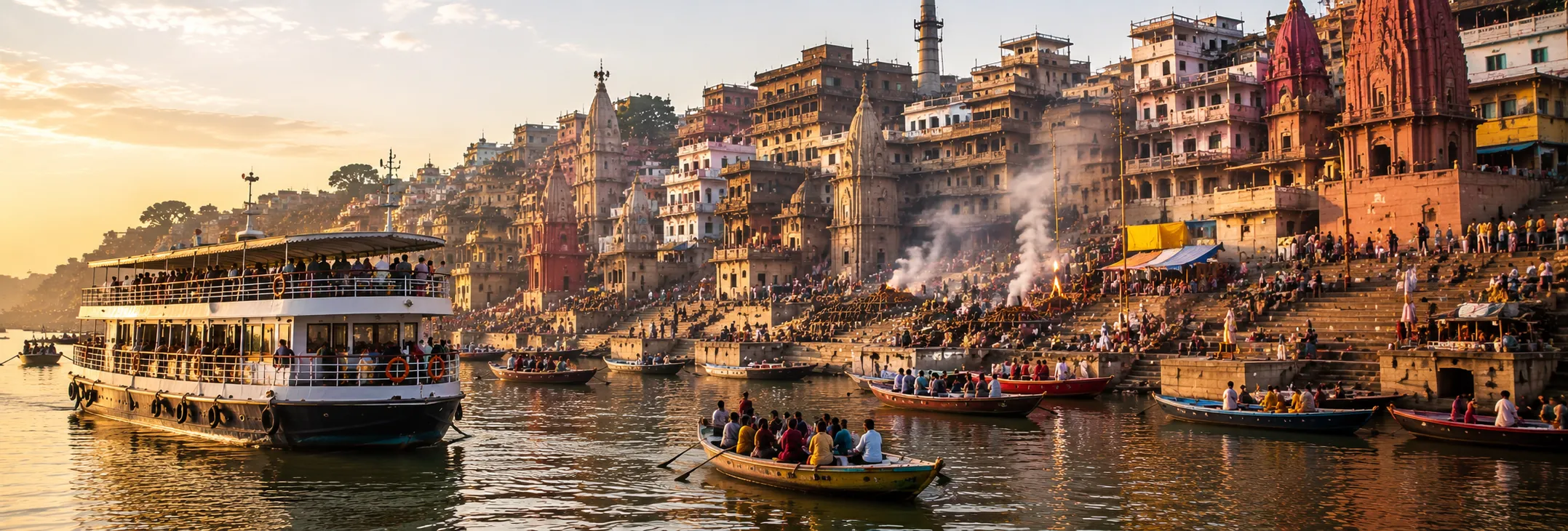
At the core of Varanasi’s sacred sphere, Manikarnika Ghat is one of the holiest spots, uniting the sacred rites, death ceremonies, and ancient lore on the banks of the Holy Ganga.
“Life and death meet here on the path towards freedom.”
One of the most significant and ancient places in Varanasi, Manikarnika Ghat lies on the western bank of the River Ganga and is the city's primary cremation ghat with funeral pyres constantly burning. In Hinduism, a soul cremated here is believed to achieve moksha, liberation from the cycles of birth and death. Legend has it that Manikarnika Ghat got its name from the jeweled earring, or manikarnika, of Goddess Parvati that fell here.
For ages, the site has drawn pilgrims, saints, and tourists for an eyewitness experience of one of the world's oldest, living, religious traditions.
A trip to this unique Varanasi Ghat can stir a plethora of emotions and leave you deeply impressed. From the respectful presence of cremated remains to the constant burning funeral pyres, you'll find yourself compelled to witness this spiritual event in the most traditional and pure form. Due to respect, all visitors are to remain at a considerable distance from the cremation ritual. Enjoy a leisurely walk on the riverbank or take a boat tour to gain a memorable and cultural perspective on this ancient place of worship.
No visit to Varanasi can be considered complete without visiting Manikarnika Ghat Varanasi.
You will be transported into the spiritual realm and the timeless traditions of the Hindu faith, where life and death are viewed as two phases of an everlasting cycle.
The rituals, sights and quiet corners that make this ghat unforgettable.
Traditional end-of-life rituals on the Ganges leading to the emancipation of the soul.
End-of-life ceremonies by the Ganges designed to achieve the soul’s salvation.
An ancient, unbroken fire, continuously lit for centuries to ignite every pyre.
Take a tour of Manikarnika by water. A Cholan expert will chart a unique cruise along with echoing chanting, the eternal flame, and tranquil first light.
 DIVINE AARTI01
Whether you visit for cultural experiences, spiritual reasons, or sightseeing, Dashashwamedh Ghat Varanasi offers you a memorable glimpse of one of India's oldest living cities.
Highly famous for its spiritual atmosphere and Ganga Aarti, Dashashwamedh Ghat rightly presents Varanasi's ancient traditions. Every moment spent here, from sunrise boat rides to sacred evening rituals, reveals a different side of Varanasi's rich heritage. If you are planning a Varanasi tour, it deserves the top slot in your itinerary.