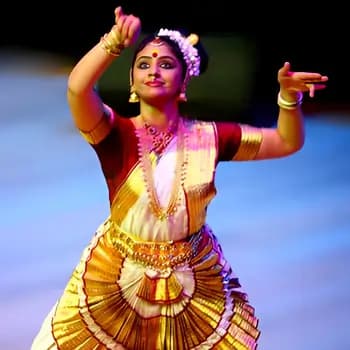
Puli Attam
Puli Attam involves young men, adorned in yellow & black with detailed fangs, headgear, and tails, mimicking the fierce actions of a tiger. Drums amplify the intensity as they perform. Occasionally, goats are brought alongside as part of the act where dancers simulate hunting them. This dance captures attention at temple festivals, gathering numerous spectators.
Oyilattam
Deriving from the word "beauty," Oyilattam is a dance that showcases grace & used to be exclusive to men until women joined about a decade ago. Originating in Kongu Nadu, it begins with dancers in line performing intricate steps to music, growing as more join in. Ankle-bells and traditional instruments complement their movements. Typically held near temples or public spaces, performances can extend into the night.
Theru Koothu
Often termed as “Street play,” Theru Koothu is performed during village festivals particularly in the Tamil months of Panguni and Aadi. Set up at street intersections under gas lights on a makeshift stage, it entails acting, singing and dancing by men even in female roles. The narrative drawn from epics captivates viewers till early hours of dawn, more prevalent in Tamil Nadu’s northern districts.
Bagavatha Nadanam
A poignant part of Tamil Nadu's folklore, Bagavatha Nadanam is performed within temples around a lamp to honor Lord Krishna amidst celebrations like Ramanavami and Gokulashtami.
Bommalattam (Puppet Show)
Vibrant puppet shows engage people during local festivities using various types including cloth and leather puppets operated behind screens. Tales from epics provide entertainment for all ages.
Silambattam
Originating from ancient Tamil martial traditions, Silambattam has evolved into an expressive yet combative dance form demonstrating defensive techniques while using bamboo or red teak staves called “Silambam.” Beyond physical exercise, it embodies discipline & cultural values.
Kai Silambu Aattam
Celebrated during Amman festivals or Navaratri, dancers ringing ankle-bells praise female deities through intricate steps and jumps exuding devotion towards figures like Goddess Kali or Durga.
Poikkal Kudirai Aattam
Also referred to as Horse dance or Wooden leg dance due to its distinctive costume that simulates the dancer being mounted on a horse. It’s an integral part of joyful communal gatherings across Tamil Nadu and influences folk dances nationally.
Kavadi Aattam
As a devotional offering to Lord Muruga during pilgrimages, devotees perform Kavadi Aattam balancing poles laden with sacrifices while moving rhythmically along lengthy pathways; this blend of burden and jubilation symbolizes devotion & endurance through melodic songs known as Kavadi Sindhu.
Kolaattam
Traced back to historical references in texts like 'Cheivaikiyar Kolattam,' this exclusively feminine art form uses rhythmic claps of sticks accompanied by continuant steps which interweave ropes into complex patterns with symbolic significance throughout festivals starting after Deepavali.
Mayil Aattam
Literally translated as "Peacock Dance," this delightful performance involves dressing up as peacocks. Variations include enacting bulls (Kaalai Attan), bears (Karadi Attan), or demons (Aali Aatman) typical in community gatherings aiming at uniting elements through vibrant expressions via traditional costumes which are essential to each performance style.
Karagaattam
An energetic traditional dance centered around balancing pots on heads and dancing spiritedly often for blessings from the rain goddess Mari characterized by celebratory tones infused with acrobatics portraying an artistic legacy integral to village celebrations either for divine reverence or pure enjoyment described vividly in Sangama literature referencing varied instrumentations like Melame Nathaswaram and Thiala adding layers of festivity anticipated eagerly by local communities.

 English
 Chinese (Simplified)
 Dutch
Dutch French
 German
 Hebrew
 Italian
 Portuguese (Brazil)
 Russian
 Spanish
 Arabic