
- +91 96773 55555
- Toll Free: 1800 123 2255
 English
 Chinese (Simplified)
 Dutch
Dutch French
 German
 Hebrew
 Italian
 Portuguese (Brazil)
 Russian
 Spanish
 Arabic
EnglishChinese (Simplified)DutchFrenchGermanHebrewItalianPortuguese (Brazil)RussianSpanishArabic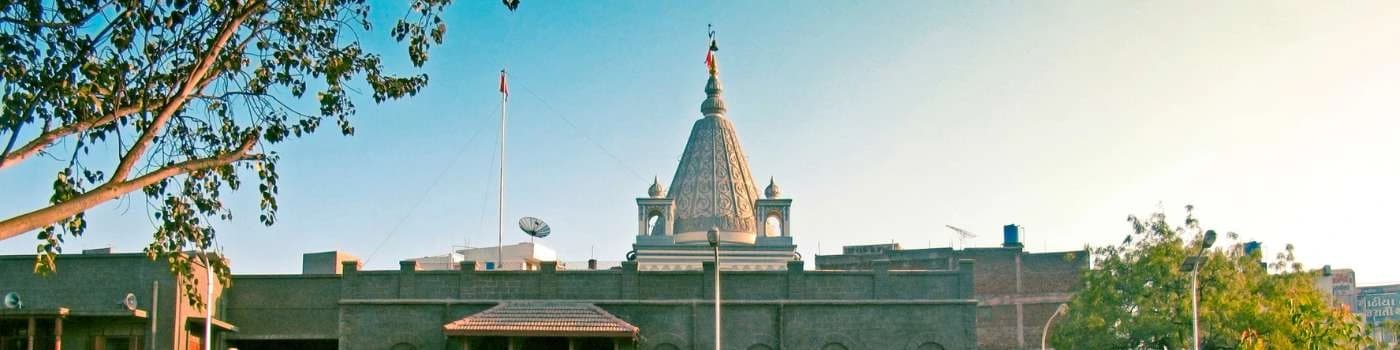
The Land of Sai, Shirdi, is a sacred place for those who believe in humanity and the “God is One” ideology. Shirdi is one of the very few pilgrimage centres visited by most of the South Indian devotees. Devotees and tourists from all parts of South India visit Shirdi to worship Sai. Without any barriers of caste, creed, community, or religion, devotees unite to experience the divine powers of Sai in the most hospitable holy grounds of India – SHIRDI in Maharashtra.
A penniless fakir in his torn Kafni had served and was still serving countless humans without expecting anything in return. His divinity has reached great heights, and his tales are widespread across India.
The main attraction in Shirdi is the Sai Baba Temple, which is the Samadhi of Sai Baba. Next to Tirupati, it is one of the most visited pilgrimage places in India.
The auspicious abode of Shri Sai Baba in Shirdi is visited by 60,000 people on weekdays and by more than 100,000 on weekends. From early morning, with Kakad Aarti at 4.30 am, to Mid-day Aarti at 12 pm, and Shej Aarti at 10.30 pm, Shirdi is lit with pomp and celebration throughout the day. At the main shrine, a devotee only gets a couple of minutes to complete their prayers (Sai Darshan).
As there will be humongous gatherings of ardent devotees, those who can’t bear the long queue can book darshan tickets online. Shri Sai Baba is believed to be an incarnation of Lord Shiva, and his devotees are both Muslims and Hindus.
That’s what makes this spiritual master ineffable! Every religion adores Sai Baba for his selfless service to humanity, especially for his kindness toward the needy. Sai Baba is not only considered a spiritual master but also a saint, Satguru and an incarnation of Dattatreya.
Sirdi is one spiritual place; however, there are more than one reason to visit Shirdi.
The peak season to visit Shirdi is winter, spanning from October to March in India. The temperature during this time remains around 12 to 28 degrees Celsius. It is ideal and comfortable to visit with family, having kids and older people. Since the weather is pleasant, that makes it is the time of highest footfall, especially around Dussehra and Diwali festivals.
In Monsoon, the weather and climate conditions are comfortable, with no major discomfort. However, sightseeing may be disrupted by rain.
April to June, which is summer in Shirdi, is the least recommended time to visit, as temperatures exceed 40 degrees Celsius and the scorching heat makes it uncomfortable.