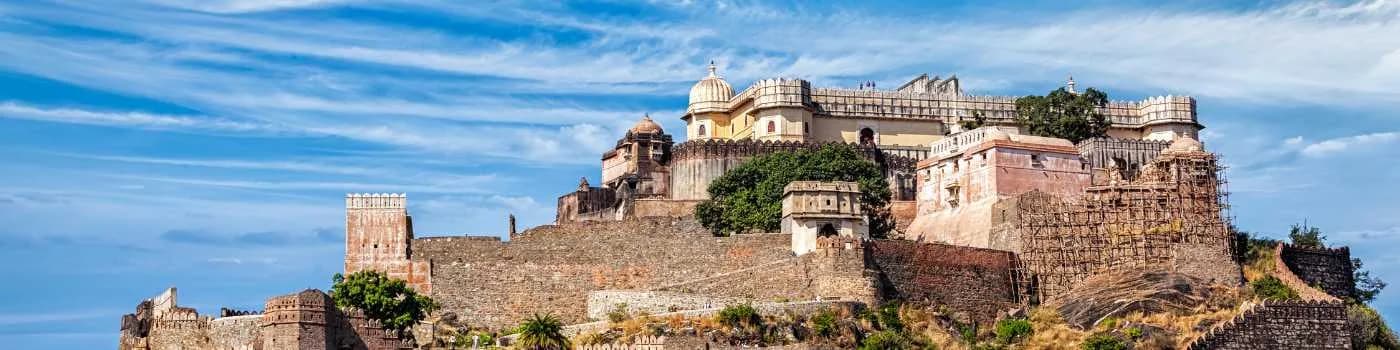
A Marvellous UNESCO World Heritage Site in Rajasthan
Situated in the Aravalli Hills of Rajasthan, Kumbhalgarh Fort is renowned for its impressive 36-kilometre-long wall, often referred to as the Great Wall of India. This 15th-century architectural masterpiece is a UNESCO World Heritage Site that symbolises Rajput valour and strategic prowess.
Historical Significance and Construction
Kumbhalgarh Fort holds historical significance as the birthplace of Maharana Pratap, the legendary Rajput king. Inscriptions on the fort walls narrate the construction chronicles, showcasing the dedication and engineering marvels of its builders.
Temples and Cultural Heritage
Within Kumbhalgarh Fort, numerous temples dedicated to Hinduism and Jainism reflect the religious tolerance and cultural patronage of its rulers. These temples are not just religious centres but also repositories of artistic excellence and centuries-old heritage.
Kumbhalgarh Sanctuary and Surrounding Attractions
Surrounded by the Kumbhalgarh Sanctuary, the fort offers a unique opportunity to explore the region's diverse flora and fauna. Nearby attractions include Rajasmund Lake, adding to the allure of visiting this historic fortification.
Visitor Information
- Best Time to Visit: Plan your visit to Kumbhalgarh Fort between September and February to enjoy the pleasant weather and explore the expansive fort complex comfortably.
- Attire and Accessibility: Ensure you wear comfortable clothing and footwear suitable for climbing and exploring the fort. The terrain can be challenging in places, so be prepared for some walking and climbing.
- Exploring the Fort: Allocate sufficient time to explore Kumbhalgarh Fort, as its vast premises and numerous temples and palaces require ample time to appreciate fully.


 English
 Chinese (Simplified)
 Dutch
Dutch French
 German
 Hebrew
 Italian
 Portuguese (Brazil)
 Russian
 Spanish
 Arabic