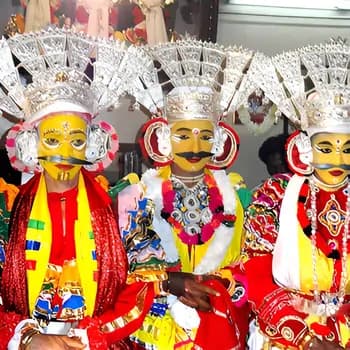
Garadi, a prominent folk dance in Pondicherry, is performed during local festivals. Steeped in inspiration from the Hindu epic Ramayana, the dance dramatises episodes in which the vanars (monkeys) assist Lord Rama in rescuing His consort, Sita, from the clutches of King Ravan.
These monkeys were instrumental in constructing the Rama Sethu Bridge, which connects to Sri Lanka, an event detailed in sacred texts such as the Hindu Kaavyas, Puranas, and the Ramayana, highlighting Lord Rama's glory.
The dance features performers dressed as monkeys, reenacting the vanars' role in aiding Lord Rama. Characterised by vigorous movements and elaborate steps, Garadi lasts between six and eight hours during festivals. Performers use sticks and wear unique iron rings on their legs, producing rhythmic sounds that harmonise with the beats of two large drums known as Ramadolus.
Garadi not only celebrates but enshrines the pivotal, yet often unsung, contribution of the monkeys in the lore of restoring Goddess Sita to Rama. This captivating spectacle, integral to Pondicherry's cultural festivities, is a must-see event.
Apart from its mythological narrative, Garadi Dance is an ideal expression of community spirit and devotion. Performers do this dance in open grounds and temple courtyards. Garadi's performance draws villagers and visitors into an atmosphere of festivity and faith.
Before the actual performance, dancers prepare themselves physically and spiritually. This preparation helps them embody the loyalty, strength and exuberance of the vanars. Through dramatic gestures, sustained stamina, and pulsating rhythms, Garadi transforms sacred legend into living theatre and preserves tradition.


 English
 Chinese (Simplified)
 Dutch
Dutch French
 German
 Hebrew
 Italian
 Portuguese (Brazil)
 Russian
 Spanish
 Arabic