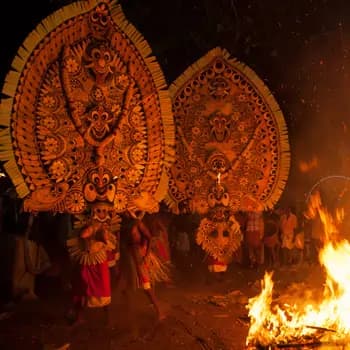
Padayani is a traditional ritual art form. It belongs to central Kerala in South India. Apart from being a dance performance, it is a sacred temple ritual, which perfectly combines devotion, music, storytelling, and masks. Local communities have been performing Padayani for centuries to honour Goddess Bhadrakaali. They do it to get her blessings for prosperity and protection.
The word Padayani is a combination of two Malayalam words: pada (army) and ani (row). When placed together, these two words mean a row of warriors. The term reflects the ancient connection of this art form with temple rituals and martial traditions.
When and Where is Padayani Performed?
In general, Padayani is performed during the temple festival season. The festival season usually occurs between February and April every year. The performance of this art form takes place in Kerala’s many districts like Alappuzha, Kottyam, and Kollam.
Under the open sky, it happens at night in temples’ courtyards. It creates a strong, spiritual environment. A large number of villagers gather in the temple courtyard. They participate in and watch this ritual performance. This performance is an integral part of their cultural identity and faith.
The Beautiful and Bold Kolams
Padayani’s most striking feature is the kolam, which means headgear or mask. The kolams are made from areca palm trees’ natural sheaths. With the use of natural colours, these masks are painted in bright shades like yellow, red, black, and green.
Each kolam is a mythological character. Some kolams represent goddess’ fierce forms while others represent humorous figures, spirits, or birds. Bhardakaali is the most popular kolam. It is shown in a dramatic and powerful form. Performers appear larger than their actual shape when they put on these huge masks.
Music, Dance and Storytelling
This art form from Kerala, Padayani, is an ideal combination of dance, ritual, and music. Performers take rhythmic and energetic steps by following the traditional drums’ beats such as the thappu and chenda. The strong drum sounds create intensity and excitement.
Singers recite particular songs, kolappattu. These songs narrate mythical stories, especially Goddess Bhadrakaali’s victory over the demon, Darika. Padayani’s performance builds an emotional and dramatic experience for viewers and performers as well.
A Community Celebration
Padayani is deeply connected to the local community. Preparing the masks, organising the festival and performing the rituals involve many people from the village. It strengthens unity and keeps ancient traditions alive.
Although modern life has changed many customs, Padayani continues to be practised with devotion. It remains one of Kerala’s most powerful and visually stunning folk arts.
 English
 Chinese (Simplified)
 Dutch
Dutch French
 German
 Hebrew
 Italian
 Portuguese (Brazil)
 Russian
 Spanish
 Arabic