Government Museum
Government Museum

About Government Museum

Situated along Pantheon Road in Egmore, the Government Museum proudly represents Chennai, the capital city of Tamil Nadu. Established in 1851, it occupies 16.25 acres and features six buildings and 46 art galleries.

As India's second-oldest museum, it boasts an array of exhibits covering fields such as Archaeology, Numismatics, Zoology, Natural History, Sculpture, Palm Leaf Manuscripts, & Amravathi Paintings. Its collection of Roman antiquities is the largest outside of Europe, making it a unique repository worldwide.

This museum is highly recommended for tourists and should be integrated into travel plans because of its cultural & historical significance.

History :
Originating in Nungambakkam in 1851 before moving to its current site in 1854, this museum was the first to be sponsored by the government in India. It began with a modest collection of 1000 geological specimens donated by the Madras Literary Society.

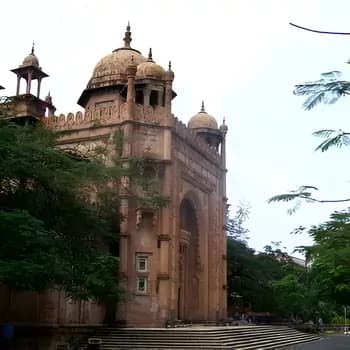
The collection expanded over time, necessitating several renovations, including six new buildings, a lecture hall & a museum theatre. The architectural styles of Indo-Saracenic alongside Gothic–Byzantine, Rajput, Mughal & South Indian Deccani make up the museum's structure.

A noteworthy feature of this complex is the Connemara Library, which features stained-glass workshops & ornate decorations. It receives every publication produced in India as one of only four such libraries nationwide and serves as a depository library for UN documents. Originally a single hall, it now stands as one of India’s largest libraries with an extensive reference section.

Another highlight is the 19th-century Museum Theatre, in the Italianate style, which has hosted many cultural events, including Shakespeare’s plays, since its inception. Additionally, Chennai’s first zoo, established here in 1855, has been operating from Vandalore since 1985. The Centenary Exhibition Hall commemorates 100 years since its establishment, next to an area designated for children’s exhibitions. From 2004 onwards, this site has also served as a Manuscript Convention Centre, attracting at least 1,000 daily visitors.

For those curious about ancestral lifestyles, this place holds many answers about our forebearers' lives.

Getting There:
By Flight- The nearest airport is Chennai airport, just 18km away.

By Train- From Chennai Central railway station, it's only about 3.4km.

By Road- Conveniently accessible from adjoining areas due to well-connected roads.

The Government Museum not only preserves treasured artefacts but also continuously educates and entices a wide audience; truly embodying its status as a cornerstone of cultural heritage."


Send Enquiry

Phone

FAQs on Government Museum

FAQ

When was the Government Museum in Chennai established, and why is it historically significant?

The Government Museum in Chennai was established in 1851, making it the second-oldest museum in India. Initially started with a collection of about 1,000 geological specimens donated by the Madras Literary Society, it later expanded into a major cultural and historical institution. The museum is significant because it preserves artefacts spanning archaeology, numismatics, zoology, natural history, and art. It is also internationally recognised for housing the largest collection of Roman antiquities outside Europe, making it a vital centre for historical research and heritage preservation.
FAQ

What are the major highlights visitors should not miss at the Government Museum Chennai?

Some of the most notable highlights include the impressive Bronze Gallery featuring exquisite Chola-period bronzes, the Archaeology Gallery with ancient sculptures and artefacts, and the Amaravati Gallery showcasing Buddhist sculptures from the Amaravati Stupa. Visitors should also explore the Connemara Public Library, one of India’s four national depository libraries, and the historic Museum Theatre built in Italianate style. Together, these attractions make the museum complex a fascinating journey through South Indian art, history, and global antiquities.
FAQ

How much time should tourists plan to explore the Government Museum complex?

Since the museum complex covers over 16 acres with six buildings and 46 galleries, visitors should ideally set aside at least two to three hours to explore it properly. Those interested in archaeology, ancient art, manuscripts, and natural history may even spend half a day discovering the different sections. The variety of exhibits,from prehistoric artefacts to classical sculptures and rare manuscripts,ensures that every gallery offers something unique for history enthusiasts and cultural travellers.
FAQ

What is the best way to reach the Government Museum in Chennai?

The Government Museum is conveniently located on Pantheon Road in Egmore, making it easily accessible by all modes of transport. The nearest railway station is Chennai Central, located about 3.4 kilometres away, while the Egmore railway station is even closer. Chennai International Airport is approximately 18 kilometres from the museum. Visitors can reach the museum by taxi, metro, local buses, or auto-rickshaws, making it a simple addition to most Chennai sightseeing itineraries.
FAQ

Why should the Government Museum be included in a Chennai travel itinerary?

The Government Museum is one of Chennai’s most important cultural landmarks and offers deep insight into the history, art, and heritage of India. With galleries covering ancient civilisations, classical sculptures, rare manuscripts, and natural history, it provides a comprehensive educational experience for travellers. Its historic architecture, the renowned Connemara Library, and the Museum Theatre further enrich the visit. For travellers interested in culture, archaeology, and heritage tourism, the museum is an essential stop in Chennai.
Government Museum - cholan tours