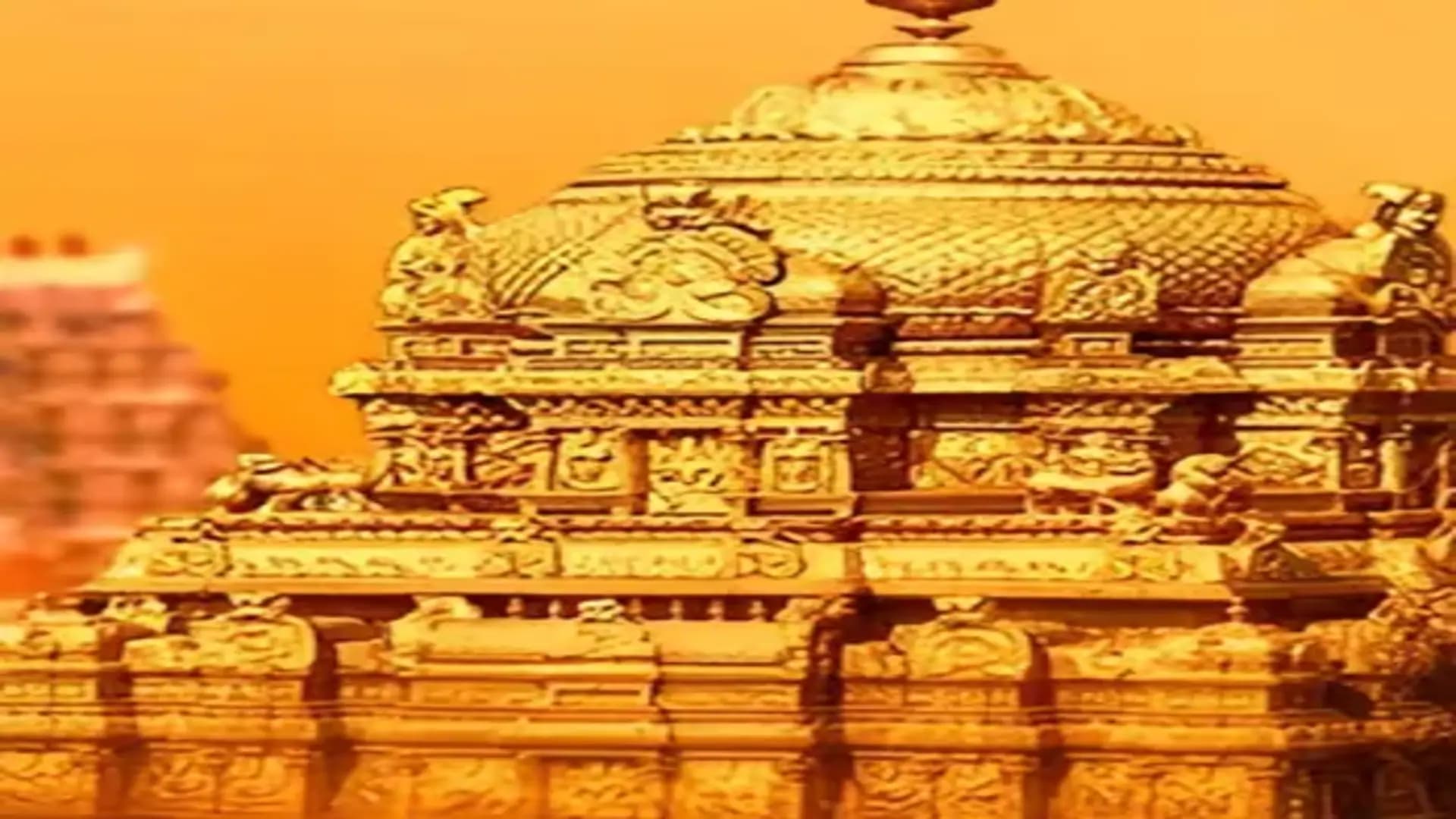
The Divine Temple: The temple of Seven Divine Hills, located at an altitude of 3200 feet above sea level, is one of the eight in India where Lord Vishnu resides in a self-manifested form. Known as Tirumala, this site is situated in the Chittoor district of Andhra Pradesh, India. It is the shrine of Lord Venkateswara Swamy, who is revered as a granter of wishes to all his followers. This temple is an essential part of South India Pilgrimage packages, even for those who have not planned it in their itinerary.
Tirumala is home to the magnificent self-manifested (Swayam Vyaktha) Lord Venkteswara, standing over nine feet tall. It is recognised as the 106th Divya Desam in the Vaishnava tradition, as mentioned in the Naalayira Divya Prabhandham, a sacred text penned by various saints between the 6th and 8th centuries AD and compiled by Saint Naadha Muni. All the saints of Sri Vaishnavism, known as Alwars, have celebrated the glory of this sacred site and the deity it houses. Interestingly, daily visitors range from 50,000 to 100,000, amounting to 30 to 40 million annually, making it the world's most frequented holy site. During festivals, visitor numbers can soar to 500,000. Additionally, the temple’s collection boxes make it the richest in the world in terms of donation revenue.
Legend:
The temple’s age is indeterminable, having outlasted numerous dynasties. All the kings who have ruled here were devout worshippers of Lord Venkateswara and enriched the temple through their generous endowments. Just north of the temple lies a geological marvel known as "Silotharanam," a natural rock arch, which research indicates may date back to the Proterozoic Era within the Precambrian period. This connection suggests the ancient origins of this site, which, philosophically, is part of Mount Meru, with Lord Venkateswara believed to protect the Earth from the evils of Kaliyuga.
Architecture of the Tirumala Venkateswara Temple
The architecture of this temple is in the Dravidian style, and it is believed that construction began around 300 AD. The journey to this majestic temple starts from Alipiri at the base of Tirumala. While a well-maintained road allows vehicle access to the summit, many devotees choose to ascend the 3550 steps, covering 11 kilometres under a covered walkway. An alternative route, starting from Srivari Mettu, includes 2400 steps leading directly to the temple entrance.
Dwarams (Courtyards):
Upon entering, visitors are welcomed by the outer courtyard featuring a fifty-foot, five-story tower adorned with seven pinnacles. The Silver Entrance leads to the Sampangi Prakaram, and the inner courtyard houses a three-story tower topped with seven pinnacles. The Golden Entrance guides worshippers to the Sanctum Sanctorum (Garbha Griha), where the deity resides. Over the sanctum, a three-story tower features a solitary pinnacle. The entrance is guarded by two tall copper idols of Jaya and Vijaya, the Dwarapalakas (door guardians), and a thick wooden door decorated with golden plates depicting the ten incarnations (Dasavatharams) of Lord Vishnu.
Located in a region where Telugu is predominantly spoken, the deity is affectionately known as Dhruva Beram. A silver miniaturised deity, referred to as Bhoga Srinivasa, receives all the rituals intended for the main deity. This idol is ceremoniously rocked in a silver cradle and laid in a golden cot every night. It remains within the sanctum, connected to the primary deity by a gold string, and angled at 45 degrees to allow devotees a better view. This arrangement includes the Prayoga Chakra, symbolising readiness to combat evil. Additionally, the temple hosts a processional deity, Malayappa Swamy, used during festivals.
Followed by exiting the Sanctum, it is customary to circumambulate, beginning with the Sampangi prakaram, where prasadam (holy offering) is distributed. The adjacent Vimana Pradakshinam includes several minor shrines dedicated to deities such as Varadharaja, Yoga Narasimha, and Visvaksena, with the main kitchen operating within this section.
Temple Rituals:
The temple practices Vaikhanasa Agama traditions with rituals ongoing from 2:30 AM to 1:00 AM. Daily rituals start with Suprabhata Seva, followed by various other services including Thomala Seva, Archana, and Kalyanotsavam. Additionally, weekly and special rituals are observed, aligning with religious customs. Detailed information on temple services, accommodation bookings, and other facilities is available on the temple's official website, www.tirumala.org.
Temple Practices:
The calendar at Tirumala Tirupati is marked with 433 festivals per year. Key festivals include Srivaari Brahmothsavam and Vasanthotsavam, attracting hundreds of thousands of devotees. Temple practices include the distribution of prasadam and other offerings such as the famed Tirupathi Laddu, prepared daily in large quantities in a state-of-the-art kitchen. The ingredients undergo rigorous testing to ensure quality. The temple also provides free meals to over 100,000 devotees daily.
Devotees often participate in Tonsuring, a ritual shaving of the head, as a gesture of gratitude for fulfilled prayers. The collected hair is auctioned internationally for use in hair extensions and cosmetics, generating significant revenue.
Hundi:
Contributions from devotees to visit Tirupati:
Venkateswara Museum showcases ancient weaponry, pooja items, and idols alongside a photo gallery and meditation centre.
Silathoranam is a natural rock arch with geological significance dating back to the Precambrian Era.
Srivari Paadamulu, footprints believed to belong to Lord Venkateswara.
Papavinasanam, a sacred water body.
A temple dedicated to Goddess Ganga.
Akaasa Ganga, a picturesque natural waterfall.
How to Reach Tirumala Venkateswara Temple
- Road: Tirupati is 23 kilometres from Alipiri. Free buses are available for easier access within the area.
- Train: The main hub, Tirupati Main Railway Station, is 26 kilometres away, with frequent connections to major cities.
- Airport: Tirupathi Airport, located 40 kilometres away, offers domestic flights. The nearest international airport is in Chennai, 162 kilometres away, accessible by road and rail.


 English
 Chinese (Simplified)
 Dutch
Dutch French
 German
 Hebrew
 Italian
 Portuguese (Brazil)
 Russian
 Spanish
 Arabic