
- +91 431 4226100
 English
 Chinese (Simplified)
 Dutch
Dutch French
 German
 Hebrew
 Italian
 Portuguese (Brazil)
 Russian
 Spanish
EnglishChinese (Simplified)DutchFrenchGermanHebrewItalianPortuguese (Brazil)RussianSpanishPublished on: May 27, 2024
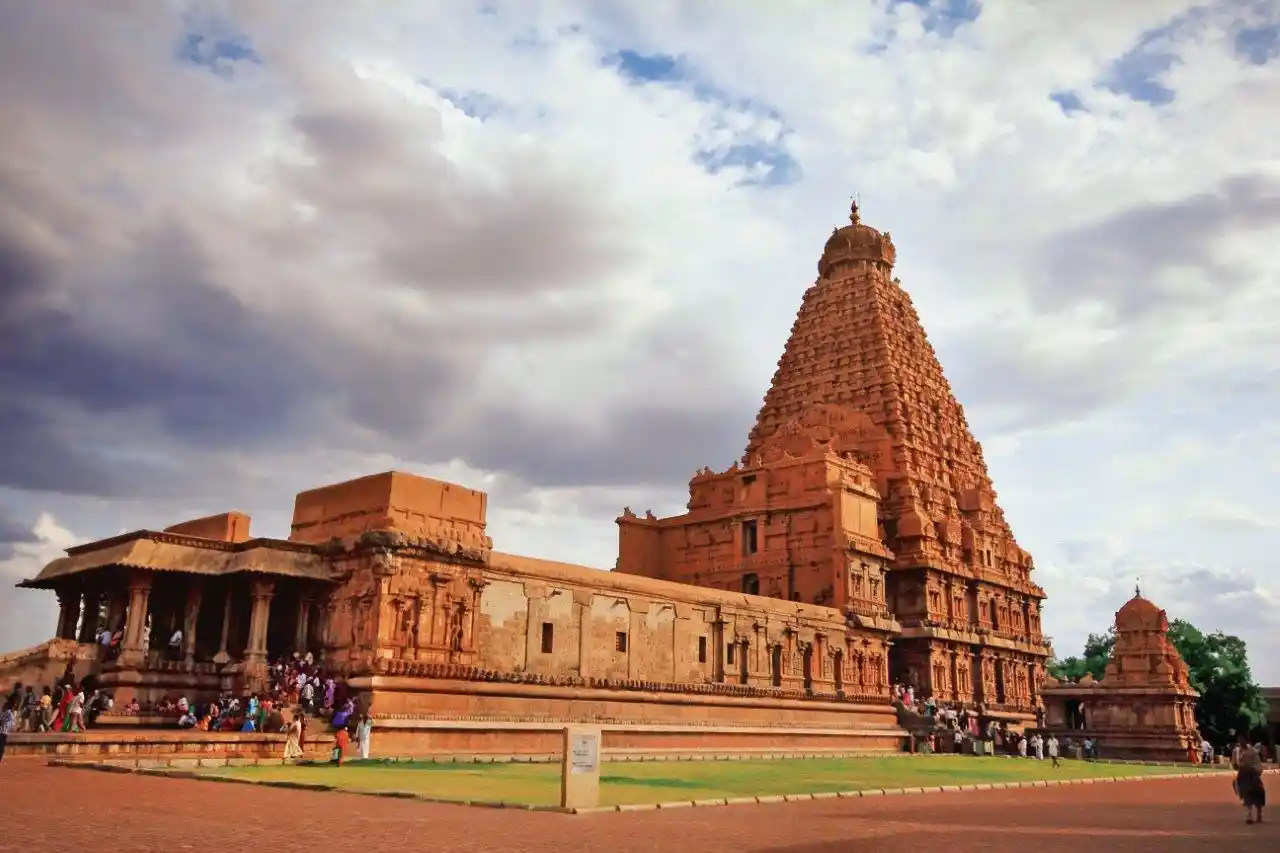
Thanjavur, originally Tanjore, is a major religious, artistic, and cultural centre in South India. It is home to most of the Great Living Chola Temples and India's finest examples of Chola architecture, which are included as UNESCO World Heritage Monuments. Thanjavur is one of the state's most scenic districts and is also called Tamil Nadu's 'Rice Bowl'. In the ninth century, Chola governed the entire Southeast Asia only from here. So, this city is historically important and culturally significant. Tanjore’s Big Temple is a stunning monument built by Raja Raja Cholan, the greatest king of the Chola Dynasty. The temple’s engineering and architecture will be acknowledged as a world marvel and undeniably, this needs to go into the list of wonders of the world as an eighth wonder.
We are delighted to share such wonderful city information with other prominent cities, such as Trichy and Thiruvaiyaru.
Tanjore
Tanjore (Thanjavur in Tamil), is a well-deserved name for the city. It has exquisite temples, particularly those of the Chola period (9th-11th century). The Brihadeeswara Temple, a UNESCO World Heritage Site, is out for its high vimana (dome) and elaborate carvings. Tanjore was the early capital of the Chola dynasty, a formidable kingdom that ruled from the ninth to the eleventh centuries. This era produced a legacy of spectacular temples and artistic practices. Tanjore paintings are well-known for their vibrant colours, gold leaf decorations, and Hindu deities and mythology portrayals. Beyond its cultural significance, Thanjavur is a major agricultural centre. Nestled in the lush Kaveri Delta, the city is a significant rice grower, garnering the signature name "Rice Bowl of Tamil Nadu." The surrounding scenery is a patchwork of rich green fields highlighting the city's agricultural expertise. The region is a major agricultural producer, including rice, sugarcane, and bananas. The city holds great historical significance for its excellent handicrafts, bronzes, handlooms, silk and cotton sarees, and South Indian musical instruments. The Maratha Empire governed the city for about two centuries, leaving an indelible mark on its architecture, food, and cultural traditions.
The best time to visit Tanjore is during the winter, from December to February. This is the peak season for visiting Tanjore, with excellent weather and temperatures ranging from 21°C to 31°C.
How to reach Tanjore:
By Flight: The nearest airport to Tanjore is Tiruchirappalli International Airport (Trichy Airport), located about 60 kilometres away, has regular flight connectivity to major cities in India, including Chennai, Bangalore, Delhi, Hyderabad and Mumbai and also has connections to some international destinations, such as Singapore, Kuala Lumpur, Dubai and Colombo. The second nearest airport is Madurai Airport which is 190 km away.
By Train: Tanjore has its railway station (TJ). It is a well-connected station with trains to major cities across India, including Chennai, Trichy, Madurai, Bangalore, and Delhi.
By Road: Thanjavur is well-connected by road to other cities in Tamil Nadu and neighbouring states. National highways NH 45 and NH 81 pass through Thanjavur.
Major Attractions in Tanjore:
Brihadeeshwarar Temple:
Timings: 06.00 AM to 12.30 PM & from 04.00 PM to 08.30 PM.
The Brihadeeshwarar Temple, popularly known as the Periya Kovil (Big Temple) or Raja Rajeswara Temple, is a stunning landmark in Tanjore. It is an architectural masterpiece and a UNESCO World Heritage Site. King Raja Raja Chola, I erected the temple in 1010 CE. The temple represents the Chola dynasty's dominance and wealth during their reign. The elaborate carvings and sculptures on the temple walls depict scenes from mythology, Chola army operations, and daily life during that period, providing vital historical insights.
The Architectural Grandeur is remarkable for its tall vimana (dome), which is 59.8 meters (196 feet) high. For centuries, it was South India's highest structure. The elaborate sculptures on the temple walls depict events from mythology, Chola dynasty army campaigns, and everyday life, offering a glimpse into the past. The huge temple complex is made up of multiple halls, courtyards, and shrines, each with architectural features that showcase Dravidian architecture. The temple is dedicated to Lord Shiva and is considered an important pilgrimage spot for Hindus, particularly Saivites. The temple houses a massive lingam, the symbolic image of Shiva, which is self-manifested (Svayambhu) and the world’s second-largest.
Throughout the year, worshipers come to the temple for various religious festivals and rites. The Brihadeeshwarar Temple is a famous symbol of Tamil culture and history. The temple complex has inscriptions that provide valuable information on the Chola government, social life, and economic structure during that time. The temple's architectural and artistic styles influenced temple design throughout South India. The temple complex is well-known for its exquisite bronze statues depicting various deities and legendary figures. The statues of nartakis, or dancers, depicting eighty-one hundred and eight karanas in Bharatanatyam (Karana is a Sanskrit verbal noun, meaning "doing") make this area a "UNESCO World Heritage Site." As a result, it falls under the "Great Living Chola Temples" category.
Tanjore Palace:
Timings: 0900Hrs to 1300Hrs and 1500Hrs to 1800Hrs
Entrance: Foreigners Adult – Rs.200 Children – Rs.70 (Child age – 7 to 12 years old) & For Indians Adult – Rs.60, Child – Rs.20 (It includes Saraswathy Mahal Library, Archaeology Monuments, Art Gallery)
Camera – Indian Rs.50, Foreigner – Rs.100
Video Camera – Indian – Rs.150, Foreigner – Rs.200
Holidays: Government Holidays & Art Gallery closed for Local Holidays also
The Tanjore Palace, also known as Maratha Palace, is a complex that served as the residence of the Maratha rulers in Thanjavur. It is 1 Km away from the big temple and was originally built by the Nayaka dynasty in the 16th century as the Sivaganga Fort, the Thanjavur Palace was expanded and renovated by the Maratha rulers who captured the region in the 17th century. The Marathas ruled Thanjavur from 1674 to 1855 and made the palace their administrative centre and residence. It is a blend of architectural styles, reflecting the influence of the Nayakas and the Marathas. The complex is vast, encompassing courtyards, halls, corridors, audience chambers, and a watchtower. The architecture showcases high walls and gateways for security purposes, remnants from the fort's original structure & also its’ stuccowork (decorative plaster) and frescoes (wall paintings) depicting scenes from mythology and history. While some areas are in ruins, others have been restored and offer a glimpse into the royal life of the Maratha era. The Thanjavur Palace is a historical landmark that stands as a testament to the Maratha dynasty's rule in the region. The complex is vast and can be broadly divided into various sections like follows: Public Darbar Grand halls were used by the rulers for public audiences and ceremonies. Private Quarters areas were the living spaces of the royal family & access to these might be restricted. The Armoury section might house a collection of weapons used by the royal forces. The temple complex includes the royal family's private temples, often dedicated to Hindu deities. There might be courtyards, gardens, and other functional areas within the complex. A portion of the Thanjavur Palace complex is open to the public as a museum, while other sections are still the official residence of the Maratha royal family descendants. Now inside the palace, King Saroboji Saraswathi Mahal Library, Art Gallery and Sangeetha Mahal are situated.
Saraswathi Mahal Library:
Timings: 10.00 AM to 01.00 PM & from 01.30 PM to 05.30 PM.
No Entrance
Camera and Video cameras are not allowed.
Holidays: Government Holidays
The Saraswathi Mahal Library is located within the Thanjavur Palace complex, near the East Gate. It is also known as Thanjavur Maharaja Serfoji's Saraswathi Mahal Library, and it is a treasure trove of information and a bookworm's delight. The Nayaka monarchs of Thanjavur built it as a royal library in the 16th century, and the Maratha rulers, particularly Serfoji II, a renowned scholar (1798-1832), extended it much more. Today, the Saraswathi Mahal Library is one of Asia's oldest and greatest libraries, housing a vast collection of palm-leaf manuscripts, paper books, and historical records. The library's most prized possession is its collection of over 60,000 palm-leaf manuscripts, some of which date back centuries. These manuscripts cover a wide variety of subjects, including religion, philosophy, literature, science, and medicine. The library also houses manuscripts in several languages, including Tamil, Sanskrit, Telugu, Marathi, and English. Inscriptions, manuscripts, and maps are all important historical records that shed light on the region's past. The library is housed in a beautiful hall with high ceilings and spacious reading areas. The structure combines a range of architectural styles, possibly influenced by the Nayaka and Maratha periods.
Art Gallery:
Timings: 10.00 AM to 01.00 PM & from 01.30 PM to 05.30 PM.
No Entrance
Camera and Video cameras are not allowed.
Holidays: Government Holidays
The art gallery at the Thanjavur Palace complex is officially known as the Raja Raja Chola Art Gallery, but it is popularly known locally as Thanjavur Kalaikoodam. The gallery's collection of sculptures, paintings, and artifacts focuses on South India's creative legacy, particularly the Chola dynasty (9th-13th century AD) and the Nayaka period (16th-17th centuries AD). A valuable collection of bronze sculptures shows Hindu deities, mythological figures, and historical figures. These exquisite works demonstrate the extraordinary metalworking abilities of South Indian craftspeople. The gallery also displays a collection of stone sculptures and relics from various eras. The gallery may possibly feature some Tanjore paintings, which are notable for their brilliant colors, complex gold leaf work, and portrayals of religious and mythological themes. The Raja Raja Chola Art Gallery is in the Nayaka Durbar Hall of the Thanjavur Palace Complex. This hall is a beautiful structure, with paintings and sculptures covering the upper walls and ceiling. The Thanjavur Palace Museum complex features an art gallery that is open to the public. The Raja Raja Chola Art Gallery offers a unique opportunity to appreciate South India's artistic tradition. The Thanjavur Palace Museum Complex includes the art gallery, which is open to the public. The bronze statues are the main attraction, as they represent the region's religious beliefs, mythology, and craftsmanship throughout history. Depending on the gallery's structure, you may view a variety of art forms, including Chola era bronzes, Nayaka period woodwork, and classical South Indian musical instruments.
Schwartz Church:
Entrance fee: No.
Timings: from Morning to Evening.
Camera &Video: Not allowed.
The Schwartz Church, also known as the Christ Church or the Danish Missionary Church, is a historical Protestant church situated near the Tanjore Palace. Rajah Serfoji, Thanjavur's Maratha monarch, built it in 1779 to honour Danish missionary Reverend Christian Friedrich Schwartz. Schwartz was instrumental in implementing educational and social reforms in Thanjavur during the 18th century. The church is a monument to the cultural and religious exchange that occurred between Tamil Nadu and Denmark during the colonial period. The church is designed in a simple but elegant manner, with a white front and lofty minarets. It combines European and South Indian architectural influences. The church's interior boasts stunning stained-glass windows, elaborate woodwork, and ornate ornamentation. There's a sculpture of Reverend Schwartz on his deathbed, with King Serfoji II and another missionary beside him. The church is an active Protestant church with regular services.
Punnai Nallur Mariamman Temple:
Timings: 09.00 AM to 09.00 PM
Entrance fee: No
Punnai Nallur Mariamman Temple is a Hindu temple in Punnai Nallur village, approximately 7 kilometers east of Thanjavur's city center. According to mythology, the temple was established in the 17th century by Maratha king Venkoji Maharaja Chatrapati after he had a dream about Goddess Mariamman in the Punnai woodland. The temple honors the goddess Mariamman, a protective deity who is said to fend off evil and illness. The temple's reigning deity is reported to appear as a white anthill housing Goddess Mariamman. Mariamman is known for her capacity to heal ailments and bring excellent health. The temple's unique feature is the display of mud models of body parts. Devotees bring these mud sculptures to the goddesses for healing. The Punnai Nallur Mariamman Temple, while not as grand as other Thanjavur temples, has its own unique charm and spiritual significance. The temple has various events throughout the year, the most important of which is the Mariamman Fire Walk.
Other activities possible in Tanjore:
Bronze Factory: Thanjavur is known as one of India's leading bronze casting centers. Thanjavur has a centuries-old bronze casting heritage, and the city is well-known for its superb bronze sculptures. Many tiny, family-owned workshops in Thanjavur specialize in bronze casting. These workshops provide an excellent opportunity to witness the traditional procedure firsthand and observe the craftsmen' skills. Guests can observe just bronze castings and the entire process of creating an idol.
Tanjore Painting: Tanjore is the cradle of the unique and captivating art form called Tanjore painting. These paintings were traditionally created for temples and royal courts, depicting religious themes and portraits of deities, royalty, and scholars. Tanjore paintings are known for their use of rich and vibrant colours, often including gold leaf embellishments. The paintings feature intricate details, decorative borders, and rich use of gold leaf, creating a visually opulent effect. Traditionally, natural pigments derived from minerals, vegetables, and gemstones were used, adding a unique depth and vibrancy to the colours. The guest can explore private art galleries scattered around the city, which might showcase and sell a wider variety of Tanjore paintings by contemporary artists.
The place where, the musical instrument Veena is made: The art of Veena making in Thanjavur is a fascinating and centuries-old legacy. Veena making is a laborious procedure that has been passed down through generations of families. These expert artists, known as 'Veenai aadalar' (Veena makers), have a thorough understanding of wood selection, carving skills, and the complex assembly procedure. Unlike huge factories, veena production is generally done in family-run enterprises distributed around Thanjavur. These workshops could be located on the south main street or near the temple.
The place where Tanjore dolls are made: The Tanjore doll, also known as Thanjavur Thalaiyatti Bommai, is a unique type of traditional Indian bobblehead or roly-poly toy made of clay. These dolls are notable for their bright colors, detailed decorations, and unique weighted design, which allows them to wobble or oscillate when gently touched. Doll-making units are located 7 kilometers from Tanjore, near the Punnai Nallur Mariamman Temple.
Major festivals celebrated in Tanjore:
Natyanjali Dance Festival (February-March): This five-day festival is a celebration of Indian classical dance forms, especially Bharatanatyam held in honour of Lord Shiva, the cosmic dancer. It is held during the festival of Maha Shivaratri in honour of Lord Shiva, the cosmic dancer. The majestic Brihadeeswara Temple serves as a stunning backdrop for the performances by talented dancers from all over India.
Pongal (January): Pongal is a harvest festival celebrated throughout Tamil Nadu. In Thanjavur, the festival is marked by colourful decorations, traditional music and dance performances, and special offerings made to the Sun god. It is a four-day festival that marks the beginning of the Tamil month of Thai. During Pongal, people express their gratitude to the Sun god for a bountiful harvest. The festival is marked by preparing sweet rice dishes, decorating homes with mango leaves, Kolam (rangoli). Bullock cart races are also conducted as part of this festival. This festival is celebrated on 14th January 2025.
Raja Raja Cholan Sadhaya Vizha ("Raja Raja Chozhan I Star Birth Festival"): It is a festival celebrated in Thanjavur to commemorate the birthday of Raja Raja Chozhan I, the great Chola emperor - who ruled the Chola empire from 985 to 1014 AD. He is considered as one of the greatest emperors in Indian history and is known for his military conquests, administrative reforms, and contributions to art and architecture. Sadhaya refers to the star constellation "Sathayam" in Tamil, which corresponds roughly to the "Rohini" nakshatra in Vedic astrology. Vizha translates to festival in Tamil. It is a two-day festival typically held in October or November, coinciding with the Tamil month of Aippasi and the star constellation Sathayam. The festival is celebrated with great enthusiasm in Thanjavur, particularly around the magnificent Brihadeeshwarar Temple, which was built by Raja Raja Chozhan I. Since 2022, the Tamil Nadu government has declared Raja Raja Cholan Sadhaya Vizha an official state festival. This year it is to be celebrated on 09th & 10th November 2024.
Hotels Located in Tichy:
|
Hotel Names |
Category |
Website Link |
|
Courtyard by Mariott |
Luxury (5*) |
https://www.marriott.com/en-us/hotels/trzcy-courtyard-tiruchirappalli |
|
Blossom |
Luxury (5*) |
|
|
SRM Hotel |
Deluxe (4*) |
|
|
Vivid a Boutique |
Standard (3*) |
|
|
Maya Residency |
Standard (3*) |
- |
|
Redfox |
Standard (3*) |
https://www.lemontreehotels.com/red-fox-hotel/tiruchirappalli/hotels-tiruchirappalli |
|
Breeze Residency |
Budget |
|
|
Highpoint |
Budget |
|
|
Grand Gardenia |
Budget |
|
|
Oxina Lygon |
Budget |
Local Restaurants in Trichy:
Continental Restaurants:
South Indian Restaurants:
Vegetarian Restaurant: