Visiting a place like Andhra Pradesh, which is naturally, ecologically, culturally and religiously significant, is a great idea to enrich your travel experience. Nicknamed the 'Kohinoor of India', Andhra Pradesh fascinates you with its rich culture, glorious history, mesmerising beauty and amazing architecture. The misty hill stations, tranquil beaches, national parks, sanctuaries, sparkling rivers, milky-white waterfalls, magnificent palaces, monuments, memorials, tombs, etc., are captivating aspects that make Andhra Pradesh a great place to visit.
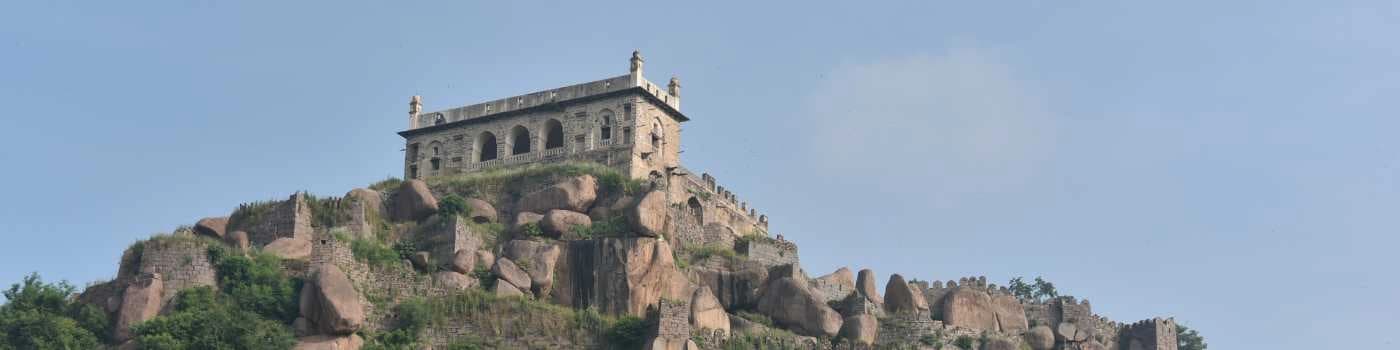
The State of Andhra Pradesh is home to many historically significant monuments. The Golconda Fort is one such monument that adds to the state's pride. It is situated in Hyderabad, the capital of Andhra Pradesh.
It takes one back to the 12th century AD when it was first constructed by the Kakatiya dynasty. The Golconda Fort has witnessed the rise and fall of various dynasties, from the Kakatiyas to the Munusuri Nayaks, the Bahamani Sultans, and then the Qutub Shahi dynasty.
Golconda Fort is an absolute retreat for history buffs and architecture enthusiasts who crave visiting such places. The Fort's incredible acoustic effects are truly surprising.
The sturdy gateways, colossal mud walls, cannons, drawbridges, temples, mosques, and the royal palaces within the Fort showcase the outstanding craftsmanship of the bygone era.
The evening light-and-sound show is the major highlight, offering insight into the amazing history of Golconda.
Major Attractions - Golconda Fort
Golconda Fort is full of unique attractions which are breathtaking to gaze at.
The main gate to the Golconda Fort, known as the Fateh Darwaza or the Victory Gate, forms the first attraction, which was built to keep alive the memory of the victorious march of Mughal Emperor Aurangzeb.
The Nawabi style Bala Hissar Darwaza is the other gate of Golconda Fort, which was used to inform the residents of the fort about the danger through clapping hands, which could be heard at the top of the fort.
Ibrahim Quli Qutub Shah Mosque, Taramati Mosque, Sri Jagdamba Mahakali Temple, Rama Temple, and Yellamma Devi Temple are the other attractions of Golconda Fort. You can also find the ruins of the royal palaces inside this Fort.
Golconda Fort houses an 800-year-old tree.
The secret underground passage that opens to the "Durbar Hall" and ends in one of the palaces at the foothill, the narrow entry gate of the Fort, and the cannon placed at the entrance of the fort to pour hot oil on enemies show how the Fort protects itself from the enemy's attack.
The brilliant brains behind the water tank mechanism of the Fort, which was used to cool the hot winds during summer need great applause.
Speciality - Golconda Fort
The word Golconda is derived from the Telugu word "Golla Konda", meaning "Shepherd's Hills".
The acoustics are the major speciality of the Golconda Fort. That means if you clap your hands at Fateh Darwaza, its sound can be heard clearly at ‘Bala Hissar’, which is the highest point situated about 1 km away from Golconda Fort.
Golconda Fort was built by the ruler of the Kakatiya dynasty and is made up of mud.
Golconda Fort served as an important centre for the flourishing diamond trade, including the world-famous Koh-i-Noor, the Hope Diamond, the Nassak Diamond, and the Noor-ul-Ain.
Best Time To Visit Golconda Fort
October to March.
How to Reach Golconda Fort?
- By Air : Rajiv Gandhi International Airport, Hyderabad, is the nearest airport to Golconda Fort, located 26.3 km away.
- By Rail : Hyderabad Railway Station is the nearest railway station to Golconda Fort, located 10.2 km away.
- By Road - Golconda Bus Station is the nearest bus station to Golconda Fort, located just 130 meters away.


 English
 Chinese (Simplified)
 Dutch
Dutch French
 German
 Hebrew
 Italian
 Portuguese (Brazil)
 Russian
 Spanish
 Arabic