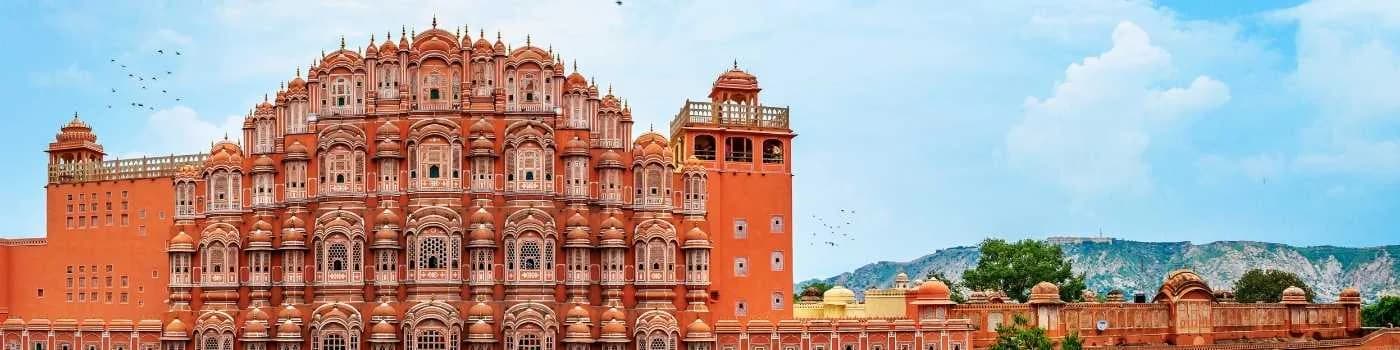
Rising like a delicate screen of carved stone in the heart of Jaipur, the Hawa Mahal is one of those rare monuments that feel both grand and intimate at once. At first glance, it appears almost like a piece of jewellery set against the bustle of the old city, symmetrical, ornate, and quietly mesmerising.
This five-storey structure, built in 1799 by Maharaja Sawai Pratap Singh, was never meant to be a conventional palace. Instead, it functioned as a viewing gallery for the royal women, who lived under strict purdah and were not permitted to appear in public. From behind its intricate lattice windows, they could observe daily life, festivals, and processions unfolding in the streets below, completely unseen.
What truly sets Hawa Mahal apart is its remarkable façade. Designed by Lal Chand Ustad, the building resembles a honeycomb, made up of 953 small windows, or jharokhas. These tiny openings were decorative. In addition; they allowed cool air to circulate freely through the structure, creating a natural ventilation system that made the interior surprisingly comfortable, even during Jaipur’s intense summers.
Constructed from red and pink sandstone, the palace reflects a graceful blend of Rajput and Mughal architectural styles. Its pyramidal shape and delicate detailing give it a light, almost airy presence, despite its height. Interestingly, while the exterior is richly adorned, the interiors are relatively simple, with narrow corridors and chambers leading to small courtyards and terraces.
Today, Hawa Mahal stands as more than just an architectural wonder. It showcases a slice of royal life. Whether you watch it from the street or get inside it to explore its quiet passages, the experience you will get will be timeless.
Visitor Information
Visiting Hours: Open daily from 9 AM to 5 PM.
Hawa Mahal is centrally located in the old city of Jaipur. It is easy to reach by local transport, taxis, or even on foot if you’re exploring nearby markets. The palace is typically open from around 9:00 AM to 5:00 PM. However, it is wise to arrive early to avoid crowds.
There is a modest entry fee for visitors, with separate pricing for domestic and international tourists. Once inside, be prepared for a bit of climbing, there are ramps rather than traditional stairs, making the ascent gentler but still slightly tiring. Comfortable footwear is recommended.
Photography is allowed and highly rewarding, especially from the upper levels, where you can take in sweeping views of Jaipur’s busy streets. The best time to visit is between October and March, when the weather is pleasant and ideal for sightseeing.


 English
 Chinese (Simplified)
 Dutch
Dutch French
 German
 Hebrew
 Italian
 Portuguese (Brazil)
 Russian
 Spanish
 Arabic