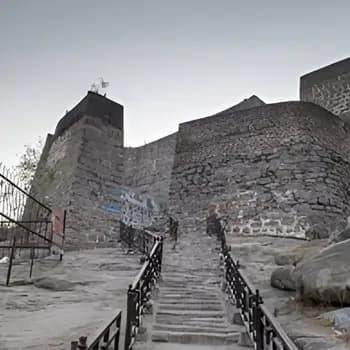
Constructed by the esteemed Kakatiya rulers, Khammam Fort has stood as a proud emblem of both Andhra Pradesh and Telangana for centuries. Initially built in the 9th century, the fort has undergone numerous enhancements by various rulers, culminating in the renovations carried out by the Qutub Shahi Kings in the 15th century.
The picturesque town of Singareni, located in Khammam district along the banks of the Munneru River, a tributary of the mighty Krishna River, is notable for its coal reserves, which serve as a vital energy source for the entire Telangana region.
Perched quietly above the bustle of modern Khammam, the fort offers far more than a glimpse into the past; it feels like stepping into a living chronicle. As you make your way up the winding paths, the air grows calmer, carrying with it echoes of a time when the fort stood as a vigilant guardian over the region.
The weathered stone walls, though aged, still hold a quiet strength, reflecting centuries of resilience and adaptation under different dynasties. From the summit, the sweeping views of the surrounding landscape, dotted with greenery and the gentle flow of the Munneru River, create a striking contrast between nature and artificial might.
What makes Khammam Fort particularly captivating is not just its scale, but the subtle details: the way sunlight filters through its arches, the silence of its corridors, and the sense of stories waiting to be discovered at every turn. Whether you are a history enthusiast or a curious traveller, the fort invites you to slow down, take it all in, and imagine the lives once lived within its formidable walls.
Highlights of the Khammam Fort
- Sprawling over 4 square miles atop a granite hill, Khammam Fort was built as a stronghold to protect the city from invaders.
- Capable of mounting over 60 cannons simultaneously, the fort boasts a large number of windows and balconies.
- The Mughal-era water management system within the fort remains a testament to historical engineering prowess.
- With at least 15 bastions, the fort was strategically poised to fend off enemies.
- The prominently visible stone structure, Nethi Bhavi, is visible from anywhere in the city.
- The fort is rumored to have concealed tunnels linking it to Warangal Fort, providing emergency escape routes for the royalty during wars or invasions.
- Make sure to visit Khammam Fort, a historic edifice that eloquently narrates the saga of Telangana's glory.
Don't forget to visit this historic structure, Khammam fort, which speaks volumes about the glories of Telangana.


 English
 Chinese (Simplified)
 Dutch
Dutch French
 German
 Hebrew
 Italian
 Portuguese (Brazil)
 Russian
 Spanish
 Arabic