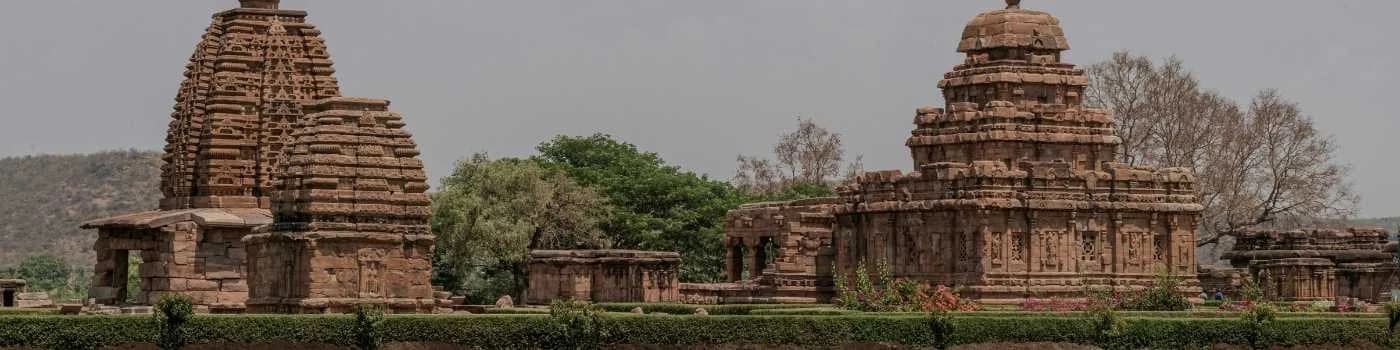
Pattadakal is set along the banks of the Malaprabha River in northern Karnataka. This historic town stands as one of India's best examples of early temple architecture. Once an important ceremonial centre of the Badami Chalukya dynasty, the site beautifully reflects the artistic brilliance and engineering skills of artisans who lived more than 1,500 years ago. Today, travellers visit Pattadakal not only for its architectural heritage but also for the peaceful atmosphere that surrounds its ancient monuments.
Between the 7th and 9th centuries, Pattadakal served as the site of the Chalukyan rulers' coronations. Because of this royal connection, the town earned the poetic title "City of Crown Rubies." The temples built here were designed to celebrate power, devotion, and artistic excellence. Walking through the complex today feels like stepping into a living museum, where every pillar, sculpture, and stone carving tells a story from a distant past.
UNESCO recognises the entire complex as the Group of Monuments at Pattadakal, a prestigious World Heritage Site admired by historians, architects, and travellers from across the globe. What makes Pattadakal particularly fascinating is its rare blend of architectural traditions. Builders experimented with both the northern Nagara and southern Dravidian temple styles, creating a harmonious fusion that later influenced temple construction throughout the Indian subcontinent.
Among the ten main temples at the site, the Virupaksha Temple is often considered the highlight. Built in the 8th century, it showcases remarkably detailed carvings depicting scenes from Hindu epics such as the Ramayana and the Mahabharata. Nearby, the Mallikarjuna Temple and the elegant Papanatha Temple demonstrate the creative experimentation that defined Chalukyan architecture. Alongside these nine Hindu temples stands a Jain sanctuary, reflecting the religious diversity that flourished during the later years of the Chalukyan rule.
Beyond the monuments themselves, Pattadakal offers visitors a sense of calm that is increasingly rare at major heritage sites. Early mornings are particularly magical when the rising sun casts a golden glow on the sandstone temples, and the quiet surroundings allow travellers to appreciate the artistry carved into every surface fully.
How to Reach Pattadakal?
- By Air: The nearest international airport is in Bangalore, 449 km away. Prepaid taxis are readily available for the journey to Pattadakal.
- By Train: Badami, 20 km from Pattadakal, is the nearest railway station and well linked to major regions across the state.
- By Road: Cities like Bijapur, Hubli, and Belgaum are well connected to Pattadakal, with an excellent road network that facilitates convenient travel.


 English
 Chinese (Simplified)
 Dutch
Dutch French
 German
 Hebrew
 Italian
 Portuguese (Brazil)
 Russian
 Spanish
 Arabic