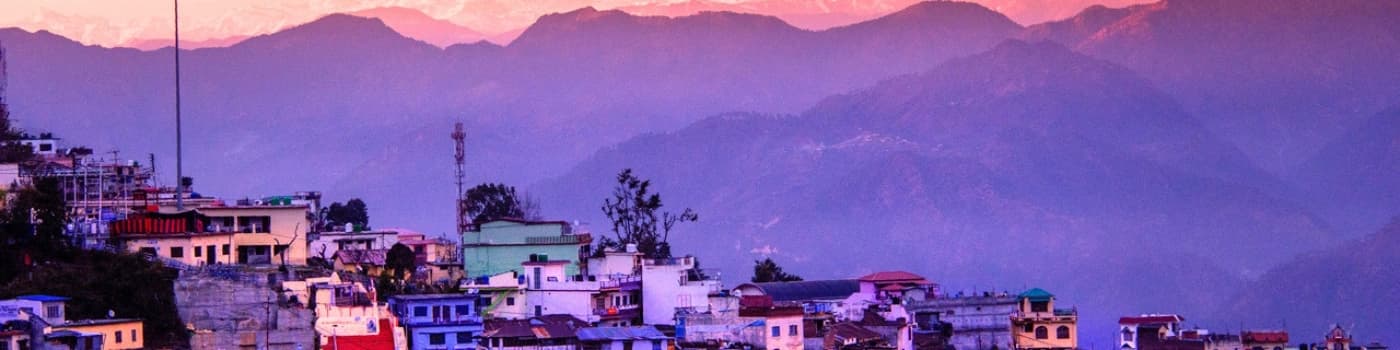
Pauri is a picturesque hill town in the Garhwal region of Uttarakhand, serving as the headquarters of Pauri Garhwal district. Situated at an elevation of around 1,800 metres above sea level, the town is known for its mountain scenery, forested slopes and sweeping views of the Himalayan ranges on clear days. Its peaceful surroundings and relatively relaxed pace of life make it distinct from the busier tourist centres of the state.
Pauri has a strong connection with the history and cultural traditions of Garhwal. The wider region is home to ancient temples, traditional settlements and pilgrimage routes that have shaped local life over generations. Kandoliya Temple, dedicated to Lord Shiva, is among the town’s notable religious sites, while the nearby Laxman Jhula area and other regional landmarks connect visitors with the spiritual heritage of the Garhwal hills.
The natural landscape is one of Pauri’s defining features. Deodar and pine forests cover the surrounding hills, and viewpoints around the town offer impressive panoramas of the Himalayan peaks when the skies are clear. Chaukhamba and other prominent mountain ranges may be visible from suitable vantage points. The changing scenery through spring, monsoon and winter gives the area a different character in each season.
Pauri also provides access to several attractions across the Garhwal region, including the temple town of Devprayag, where the Alaknanda and Bhagirathi rivers meet to form the Ganga, and the historic village of Khirsu, known for its wooded surroundings and mountain views. With its blend of local culture, religious heritage and Himalayan scenery, Pauri offers a quieter introduction to the landscapes and traditions of Uttarakhand.
Places to Visit in Pauri
- Kandoliya Temple: Located on Kandoliya Hill, this temple is dedicated to Kandoliya Devta, a revered local deity associated with Lord Shiva. Surrounded by oak and pine trees, the temple is an important place of worship for the local community. The nearby park and elevated location offer views across Pauri town and the Gangwarsyun Valley, making this area suitable for both spiritual visits and relaxed outdoor walks.
- Kyunkaleshwar Mahadev Temple: Kyunkaleshwar Mahadev Temple is an ancient Shiva shrine situated on the outskirts of Pauri. The temple complex houses deities including Lord Shiva, Goddess Parvati, Lord Ganesha and Lord Kartikeya. Its traditional architecture and peaceful surroundings reflect the religious heritage of the Garhwal region. The elevated setting also provides views of the Alaknanda Valley and the Himalayan ranges on clear days.
- Nagdev Temple: Dedicated to the serpent deity Nag Devta, Nagdev Temple stands amid a forested area along the Pauri–Bubakhal road. The approach passes through pine and rhododendron vegetation, adding a nature-walk element to the visit. A viewpoint along the route offers expansive views of the surrounding mountain ranges when weather conditions are favourable.
- Chaukhamba Viewpoint: Chaukhamba Viewpoint is known for its panoramic outlook towards the Himalayan mountains and the valleys surrounding Pauri. On clear days, the distant snow-covered peaks create an impressive backdrop, particularly during the cooler months. It is a popular place for photography and for appreciating the region’s mountain landscape without undertaking a long trek.
- Kandoliya Park: Situated close to Kandoliya Temple, Kandoliya Park is a green recreational area used by local residents and families. Its open spaces and tree-lined surroundings provide a pleasant setting for a walk or a short break from sightseeing. The park’s elevated position also allows visitors to enjoy views of the town and neighbouring valleys.
- Ransi Stadium: Located in the Kandoliya area, Ransi Stadium is a notable sports facility in Pauri, set against the backdrop of the surrounding hills. Its location gives it a distinctive mountain setting, while the open landscape around the stadium offers views of the region. Access and entry arrangements may depend on sporting events or local activities.
- Khirsu: Approximately 19–20 km from Pauri, Khirsu is a quiet hill destination surrounded by oak, pine and deodar forests. The area is known for its orchards, rural surroundings and views of the Himalayan peaks, including Nanda Devi on clear days. Walking along the forested paths and enjoying the mountain scenery are among the main attractions. Khirsu is particularly appealing to visitors looking for a slower-paced experience away from busier hill towns.
- Ghandiyal Devta Temple: Located in the Khirsu region, Ghandiyal Devta Temple is dedicated to a local deity worshipped by communities across parts of Garhwal. The shrine is set amid green hills and offers a glimpse into the region’s traditional religious practices. Its surroundings also provide scenic views, making it a worthwhile stop for those exploring the villages and temples near Khirsu.
- Jwalpa Devi Temple: Situated along the Pauri–Kotdwar road, Jwalpa Devi Temple is an important shrine dedicated to Goddess Durga. Devotees visit throughout the year, with larger gatherings during Navratri. The temple holds a significant place in local religious traditions and is a prominent pilgrimage stop in Pauri Garhwal district.
- Devalgarh: Devalgarh is a historic settlement near Srinagar Garhwal, known for its old temples and architectural remains. The Lakshmi Narayan Temple, Gauri Devi Temple and Rajeshwari Temple are among its notable religious landmarks. The stone structures and inscriptions preserve traces of the area’s historical and spiritual past, making Devalgarh of interest to visitors who enjoy exploring heritage sites beyond the main tourist centres.
- Devprayag: Devprayag is a sacred town where the Alaknanda and Bhagirathi rivers meet to form the Ganga. The confluence is one of the five revered river junctions known as the Panch Prayag. Raghunathji Temple, dedicated to Lord Rama, is a major religious landmark, while the stepped riverfront offers views of the meeting waters and the surrounding hills. Devprayag is located farther from Pauri and is best planned as a separate excursion.
- Doodhatoli: Doodhatoli is a mountainous region known for its extensive forests, high-altitude terrain and wide views of the surrounding Himalayan landscape. It is suited to experienced trekkers and visitors interested in remote natural areas rather than conventional sightseeing. Reaching parts of Doodhatoli requires a trek from the accessible roadheads, so local guidance and suitable preparation are important before setting out.
Best Time to Visit Pauri
The best time to visit Pauri is generally from March to June and September to November, when the weather is suitable for sightseeing, temple visits and exploring the surrounding hills. Spring brings fresh greenery and blooming flowers, while autumn often offers clearer skies and impressive views of the Himalayan ranges. The monsoon season brings heavier rainfall, and winter can be quite cold, particularly during the early mornings and evenings.
- Summer (March to June): Summer is one of the most comfortable seasons to explore Pauri. Temperatures are generally pleasant compared with the plains, making it a good time to visit Kandoliya Temple, Kyunkaleshwar Mahadev Temple and nearby viewpoints. The surrounding forests and hill settlements are also suitable for day trips, while clear mornings may offer views of distant Himalayan peaks.
- Monsoon (July to September): The monsoon transforms the hills around Pauri into a lush green landscape, with forests and valleys appearing especially vibrant. However, heavy rainfall can cause road disruptions, landslides and reduced visibility along mountain routes. Visitors planning excursions to Khirsu, Devprayag or other nearby destinations should check weather and road conditions before travelling.
- Autumn (October to November): Autumn is an excellent period for exploring Pauri, with generally pleasant daytime temperatures and clearer skies. The conditions are favourable for visiting temples, walking through forested areas and enjoying mountain viewpoints. This season is particularly appealing to photography enthusiasts hoping to capture the Himalayan scenery.
- Winter (December to February): Winter brings cold mornings and evenings, and temperatures can fall considerably at night. The surrounding hills may experience frost, while snowfall is possible in higher parts of the region but is not a regular occurrence in Pauri town itself. Visitors who enjoy quiet surroundings and crisp mountain air may appreciate this season, provided they carry warm clothing and check local weather conditions before travelling.
How to Reach Pauri
- By Air: The nearest airport commonly used to reach Pauri is Jolly Grant Airport in Dehradun, located approximately 130–150 km away by road, depending on the route. The airport has connections to Delhi and selected other Indian cities. From the airport, visitors can hire a taxi or travel via Rishikesh and Srinagar Garhwal to reach Pauri. Travel times may vary depending on traffic and mountain road conditions.
- By Rail: Pauri does not have its own railway station. Kotdwar Railway Station, approximately 100–110 km away by road, is one option for reaching the region. Haridwar Railway Station is another major railhead, with broader connections to cities across India. From either station, the onward journey can be completed by bus or taxi through the hill roads of Garhwal.
- By Road: Pauri is connected by road to major towns in Uttarakhand, including Dehradun, Rishikesh, Haridwar, Kotdwar and Srinagar Garhwal. Buses operated by Uttarakhand Transport Corporation and other local services connect the region with nearby towns, while taxis and private vehicles provide more flexible travel options. The journey involves Winding Mountain roads, so extra travel time should be allowed during the monsoon and periods of heavy traffic.


 English
 Chinese (Simplified)
 Dutch
 French
 German
 Hebrew
 Italian
 Portuguese (Brazil)
 Russian
 Spanish
 Arabic