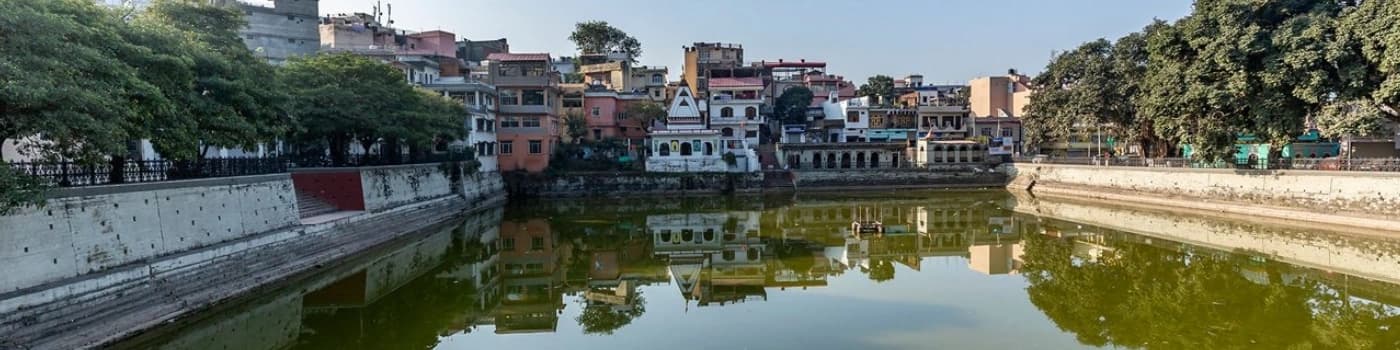
Nahan is a picturesque town in the Sirmaur district of Himachal Pradesh, situated on a ridge in the Shivalik hills near the Haryana border. Known for its pleasant setting, historic landmarks and traditional townscape, Nahan offers a quieter hill-town experience away from the more crowded destinations of the state. Its narrow streets, old temples and surrounding greenery reflect a blend of royal history and everyday Himachali life.
The town was founded in 1621 by Raja Karam Prakash and served as the capital of the former princely state of Sirmaur. Its development under the royal family left a lasting imprint on the town’s architecture and public spaces. The Rani Tal garden and pond, historic palaces and traditional religious sites provide glimpses into Nahan’s past, while its compact layout makes it pleasant to explore on foot.
Nahan is also known for its religious heritage. Jagannath Temple, dedicated to Lord Jagannath, is one of the town’s prominent shrines, while Trilokpur’s Bala Sundari Temple in the wider district attracts pilgrims throughout the year. Local fairs and festivals bring communities together through worship, cultural activities and traditional customs.
The surrounding Sirmaur region adds to Nahan’s appeal with forested hills, scenic viewpoints and nature destinations. Renuka Lake, a major attraction in the district, is associated with local legends and offers a peaceful setting amid wooded slopes. The nearby Renuka Wildlife Sanctuary supports a variety of wildlife and bird species. With its royal legacy, religious landmarks and access to the natural landscapes of Sirmaur, Nahan provides an appealing introduction to the lower Himalayan region.
Places to Visit in Nahan
- Rani Tal: Rani Tal is a historic pond and garden located within Nahan town, associated with the town’s royal past. Surrounded by greenery, the area offers a peaceful setting for a short walk or a quiet break from sightseeing. The pond and its landscaped surroundings reflect the traditional water features once maintained in princely towns, making it a pleasant place to appreciate Nahan’s slower pace of life.
- Jagannath Temple: Situated in the heart of Nahan, Jagannath Temple is a prominent Hindu shrine dedicated to Lord Jagannath. Established during the reign of the former rulers of Sirmaur, the temple remains an important centre of worship for local residents. Its religious traditions and annual observances bring devotees together, while its location in the old town makes it a useful stop when exploring Nahan’s historic streets.
- Jaitak Fort: Jaitak Fort stands on a hill near Nahan and is associated with the conflict between the Gurkhas and the British in the early 19th century. The fort is linked to the Gurkha occupation of the region and the battles that shaped the history of Sirmaur. Its elevated position offers broad views of the surrounding hills and valleys. Reaching the site may involve a drive followed by walking, depending on the access route.
- Suketi Fossil Park: Located near the Markanda River, Suketi Fossil Park is a distinctive attraction known for its life-size fibre-reinforced plastic models of prehistoric animals whose fossils were discovered in the region. The exhibits introduce visitors to the ancient wildlife of the Shivalik hills, including species that lived millions of years ago. The park also highlights the palaeontological importance of the area and offers an educational stop for families and those interested in natural history.
- Renuka Lake: Renuka Lake, around 35 km from Nahan, is the largest natural lake in Himachal Pradesh and is associated with the legend of Goddess Renuka. Its distinctive outline is often said to resemble the form of a reclining woman. Forested slopes surround the water, creating a calm setting for walks, photography and nature appreciation. A temple dedicated to Renuka Mata stands nearby, and the area becomes particularly lively during the annual Renuka Fair.
- Renuka Wildlife Sanctuary: Surrounding Renuka Lake, Renuka Wildlife Sanctuary protects forest habitat that supports animals such as sambar, barking deer, leopard and a variety of bird species. The sanctuary offers a nature-focused experience alongside the lake’s religious attractions. Visitors should follow designated routes and local guidance, as wildlife sightings are not guaranteed and access may be regulated in certain areas.
- Trilokpur Bala Sundari Temple: Situated near Kala Amb, approximately 20–25 km from Nahan, Trilokpur Bala Sundari Temple is one of the most important pilgrimage destinations in Sirmaur district. Dedicated to Goddess Bala Sundari, the temple attracts large numbers of devotees during the Navratri fairs held in spring and autumn. The complex is known for its religious atmosphere and traditional architecture, with the surrounding area becoming especially busy during festival periods.
- Dhaula Kuan: Dhaula Kuan is a locality near Paonta Sahib known for its agricultural landscape and horticultural activity. The surrounding area is associated with fruit cultivation, particularly citrus and mangoes, reflecting the warmer conditions of this part of Sirmaur district. It provides a different perspective on the region beyond its hill-town and temple attractions, with farms and orchards shaping much of the countryside.
- Paonta Sahib: Located around 40–45 km from Nahan, Paonta Sahib is an important Sikh pilgrimage town on the banks of the Yamuna River. Gurudwara Paonta Sahib commemorates the period Guru Gobind Singh Ji spent in the area and is the town’s principal religious landmark. The complex welcomes devotees throughout the year and hosts major gatherings on important Sikh occasions. The riverside setting and nearby markets add to the experience of exploring this historic town.
- Churdhar: Churdhar is a prominent mountain peak in Sirmaur district, rising to approximately 3,647 metres above sea level. It is revered for the temple of Shirgul Maharaj near the summit and is a well-known trekking destination. The ascent passes through forests and high-altitude terrain, rewarding trekkers with expansive views of the surrounding Himalayan ranges on clear days. The trek is physically demanding, and visitors should plan carefully, check weather conditions and avoid attempting it without suitable preparation.
- Haripurdhar: Haripurdhar is a hill settlement in Sirmaur district known for its mountain scenery and the nearby Maa Bhangayani Temple, an important local pilgrimage site. The temple draws devotees from across the region, while the elevated location provides views of forested ridges and valleys. The area offers a quieter mountain excursion for visitors interested in local religious traditions and rural life.
- Nahan Local Market: Nahan’s local market reflects the everyday character of this historic hill town. Its shops offer clothing, household goods, sweets, local produce and everyday essentials, while small eateries serve regional Himachali and North Indian dishes. Walking through the market and nearby old streets is a simple way to experience the town’s community life and discover local flavours.
Best Time to Visit Nahan
The best time to visit Nahan is generally from March to June and September to November, when the weather is suitable for exploring the town’s historic landmarks, temples and surrounding natural attractions. Nahan enjoys a relatively mild climate compared with many higher Himalayan destinations, although summers can be warm and the monsoon may bring heavy rainfall.
- Summer (March to June): Summer is a good season for exploring Nahan’s temples, gardens and local markets. Temperatures are generally pleasant in early spring but can rise during May and June. This period is also suitable for excursions to Renuka Lake and nearby hill areas, particularly if outdoor activities are planned for the morning or late afternoon.
- Monsoon (July to September): The monsoon brings rainfall that refreshes the forested hills and countryside around Nahan. The landscape becomes greener, making the region attractive for nature lovers. However, heavy showers can affect road conditions and outdoor sightseeing, particularly on routes through the hills. Visitors should check weather forecasts before travelling to remote locations.
- Autumn (October to November): Autumn is one of the most comfortable periods to visit Nahan, with generally pleasant daytime temperatures and favourable conditions for sightseeing. It is a suitable time to explore the town’s historic sites, visit Renuka Lake and discover nearby religious destinations. The annual Renuka Fair, usually held in November, can also be a highlight for visitors interested in local culture and traditions.
- Winter (December to February): Winter brings cool mornings and evenings, while daytime weather is often suitable for exploring Nahan and its surroundings. The season is generally quieter than the main holiday periods, offering a relaxed atmosphere for visiting temples, gardens and local markets. Warm clothing is advisable, particularly for early mornings and excursions into higher areas of Sirmaur district.
How to Reach Nahan
- By Air:The nearest major airport to Nahan is Chandigarh International Airport, located approximately 80–90 km away by road. From the airport, visitors can hire a taxi or continue by bus via Panchkula, Naraingarh and Kala Amb. Dehradun’s Jolly Grant Airport is another option, depending on flight availability and the preferred route.
- By Rail: Nahan does not have its own railway station. Ambala Cantt Junction, approximately 65–70 km away, is a convenient railhead with connections to several major Indian cities. Chandigarh Railway Station is another option. From either station, the onward journey to Nahan can be completed by bus or taxi.
- By Road: Nahan is well connected by road to Chandigarh, Ambala, Dehradun, Shimla and Delhi. Regular bus services operated by Himachal Road Transport Corporation and other transport providers connect the town with neighbouring cities. Taxis and private vehicles are also convenient options. The approach from Chandigarh passes through Panchkula, Naraingarh and Kala Amb, while the route from Dehradun runs via Paonta Sahib.


 English
 Chinese (Simplified)
 Dutch
 French
 German
 Hebrew
 Italian
 Portuguese (Brazil)
 Russian
 Spanish
 Arabic