

- +91 96773 55555
- Toll Free: 1800 123 2255
 English
 Chinese (Simplified)
 Dutch
 French
 German
 Hebrew
 Italian
 Portuguese (Brazil)
 Russian
 Spanish
 Arabic
EnglishChinese (Simplified)DutchFrenchGermanHebrewItalianPortuguese (Brazil)RussianSpanishArabic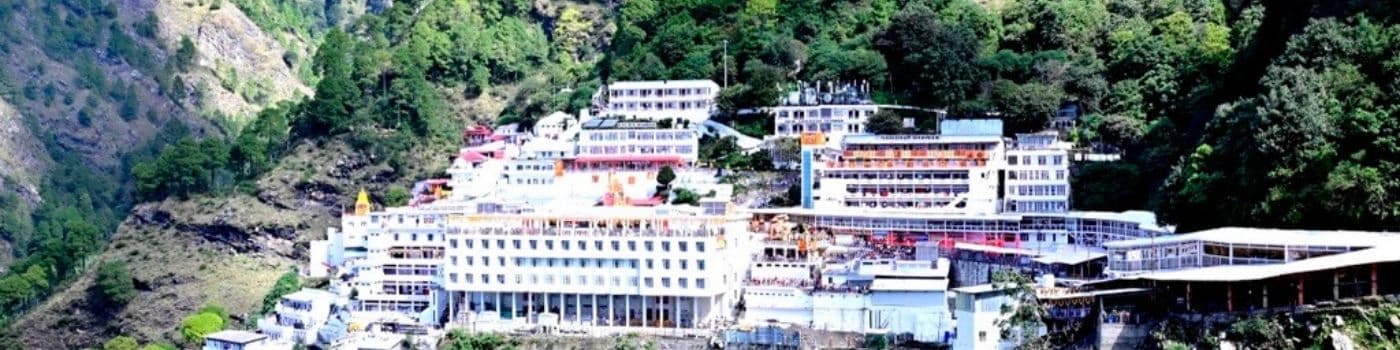
Maa Vaishno Devi is one of India’s most revered Hindu pilgrimage destinations, located in the Trikuta Hills near Katra in the Reasi district of Jammu and Kashmir. The holy shrine, dedicated to Goddess Vaishno Devi, draws millions of devotees each year who undertake the uphill journey to seek her blessings. Although often referred to as a destination in its own right, the shrine is reached through Katra, the principal base town for pilgrims.
The pilgrimage follows a well-established route from Katra to the Bhawan, where the sacred cave shrine is situated at an elevation of approximately 5,200 feet. The traditional walking route covers around 13 km one way, passing through designated resting points, refreshment facilities and viewpoints along the mountain path. Battery-operated vehicles, ponies and helicopter services may be available for eligible sections or routes, subject to current operating rules and availability. Pilgrims are required to complete the prescribed registration process before beginning the journey.
The spiritual significance of the shrine is rooted in the belief that Goddess Vaishno Devi represents the combined power of Mahakali, Mahalakshmi and Mahasaraswati. According to local tradition, the goddess took refuge in the Trikuta Mountains, where the sacred cave became the centre of worship. Inside the Bhawan, devotees offer prayers before the naturally formed sacred rock structures known as the Pindies, which represent the goddess in her three forms.
Katra has grown into a major pilgrimage town, with hotels, guesthouses, restaurants, shops and facilities catering to visitors throughout the year. The surrounding region also contains other places of religious and natural interest, including Bhairon Temple, reached by a further uphill route beyond the main shrine, and scenic viewpoints across the Trikuta range. The changing mountain weather adds to the character of the journey, though it can also affect travel arrangements.
With its deep religious significance, organised pilgrimage route and dramatic mountain setting, Maa Vaishno Devi holds a special place in India’s spiritual landscape. The journey combines devotion, physical effort and the experience of travelling through the Himalayan foothills, making it an important destination for pilgrims from across the country.
Places to Visit in Maa Vaishno Devi
Major Festivals Celebrated at Maa Vaishno Devi
Best Time to Visit Maa Vaishno Devi
The ideal time to visit Maa Vaishno Devi is from March to June and September to October, when weather conditions are generally suitable for the pilgrimage. The shrine remains open throughout the year, but temperatures, rainfall and snowfall can affect the journey from Katra to the Bhawan. The timing of major festivals, especially Navratri, also influences the number of devotees and waiting times.
· Spring (March to April): Spring offers mild weather, making the climb to the shrine more comfortable for pilgrims. The surrounding hills begin to show fresh greenery, making this a suitable period for walking and sightseeing around Katra. Visitor numbers may rise during Chaitra Navratri.
· Summer (May to June): Summer is a popular season for the pilgrimage, with relatively favourable weather compared with the colder months. Days can become warm, so starting the trek early and carrying sufficient drinking water is advisable. Katra and the shrine route may be busy during school holidays.
· Monsoon (July to August): Rainfall during the monsoon can leave the trekking route slippery and sometimes affect road access and pilgrimage services. The hills become greener, but visitors should check weather forecasts and official advisories before setting out.
· Autumn (September to October): Autumn offers generally comfortable temperatures and is a popular time to visit the shrine. Sharad Navratri draws large numbers of devotees, creating a particularly vibrant religious atmosphere but also longer queues and heavier crowds. Advance planning is recommended during festival periods.
· Winter (November to February:. Winter temperatures drop in Katra, while higher elevations experience harsher cold and occasional snowfall along the pilgrimage route. The pilgrimage continues during this season, although weather-related delays or changes to services may occur. Warm clothing and checks of official travel updates are essential.
How to Reach Maa Vaishno Devi
The Shri Mata Vaishno Devi shrine is located in the Trikuta Hills near Katra in Jammu and Kashmir. Katra serves as the main base for the pilgrimage, with transport connections from major Indian cities. From Katra, pilgrims continue towards the Bhawan on foot or through approved transport services available along designated sections of the route.
By Air: The sacred shrine of Shri Mata Vaishno Devi lies in the Trikuta Hills, close to the town of Katra in Jammu and Kashmir. It has flight connections with several major Indian cities. Taxis and other road transport options are available from the airport to Katra, with the journey generally taking around 1.5–2 hours depending on traffic and road conditions.
By Rail: Shri Mata Vaishno Devi Katra Railway Station is the principal railhead for pilgrims travelling to the shrine. It receives trains from Delhi and several other cities, although services vary by schedule. Taxis and local transport are available from the station to hotels, registration counters and the pilgrimage route’s starting point.
By Road: Katra is connected by road to Jammu and other towns in northern India. Buses, taxis and private vehicles operate along the route from Jammu, while longer-distance road journeys are possible from cities such as Delhi and Chandigarh. Pilgrims must register at Katra before starting the journey to the Bhawan, which is around 13 km away by the traditional walking route. Helicopter services and battery-operated vehicles are also available for designated sections, subject to current regulations and availability.