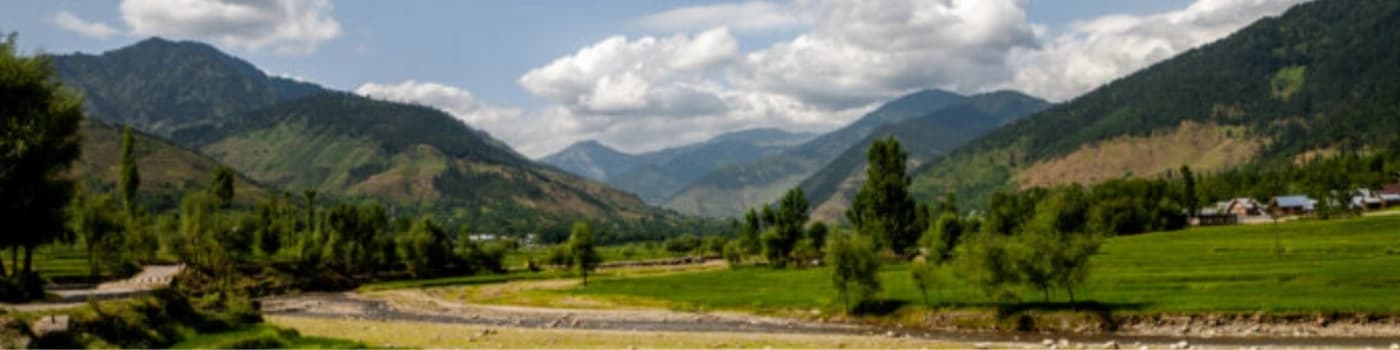
Kupwara is a district headquarters town in the northern part of Jammu and Kashmir, set amid forested hills, fertile valleys and the foothills of the Himalayas. Located northwest of Srinagar, it serves as an administrative and commercial centre for the surrounding region. While the wider Kashmir Valley is known for destinations such as Srinagar and Gulmarg, Kupwara offers a different perspective, with quieter countryside, traditional villages and access to some of north Kashmir’s most striking natural landscapes.
The region’s identity is closely connected with its geography and rural way of life. Agriculture and horticulture support many local communities, with orchards, cultivated fields and grazing lands spread across the valleys. Traditional Kashmiri customs remain part of everyday life, reflected in local food, handicrafts, architecture and community celebrations. The town also serves as a centre for nearby villages, linking them with essential services and regional markets.
Kupwara district is particularly noted for its forests, mountain streams and high-altitude meadows. Lolab Valley, often admired for its green fields, orchards and wooded slopes, is among the region’s best-known scenic areas. The wider district also includes the landscapes around Bangus Valley, a highland area recognised for its expansive meadows and mountain surroundings. Access to some remote areas may be subject to seasonal conditions and local security regulations, so visitors should confirm current travel arrangements before setting out.
The cultural and historical character of Kupwara is reflected in its religious sites, village settlements and longstanding connections with the wider Kashmir region. The changing scenery through spring, summer, autumn and winter gives the district a distinct seasonal appeal, from fresh greenery and flowering orchards to snow-covered mountain slopes.
With its rural character, forested valleys and mountain scenery, Kupwara provides an opportunity to explore a less urbanised side of north Kashmir while experiencing the natural environment and traditions of the region.
Places to Visit in Kupwara
- Lolab Valley: Lolab Valley is one of the best-known scenic areas in Kupwara district, distinguished by its green meadows, forested slopes, fruit orchards and small villages. The Lahwal stream winds through the valley, adding to its natural appeal. Apple, walnut, cherry and peach cultivation forms part of the local landscape, while villages such as Sogam, Chandigam and Lalpora offer a glimpse of rural life in north Kashmir. The valley is especially attractive during the warmer months, when the countryside is green and the surrounding forests are accessible.
- Bangus Valley: Bangus Valley is a high-altitude meadow region surrounded by the Shamsbari and other mountain ranges. Its broad grasslands, streams and seasonal wildflowers create a striking landscape, with livestock grazing traditionally forming part of the valley’s character. The area is known for its ecological diversity and relatively remote setting. Access may be seasonal and subject to local permissions or security requirements, so visitors should confirm current entry arrangements before travelling.
- Seemab Valley: Located near the entrance to Lolab Valley, Seemab Valley is known for its wooded surroundings and the perennial water body called Daal Kul. Green spaces and the nearby hills make it suitable for a quiet outdoor excursion, photography and picnics. The area also has potential for activities such as trekking, depending on local conditions and permitted access.
- Kalaroos Caves and Satbaran: The Kalaroos area in Lolab Valley is known for its unusual rock formations and caves in the surrounding forest. Satbaran, whose name is commonly interpreted as “seven doors,” is a notable rock-cut formation that draws interest for its appearance and local legends. Stories about extensive underground passages are part of local folklore rather than established archaeological fact. The site is best explored with local guidance, particularly when approaching forested or uneven terrain.
- Sadhna Pass Viewpoint: Sadhna Pass is a high mountain pass in the Shamsbari range, connecting the Kashmir Valley with the Karnah region. The viewpoint offers sweeping views of rugged mountain slopes and deep valleys, making it a memorable stop for landscape photography when visibility is clear. Snowfall can make the route difficult or temporarily inaccessible, so visits depend on road conditions, weather and local travel advisories.
- Drangyari Valley: Drangyari lies along the road towards Chowkibal and the Karnah region. The landscape is shaped by mountain streams, springs, green meadows and the surrounding Shamsbari hills. Several small watercourses meet in this area, giving the valley its distinctive character. It is a scenic stop for those interested in north Kashmir’s less urbanised landscapes, although access and facilities may be limited compared with established tourist centres.
- Keran Valley: Keran is a remote valley beside the Kishanganga River, known for its wooded hills, cultivated fields and traditional village surroundings. The river forms part of the Line of Control in this area, giving the landscape particular geographical significance. The valley’s natural setting and rural character make it distinctive within north Kashmir. As Keran is a sensitive border area, visitors must check current access rules and obtain any required permissions before travelling.
- Machil Valley: Machil is a mountainous valley in the northern part of Kupwara district, surrounded by forests, streams and steep Himalayan slopes. Its remote settlements and dramatic terrain offer a different experience from the busier destinations of Kashmir. Snowfall can isolate the area during winter, and access may be restricted by weather or security conditions. Travel should be planned only after confirming that the route is open and visitors are permitted to enter.
- Muqam Shah Wali: Muqam Shah Wali is a village known for the shrine of Zaiti Shah Wali, a respected spiritual figure associated with Kashmir’s religious heritage. The shrine attracts devotees, particularly during its annual gathering, when people from different communities come together. Its cultural importance and connection with local traditions make it a meaningful stop for those interested in the region’s spiritual history.
- Badarkali Temple: Badarkali is an ancient Hindu religious site situated along the route between Handwara and the Rajwar area. The temple is associated with longstanding local worship and forms part of the religious heritage of Kupwara district. Its rural surroundings and location along a scenic route add to the experience, although visitors should confirm local access and conditions before setting out.
- Lov Nag Spring, Anderbug: Lov Nag is a natural spring located in Anderbug village in the Lolab region. It is one of the area’s recognised water features, reflecting the importance of springs and streams in the valley’s landscape. The surrounding village and countryside provide an opportunity to appreciate the quieter, agricultural side of north Kashmir. Visitors should follow local guidance when approaching the spring and nearby private land.
- Karnah Valley: Karnah is a scenic sub-region of Kupwara district, characterised by mountain views, cultivated land and traditional settlements. Kandi and Tangdhar are among the important local centres, while the surrounding landscape changes dramatically with elevation and season. The valley has a distinctive cultural identity shaped by its geography and longstanding community traditions. Since routes into Karnah pass through sensitive border areas and high mountain terrain, visitors should verify current permissions, road conditions and travel advisories in advance.
- Farkiyan Gali: Farkiyan Gali is a mountain pass in the Kupwara region that provides a route towards Keran. The journey passes through rugged slopes and forested mountain terrain, with views of the surrounding highlands. Weather conditions can change quickly in this part of Kashmir, and heavy snow may affect access. Travel through the pass should be undertaken only when the route is officially open and local conditions permit.
- Handwara: Handwara is an important town in Kupwara district and a useful base for exploring parts of the surrounding countryside. Its markets serve nearby villages, while roads from the area lead towards scenic locations such as Bangus Valley and Drangyari. The town offers a view of everyday life in north Kashmir, including local commerce, agriculture and traditional food culture.
Best Time to Visit Kupwara
The best time to visit Kupwara is generally from April to October, when milder weather and greener landscapes make it easier to explore the town, Lolab Valley and other accessible parts of the district. Spring brings flowering orchards, summer is suitable for enjoying meadows and forest scenery, and early autumn offers pleasant conditions for sightseeing. Winter can bring heavy snowfall, particularly in higher mountain areas, affecting road access to remote valleys and passes.
- Spring (April to May): Spring brings fresh greenery, blossoming fruit trees and flowing streams to the valleys around Kupwara. Lolab Valley is especially appealing during this period, with its orchards and wooded slopes emerging from winter. Temperatures can remain cool, especially in the mornings and evenings, so carrying warm clothing is recommended. Some high-altitude routes may remain inaccessible due to lingering snow.
- Summer (June to August): Summer is generally the most suitable season for exploring the district’s meadows, forests and mountain scenery. Lolab Valley and other accessible countryside areas are particularly attractive during these months, while higher-altitude destinations may become reachable as snow recedes. Rainfall can affect trails and mountain roads, and access to sensitive border areas remains subject to official permissions and security conditions.
- Autumn (September to October): Autumn brings cooler temperatures and seasonal colours to Kupwara’s orchards and countryside. Apple harvesting adds activity to rural areas, while clear days can provide excellent views of the surrounding mountains. This is a pleasant time for scenic drives and visits to accessible valleys, although temperatures fall as October progresses and high-altitude routes may begin to experience early snowfall.
- Winter (November to March): Winter is cold across Kupwara district, with snow and icy conditions common in higher elevations. Mountain passes and remote destinations such as Bangus, Machil and parts of Karnah may become difficult to reach or temporarily inaccessible. Visitors travelling during this season should check local weather forecasts, road conditions and security advisories before departure. Heavy winter clothing and flexible travel plans are essential.
How to Reach Kupwara
- By Air: The nearest airport to Kupwara is Sheikh ul-Alam International Airport in Srinagar, approximately 90–100 km away by road which has flight connections with major Indian cities, including Delhi, Mumbai and Bengaluru. From Srinagar, visitors can hire a taxi or take other road transport to reach Kupwara.
- By Rail: Kupwara does not currently have a railway station of its own. The nearest operational railway stations serving the town are Baramulla and Sopore, which are connected to destinations along the Kashmir Valley railway line. Travellers arriving from other parts of India should check available rail connections and plan their onward journey accordingly. From either station, taxis and local transport can be arranged to reach Kupwara.
- By Road: Kupwara is connected by road to Srinagar, Baramulla, Sopore and other towns in north Kashmir. National Highway 701 (NH 701) and connecting regional roads provide access to the district headquarters and surrounding areas. Buses, shared taxis and private cabs are available for travel from Srinagar and nearby towns. The journey from Srinagar generally takes around 2.5–3 hours. Visitors planning excursions to remote valleys or border areas should check current road conditions, security advisories and any required travel permissions before departure.


 English
 Chinese (Simplified)
 Dutch
 French
 German
 Hebrew
 Italian
 Portuguese (Brazil)
 Russian
 Spanish
 Arabic