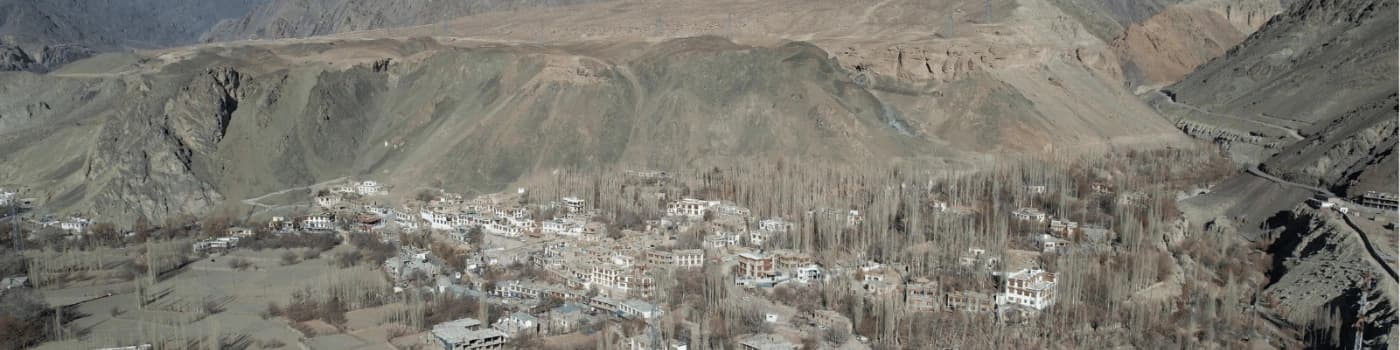
Khaltsi, also spelt Khaltse or Khalsi, is a small town in the Leh district of Ladakh, situated along the historic road connecting Leh with Kargil and Srinagar. Its position between rugged hills and the river valley gives the area a character shaped by both the stark beauty of the high-altitude desert and the fertile pockets of land near the river.
Life in Khaltsi reflects the close relationship between Ladakhi communities and their natural surroundings. The Indus River supports agriculture in nearby settlements, where barley fields and apricot orchards bring colour to an otherwise dry landscape. Traditional homes, small local markets and village settlements offer a sense of everyday life in this part of Ladakh, away from the busier tourist centres.
Khaltsi is also an entry point to the culturally distinctive villages of the Dha–Hanu region, known for their Dard communities and long-preserved customs. Villages such as Dha, Hanu and Garkone are recognised for their traditional clothing, local festivals and distinctive cultural practices. Visitors can also explore nearby Buddhist monasteries, ancient rock carvings and historic settlements that reveal the region’s links with old trade routes and religious traditions.
The wider Khaltsi subdivision includes several places of historical and scenic interest, including Alchi Monastery, the ancient monastery at Lamayuru and the villages scattered along the Indus. These destinations showcase different aspects of Ladakh’s spiritual heritage, architecture and rural life. With its strategic location, agricultural valleys and access to culturally significant communities, Khaltsi offers a rewarding introduction to the lesser-explored western stretches of Ladakh.
Places to Visit in and Around Khaltsi
- Alchi Monastery: Alchi Monastery is one of Ladakh’s most significant centres of Buddhist art, known for its ancient temples, intricate murals and finely carved wooden details. Located near the Indus River, the complex differs from many Ladakhi monasteries because it stands on relatively level ground rather than a hilltop. Its historic artwork preserves distinctive artistic influences that developed through cultural exchanges across the Himalayas.
- Lamayuru Monastery: Set on a hillside overlooking a striking landscape of eroded, pale-coloured hills, Lamayuru Monastery is among the prominent Buddhist monasteries of western Ladakh. Its prayer halls, religious paintings and traditional architecture make it an important spiritual landmark. The surrounding terrain, often described as resembling a lunar landscape, adds to the visual appeal of the village.
- Dha Village: Dha is one of the well-known villages of the Dha–Hanu region, recognised for the cultural traditions of its Dard community. Traditional homes, small agricultural plots and mountain views define the settlement. Local customs, festive clothing and community practices distinguish the village from many other parts of Ladakh, making it an important place for understanding the region’s cultural diversity. Visitors should be respectful of local customs and seek permission before photographing residents.
- Hanu Village: Hanu is part of the culturally distinctive Dha–Hanu region, where traditional lifestyles have been maintained across generations. The village lies amid rugged mountains and cultivated land near the Indus Valley. Its architecture, agricultural practices and community traditions offer a perspective on life in one of Ladakh’s less-visited cultural regions.
- Garkone Village: Garkone is another settlement associated with the Dard communities of the Indus Valley. The village is known for its traditional culture, seasonal celebrations and orchards that add colour to the dry mountain landscape. Its location along the western Ladakh route makes it a worthwhile stop for those interested in rural life and the cultural heritage of the region.
- Skurbuchan Village: Skurbuchan is a traditional village in the Khaltsi region, surrounded by mountains and agricultural land supported by irrigation from local water sources. Apricot trees, cultivated fields and old village structures form part of its distinctive setting. The settlement also has religious and cultural landmarks that reflect the longstanding Buddhist traditions of western Ladakh.
- Domkhar Rock Art Site: The Domkhar area contains ancient rock carvings that provide evidence of human movement and cultural activity along the Indus Valley. These fragile remains are valuable archaeological features and should be viewed without touching or marking the stone surfaces.
- Indus River Valley: The Indus River is central to the geography and settlement patterns of the Khaltsi region. Along its course, narrow stretches of cultivated land contrast with the dry mountains and rocky slopes surrounding the valley. Scenic viewpoints along the road reveal the river’s role in supporting villages, orchards and agriculture in this high-altitude environment.
- Wanla Monastery: Wanla Monastery is a historic Buddhist religious site in the wider western Ladakh region, associated with the area’s early monastic heritage. The monastery’s traditional structure and religious spaces reflect the architectural and spiritual traditions that developed along old routes through the mountains. Its remote setting also makes the journey through the surrounding landscape part of the experience.
Best Time to Visit Khaltsi
The best time to visit Khaltsi is generally from May to September, when milder temperatures and accessible mountain roads make exploring the Indus Valley and nearby villages more convenient. During these months, visitors can experience the region’s monasteries, traditional settlements and scenic landscapes. Conditions can vary with altitude, and road access to remote areas should be checked before travelling.
- Spring (March to April): Spring brings gradually rising temperatures, although mornings and nights can remain cold. The landscape begins to emerge from winter, but some high-altitude routes may still be affected by snow or lingering winter conditions. Travel plans should account for changing weather.
- Summer (May to June): Summer is a favourable period for exploring Khaltsi and nearby attractions. Daytime temperatures are generally comfortable for road journeys, village visits and monastery sightseeing, while the surrounding mountains offer clear views on suitable days. This is also a practical season for visiting the Dha–Hanu region, subject to local access requirements.
- Monsoon (July to August): Ladakh receives much less rainfall than many other parts of India, but occasional showers can still affect roads and mountain slopes. Landslides or road disruptions may occur on routes connecting Ladakh with neighbouring regions. Visitors should check local weather forecasts and road updates before travelling.
- Autumn (September to October): Early autumn is a pleasant time to explore the area, with generally clear skies and cooler temperatures. Apricot orchards and fields may show seasonal changes, while the mountain scenery can be especially striking. As October progresses, temperatures drop and some services or remote routes may become less accessible.
- Winter (November to February): Winter is extremely cold, with freezing temperatures and possible snowfall in the surrounding highlands. Visitors travelling during this season should prepare for severe cold and confirm road conditions and accommodation availability in advance.
How to Reach Khaltsi
Khaltsi is located in the Leh district of Ladakh, along the road connecting Leh with western Ladakh and the Kargil region. The town is accessible by air through Leh, while road travel provides connections to nearby villages, monasteries and other attractions across the Indus Valley.
- By Air: The nearest airport is Kushok Bakula Rimpochee Airport in Leh, approximately 90–100 km from Khaltsi by road. The airport has flight connections with selected major Indian cities, with schedules varying by season. Taxis and private vehicles can be arranged for the onward journey to Khaltsi, depending on road and weather conditions.
- By Rail: There is no railway station in Khaltsi or elsewhere in Ladakh. Travellers arriving by train generally use Jammu Tawi Railway Station or another suitable railway station in northern India and continue by road or connecting transport towards Leh. The onward journey is long, so travel time and seasonal road access should be considered when planning the trip.
- By Road: Khaltsi is connected to Leh and the western Ladakh region by road. It can be reached from Leh via the Srinagar–Leh Highway, passing through areas such as Nimmu and Basgo. Travel times depend on road conditions, weather and stops en route. Before departure, check the latest road status, as access to Ladakh and its remote areas can be affected by seasonal conditions.


 English
 Chinese (Simplified)
 Dutch
 French
 German
 Hebrew
 Italian
 Portuguese (Brazil)
 Russian
 Spanish
 Arabic