

- +91 96773 55555
- Toll Free: 1800 123 2255
 English
 Chinese (Simplified)
 Dutch
 French
 German
 Hebrew
 Italian
 Portuguese (Brazil)
 Russian
 Spanish
 Arabic
EnglishChinese (Simplified)DutchFrenchGermanHebrewItalianPortuguese (Brazil)RussianSpanishArabic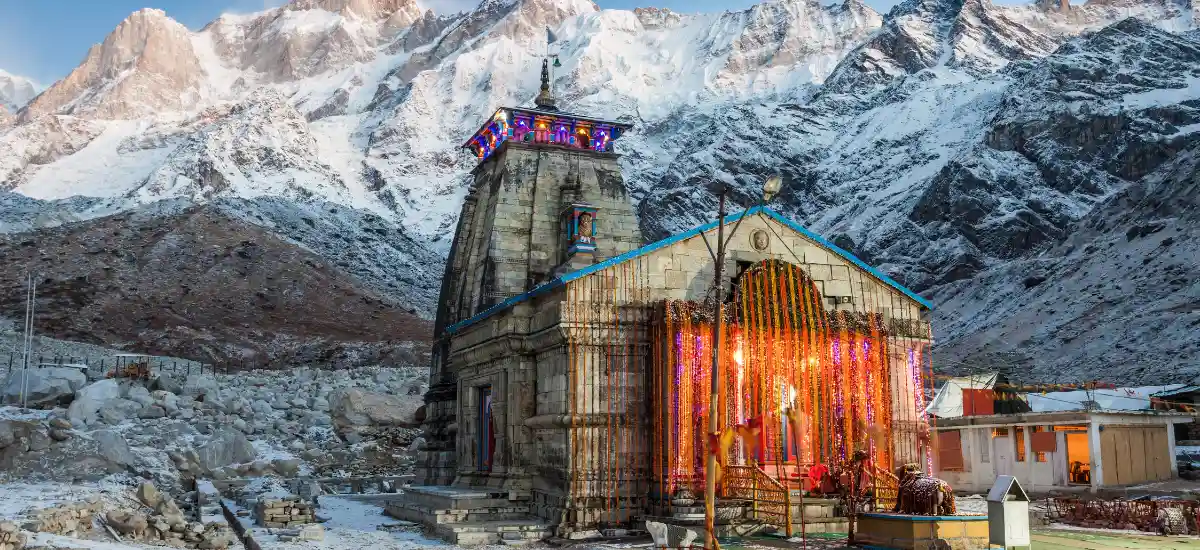
Kedarnath is one of the holiest pilgrimage destinations in Hinduism and is home to the Kedarnath Temple, one of the Twelve Jyotirlingas dedicated to Lord Shiva. It is also one of the four sacred shrines of the Char Dham Yatra in the Himalayas. Located at an altitude of about 3583 metres (11755 feet) above sea level, Kedarnath is surrounded by snow-covered mountains, glaciers and breathtaking natural scenery. Its peaceful setting and deep spiritual significance make it one of the most revered pilgrimage destinations in India.
According to Hindu tradition, the Pandavas visited Kedarnath after the Kurukshetra war to seek the blessings and forgiveness of Lord Shiva. The ancient temple is believed to have been originally built by the Pandavas, while the present stone temple is traditionally associated with Adi Shankaracharya, who is believed to have revived this sacred pilgrimage. For centuries, devotees have travelled through the Himalayas to worship at this holy shrine and experience its unique spiritual atmosphere.
The temple is open only for about six months each year, generally from May to October (till Diwali) and after that it is closed due to snowfall. During the winter months, the temple remains closed, and the idol of Lord Kedarnath is ceremonially moved to Ukhimath, where worship continues until the temple reopens.
Reaching Kedarnath is itself a memorable experience. Pilgrims travel by road to Gauri Kund, followed by a mountain trek to the temple. Pony services, palanquins and helicopter services are also available for those who require assistance. Along the journey, visitors enjoy magnificent views of rivers, waterfalls, forests and the majestic Himalayan peaks, making the pilgrimage both spiritually meaningful and visually unforgettable.
The temple's simple stone architecture reflects its great age and enduring strength. Standing before the temple with the towering Kedarnath Peak in the background is an experience that leaves a lasting impression on many visitors. The calm surroundings, fresh mountain air and continuous chanting of prayers create a peaceful atmosphere that encourages devotion and reflection.