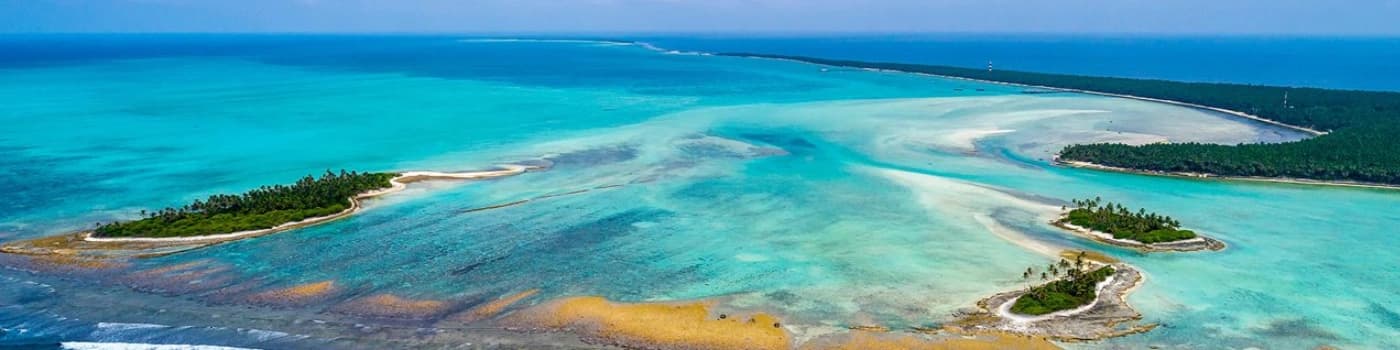
Kalpeni is a picturesque island in Lakshadweep, set in the Arabian Sea and surrounded by coral reefs, clear lagoons and stretches of pale sandy shoreline. The island is known for its shallow turquoise waters and distinctive coastal scenery, where coconut palms and low-lying settlements form part of the landscape. Its peaceful atmosphere and marine environment make it an appealing destination for those interested in the natural beauty of India’s island territory.
One of Kalpeni’s defining features is its broad lagoon, which provides a setting for water-based activities such as kayaking, snorkelling and swimming where permitted and conditions are suitable. The surrounding reef system supports a variety of marine life, while the changing shades of the water create striking coastal views. The nearby islets of Cheriyam, Pitti and Tilakkam are associated with the Kalpeni island group and add to the area's distinctive geography.
Kalpeni also has a cultural identity shaped by the traditions and everyday life of Lakshadweep’s island communities. Fishing, coconut cultivation and coir-related activities have historically supported local livelihoods. The island’s settlements reflect a close relationship with the sea, while community customs and religious traditions remain important aspects of daily life.
With its lagoon, coral-fringed shores and island heritage, Kalpeni offers a quieter side of Lakshadweep. Visitors should arrange the required entry permit and confirm transport, accommodation and activity availability in advance, as access to the islands is regulated and marine excursions depend on local conditions.
Places to Visit in Kalpeni
- Koomel Beach: Koomel Beach is one of Kalpeni’s recognised coastal attractions, known for its sandy shoreline and views across the lagoon. The calm, shallow waters can provide opportunities for swimming and water-based recreation when conditions permit. Facilities and activity availability may vary, so visitors should check local arrangements before visiting.
- Kalpeni Lagoon: The expansive lagoon surrounding Kalpeni is a major feature of the island’s natural landscape. Its clear waters and coral reef environment create opportunities for snorkelling, kayaking, sailing and pedal boating through authorised operators. Sea conditions and local guidelines determine which activities are available at any given time.
- Cheriyam Island: Cheriyam is an uninhabited island to the north of Kalpeni and forms part of the same atoll. Known for its quiet coastal setting and palm-covered landscape, it offers a contrast to the inhabited island. Access requires suitable boat arrangements and may be subject to local permissions and environmental safeguards.
- Tilakkam Islets: Tilakkam consists of small islets associated with the Kalpeni atoll. The surrounding waters and reef scenery are among their main attractions, with some excursions offering opportunities for swimming or water sports when conditions are suitable. Visitors should travel only through authorised arrangements and follow instructions designed to protect the fragile marine environment.
- Pitti Islet: Pitti is a small islet within the Kalpeni island group. Its importance lies primarily in the natural surroundings of the atoll, including nearby reefs and marine habitats. Since access to small islets may be restricted or dependent on specific arrangements, visitors should confirm permission before planning a trip.
- Coral Storm Bank: A distinctive feature of Kalpeni is the long bank of coral debris along parts of its eastern and southeastern shore. Local accounts associate the formation with a powerful storm in 1847, which deposited large coral boulders along the coast. The formation is a notable example of how natural events have shaped the island’s shoreline.
- Kalpeni Lighthouse: The lighthouse is a landmark associated with Kalpeni’s coastal landscape and offers a point of interest for those exploring the island. Its setting provides views of the surrounding island terrain and sea. Visitors should check whether access is currently permitted and follow local safety instructions.
- Local Village Settlements: Kalpeni’s settlements offer an opportunity to observe the island’s daily life, traditional homes and community customs. Fishing, coconut cultivation and coir-related activities have long been connected with local livelihoods. Visitors should respect residents’ privacy and seek permission before taking photographs of people or private property.
- Traditional Cultural Experiences: Kalpeni has traditions of folk performance, including Kolkali and Parichakali, which reflect the island’s community life and cultural heritage. Opportunities to witness these performances depend on local events and arrangements rather than a fixed tourist schedule. Respectful participation can help visitors appreciate the island’s living traditions.
- Kalpeni’s Coral Reef Environment: The reef system around Kalpeni supports marine life and helps shape the lagoon’s protected waters. Guided snorkelling or other authorised marine activities may provide a closer look at this ecosystem, depending on current availability and conditions. Coral should never be touched, broken or collected, as the reef is a fragile natural habitat.
Best Time to Visit Kalpeni
The best time to visit Kalpeni is generally from October to March, when the weather is relatively pleasant and conditions are often more suitable for exploring the island and its lagoon. The tropical climate brings warm temperatures throughout the year, while rainfall and sea conditions can affect boat transfers and marine activities.
- Winter (October to February): Winter is generally the most comfortable season to explore Kalpeni which makes it most suitable for beach visits, coastal walks and excursions around the lagoon. Activities such as snorkelling, kayaking and swimming may be available when sea conditions permit. This period is also suitable for experiencing the island’s local culture and traditional way of life.
- Summer (March to May): Summer brings warmer temperatures and increased humidity. Sun protection, light clothing and adequate hydration are recommended. Water-based activities depend on local conditions and the availability of authorised operators.
- Monsoon (June to September): The monsoon season brings heavier rainfall, stronger winds and periods of rough seas. Boat services and excursions to nearby islets may be delayed or suspended, making travel less predictable. Visitors planning a trip during these months should check official travel updates and allow flexibility in their arrangements.
How to Reach Kalpeni
Kalpeni is an inhabited island in Lakshadweep, accessible through mainland connections and onward sea transport. Kochi is a major gateway for journeys to the archipelago, with passenger ships and air connections serving different islands.
- By Air: Kalpeni does not have an airport. Travellers can fly from Kochi to Agatti, which has the only airport in Lakshadweep, and then arrange onward transport to Kalpeni if a suitable inter-island service is operating. Flight schedules and boat transfers depend on availability and weather conditions, so the complete journey should be confirmed in advance.
- By Rail: Kalpeni has no railway station. Travellers arriving by train can reach Ernakulam Junction in Kochi, which is connected to major cities across India. From Kochi, they can continue by air to Agatti or check for authorised passenger ship services to Lakshadweep that connect with Kalpeni.
- By Ship: Passenger ships operate between Kochi and Lakshadweep, with routes and schedules varying by service. Travellers should check whether a sailing calls at Kalpeni or whether an onward inter-island transfer is required. Journey times depend on the vessel, route and sea conditions.


 English
 Chinese (Simplified)
 Dutch
 French
 German
 Hebrew
 Italian
 Portuguese (Brazil)
 Russian
 Spanish
 Arabic