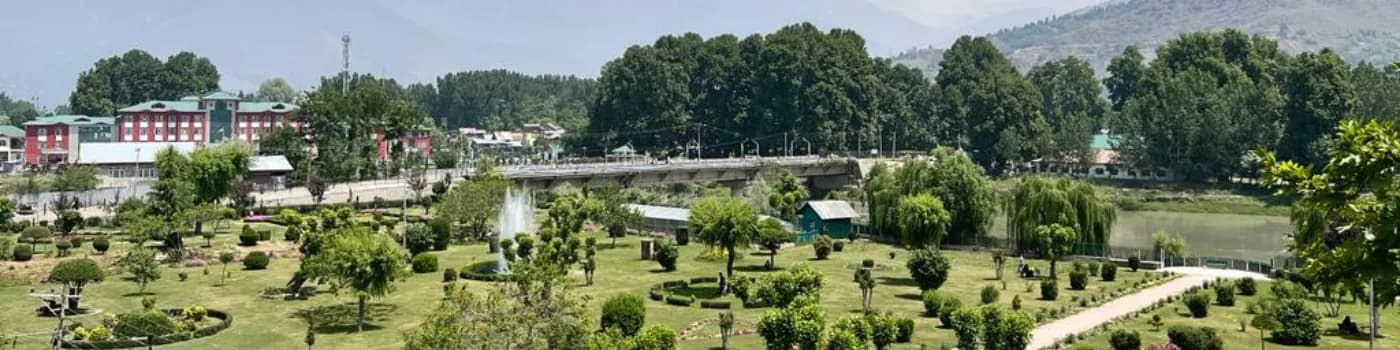
Ganderbal is a town in the Kashmir Valley of Jammu and Kashmir, situated northeast of Srinagar along the Sind River. Serving as the administrative headquarters of Ganderbal district, it is known for its fertile countryside, flowing waterways and proximity to the mountain landscapes of central Kashmir. The district encompasses fertile valley farmland as well as lofty mountain meadows, glaciers and alpine lakes, creating a landscape of remarkable variety.
The Sind River is central to Ganderbal’s landscape and local economy. Its waters support agriculture and contribute to the wider river system of the Kashmir Valley. Paddy fields, orchards and traditional villages surround the town, while local markets serve communities across the district. The area’s rural character offers a view of everyday Kashmiri life beyond the busier streets of Srinagar.
Ganderbal is also an important starting point for exploring some of Kashmir’s celebrated natural attractions. Sonamarg, known for its dramatic mountain scenery and access to high-altitude trekking routes, lies within the district. The region is also associated with the alpine lakes of Gangabal and Nundkol, located near the sacred Mount Harmukh. These remote lakes attract trekkers and pilgrims, although reaching them generally requires careful planning and suitable trekking conditions.
The district has a strong religious and cultural heritage, with mosques, shrines and temples serving as important places of worship. The Kheer Bhawani Temple at Tulmulla is one of its best-known pilgrimage sites, attracting devotees particularly during the annual Mela Kheer Bhawani. The Manasbal Lake area adds another dimension to the region, combining natural scenery with historic and cultural associations.
With its river valleys, pilgrimage landmarks, traditional settlements and access to the higher Himalayas, Ganderbal offers a distinctive introduction to Kashmir’s natural beauty and cultural traditions. Its varied landscape makes it appealing to visitors interested in scenic drives, heritage sites, nature excursions and mountain adventures.
Places to Visit in Ganderbal
- Sonamarg: Sonamarg is a celebrated mountain destination in Ganderbal district, known for its sweeping meadows, snow-covered peaks and the Sind River flowing through the valley. Its name means “Meadow of Gold,” reflecting the golden hues that appear across the landscape during certain seasons. Sonamarg serves as a base for mountain excursions, scenic drives and trekking routes, with access to higher-altitude areas depending on weather and local regulations.
- Manasbal Lake: Located near Safapora, Manasbal Lake is a scenic freshwater lake framed by rural settlements, landscaped gardens and distant mountain slopes. Its relatively calm waters make it a peaceful setting for boating and birdwatching when conditions permit. The lake is also known for its aquatic vegetation and seasonal birdlife, while the surrounding countryside offers a glimpse of rural Kashmir.
- Kheer Bhawani Temple: Located in Tulmulla, Kheer Bhawani Temple is a revered Hindu shrine dedicated to Goddess Ragnya Devi. The temple stands amid mature chinar trees and is associated with a sacred spring. It attracts devotees throughout the year, with a particularly large gathering during the annual Mela Kheer Bhawani, an important event for Kashmiri Pandits.
- Gangabal Lake: Gangabal Lake lies at the foot of Mount Harmukh in the higher reaches of the Himalayas. Known for its clear waters and dramatic mountain setting, the lake is significant both for its natural beauty and its religious associations with Lord Shiva. Reaching Gangabal generally involves a multi-day trek, so visitors should plan carefully and confirm seasonal access and local requirements.
- Nundkol Lake: Nundkol Lake is a high-altitude lake situated below Mount Harmukh, close to Gangabal Lake. Surrounded by rugged slopes and alpine scenery, it is a popular stop on trekking routes through the Harmukh region. The lake’s remote setting makes it more suitable for experienced trekkers or those accompanied by qualified local guides.
- Wangath Temple Complex: The Wangath Temple Complex, near Naranag, contains the remains of ancient stone temples associated with Kashmir’s early Hindu architectural traditions. The surviving structures and carved stone elements provide a glimpse into the region’s historic religious landscape. The site is set amid mountain scenery and is also a starting point for treks towards Gangabal and other high-altitude areas.
- Naranag: Naranag is a small mountain settlement known for its ancient temple ruins, green surroundings and access to trekking routes. It is often visited alongside the Wangath Temple Complex and serves as an important starting point for journeys into the Harmukh mountain region. The surrounding meadows and streams make the area attractive during the warmer months.
- Sind River: The Sind River flows through Ganderbal district, shaping its valleys and supporting agriculture and local communities. Along the route towards Sonamarg, the river provides changing views of rocky banks, forested slopes and mountain peaks. Designated roadside viewpoints offer opportunities to appreciate the scenery, but visitors should avoid entering fast-flowing water, particularly during periods of snowmelt or heavy rainfall.
- Thajiwas Glacier: Thajiwas Glacier is a popular natural attraction near Sonamarg, surrounded by alpine meadows and mountain slopes. Snow may remain in parts of the area well beyond winter, depending on conditions. The approach is commonly made on foot or through locally available guided excursions where permitted. Access can vary with the season, so local advice is important before setting out.
- Ganderbal Town: Ganderbal town is the district’s main administrative and commercial centre, with local markets, neighbourhood mosques and everyday Kashmiri life. A walk through the town provides a look at the region beyond its mountain attractions, including local food, shops and the role of the Sind River in the surrounding landscape. It also serves as a practical base for visiting nearby Manasbal Lake and Tulmulla.
- Wular Lake Region: The southern and eastern approaches to the wider Wular Lake region can be explored from parts of Ganderbal district and neighbouring areas, depending on the route. The lake is one of the largest freshwater lakes in South Asia and supports fishing, birdlife and local livelihoods. Visitors should confirm the specific access point, as the lake spans multiple districts and not all viewpoints are within Ganderbal.
- Sarbal: Sarbal is a small settlement near Sonamarg, surrounded by forested slopes and mountain scenery. Its setting provides a quieter perspective on the upper Sind Valley, away from the busiest parts of the main tourist area. The surrounding landscape is especially appealing during the warmer months, though access and conditions can change with weather and local restrictions.
Best Time to Visit Ganderbal
The best time to visit Ganderbal is generally April to October, when the weather is more favourable for sightseeing, exploring lakes and enjoying the mountain scenery. Summer is particularly suitable for visiting Sonamarg and Manasbal Lake, while access to high-altitude destinations such as Gangabal and Nundkol depends on snow conditions, trekking routes and local permissions.
- Spring (March to April)
- Spring brings milder temperatures to the Kashmir Valley, with fresh greenery emerging across the countryside. It is a pleasant period for visiting Kheer Bhawani Temple, exploring Ganderbal town and enjoying the surroundings of Manasbal Lake.
- Summer (May to August): Summer is one of the most popular seasons for exploring Ganderbal and its surrounding attractions. This kind of weather is most suited for sightseeing at Sonamarg, visiting lakes and enjoying scenic drives along the Sind River.
- Autumn (September to October): Autumn brings cooler temperatures and changing colours across the valley, making it a rewarding season for photography and outdoor excursions. The weather can be pleasant for visiting Manasbal Lake, exploring historic sites and enjoying views of the surrounding mountains.
- Winter (November to February): Winter is cold in Ganderbal, with snowfall affecting higher elevations and mountain routes. Sonamarg and the upper reaches of the district may experience substantial snow, potentially limiting access to some attractions.
How to Reach Ganderbal
Ganderbal is accessible by air, rail and road through Srinagar, the main transport hub of the Kashmir Valley. Its proximity to Srinagar makes it relatively convenient to reach, while road travel is essential for the final leg of the journey.
- By Air: The nearest airport is Sheikh ul-Alam International Airport in Srinagar, approximately 30–40 km from Ganderbal town. The airport has flight connections with several major Indian cities. Taxis and private vehicles are available for the onward journey, with travel time depending on traffic and the route taken.
- By Rail: Ganderbal does not have a major railway station serving long-distance trains. Travellers can use Srinagar railway station or another suitable station on the Kashmir Valley rail network, depending on the available services and their point of origin. From there, taxis and road transport can be used to reach Ganderbal. Train routes and schedules should be checked before travel.
- By Road: Ganderbal is connected to Srinagar and other parts of the Kashmir Valley by road. Taxis, private vehicles and local transport provide access to the town and nearby destinations. The route towards Sonamarg follows the Sind River through mountain scenery, while Manasbal Lake and Tulmulla can be reached by road from Ganderbal. Travel times may vary according to traffic, weather and road conditions, particularly during winter.


 English
 Chinese (Simplified)
 Dutch
 French
 German
 Hebrew
 Italian
 Portuguese (Brazil)
 Russian
 Spanish
 Arabic