Almora is a historic hill town in the Kumaon region of Uttarakhand, spread across a curved ridge of the Himalayan foothills. Known for its traditional architecture, mountain views and distinctive Kumaoni culture, the town offers a blend of heritage and natural beauty. Unlike destinations developed primarily around resort tourism, Almora retains the character of an established regional centre, with old neighbourhoods, busy bazaars, temples and settlements extending along the surrounding slopes.
The town has a history closely associated with the Chand dynasty, which established Almora as its capital in 1568 under King Kalyan Chand. Remnants of its royal past can still be seen in historic landmarks and traditional settlements. The old Lala Bazaar, with its narrow lanes and rows of traditional buildings, reflects the town’s long-standing role as a centre of trade and local life. Almora is also known for its copperware, woollen products, traditional sweets and other regional specialities.
Religious heritage is an important part of Almora’s identity. Nanda Devi Temple, located in the heart of the town, is one of its most significant shrines and a focal point for local festivals. Nearby, Kasar Devi Temple is known both for its spiritual associations and its elevated setting, which offers expansive views of the surrounding hills. Other temples in and around Almora preserve traditions connected with local deities and the wider religious culture of Kumaon.
The natural surroundings add another dimension to the town. Forested hills, terraced fields and distant Himalayan peaks shape the landscape, while nearby destinations such as Binsar offer opportunities to explore protected forests and observe wildlife. Bright autumn skies and clear winter mornings can provide striking mountain views, while spring brings colour to the hillsides. With its royal history, living cultural traditions and access to the natural landscapes of Kumaon, Almora is an appealing destination for visitors interested in discovering the heritage and scenery of Uttarakhand.
Places to Visit in Almora
- Nanda Devi Temple: Located in Almora’s central market area, Nanda Devi Temple is one of the town’s most important religious landmarks. Dedicated to Goddess Nanda Devi, a revered deity of the Kumaon region, the temple holds a special place in local worship and cultural traditions. Its carved wooden entrance and traditional architectural details add to its historic character. The annual Nanda Devi Fair brings together devotees, folk performers and local communities for religious ceremonies and cultural celebrations.
- Kasar Devi Temple: Situated on a hilltop approximately 8–10 km from Almora town, Kasar Devi Temple is dedicated to Goddess Kasar Devi. The shrine is known for its peaceful setting and broad views of the surrounding valleys and Himalayan ranges. The area also has a history of attracting spiritual seekers, writers and artists. Nearby trails and quiet hillside spots make it a popular destination for those interested in meditation, nature and mountain scenery.
- Chitai Golu Devta Temple: Located around 9–10 km from Almora, Chitai Golu Devta Temple is dedicated to Golu Devta, a widely worshipped deity associated with justice in Kumaon. The temple is particularly recognisable for the thousands of written petitions and bells offered by devotees seeking the deity’s blessings. These offerings cover much of the temple complex and create a distinctive sight. The shrine remains an important expression of regional faith and attracts visitors throughout the year.
- Katarmal Sun Temple: Situated approximately 17 km from Almora, Katarmal Sun Temple is an important medieval temple complex dedicated to Surya, the Sun God. Believed to date back to around the 9th century, the main shrine is surrounded by smaller temples and is noted for its stone construction and historical architecture. Set on a hillside amid rural Kumaoni scenery, the complex offers a glimpse into the region’s early temple-building traditions. The approach involves travelling through hill roads and may require a short walk.
- Govind Ballabh Pant Museum: Located near Almora’s main market, the Govind Ballabh Pant Museum preserves objects connected with the history, art and cultural traditions of Kumaon. Its collections include traditional textiles, local artefacts, woodwork and other items associated with the region’s heritage. The museum is a useful stop for understanding the customs and craftsmanship that have shaped life in the Kumaon hills. Visitors should check local opening hours before planning a visit.
- Lala Bazaar: Lala Bazaar is one of Almora’s oldest and most distinctive market areas, known for its narrow lanes and traditional buildings with wooden balconies. The market remains part of the town’s everyday commercial life, with shops selling copper utensils, woollen garments, local produce and regional sweets. Walking through the bazaar offers an opportunity to experience Almora’s traditional townscape while browsing locally made goods and sampling Kumaoni specialities such as bal mithai.
- Simtola Eco Park: Simtola Eco Park lies a short drive from Almora town and is surrounded by pine-covered slopes. The area offers open spaces, forest scenery and viewpoints overlooking the valleys. It is suitable for relaxed walks, photography and spending time outdoors away from the busier parts of the town. The landscape changes with the seasons, with fresh greenery during the warmer months and clearer views often possible in autumn and winter.
- Binsar Wildlife Sanctuary: Located approximately 25–35 km from Almora, Binsar Wildlife Sanctuary protects a large area of oak, rhododendron and other Himalayan forest. The sanctuary supports a variety of birds and mammals, making it appealing to nature enthusiasts and birdwatchers. Forest trails lead through quiet woodland, while selected viewpoints offer expansive views of the Himalayan range on clear days. Entry is regulated, and visitors should check access arrangements and any required permits before travelling.
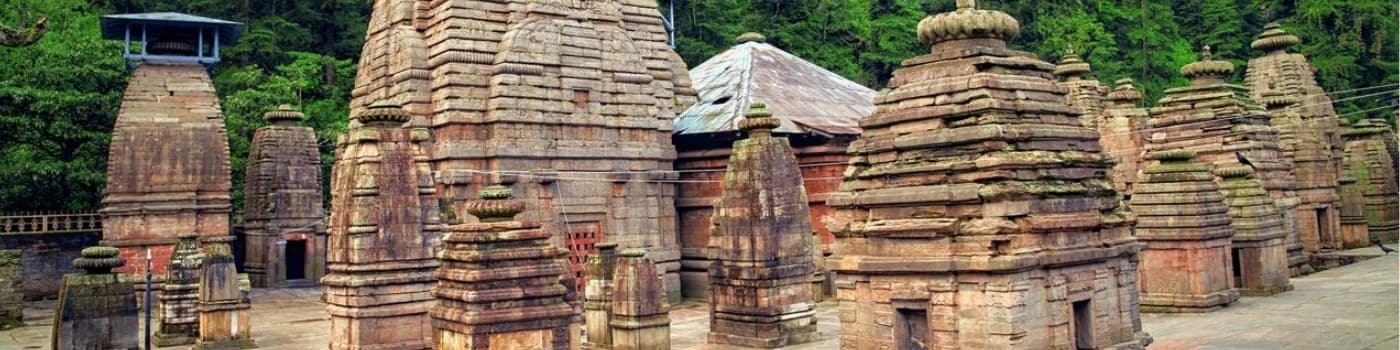
- Jageshwar Dham: Situated around 35–40 km from Almora, Jageshwar Dham is a celebrated temple complex set in a wooded valley among deodar trees. The site contains numerous ancient stone temples, many dedicated to Lord Shiva, and is an important centre of religious and architectural heritage in Kumaon. Its setting combines sacred architecture with the tranquillity of the surrounding forest. The complex is visited throughout the year, with larger gatherings during religious occasions such as the annual Jageshwar Monsoon Festival.
- Martola: Martola is a small, scenic area near Almora, known for its greenery, forested surroundings and views across the hills. It offers a quieter alternative to the town’s busier attractions and is suited to visitors who enjoy peaceful outdoor settings. The route through the surrounding countryside provides glimpses of traditional settlements and the varied landscape of Kumaon. Facilities may be limited compared with Almora town, so visitors should plan accordingly.
Best Time to Visit Almora
The best time to visit Almora is generally from March to June and September to November, when the weather is suitable for exploring its temples, heritage areas, forest trails and surrounding hill destinations. Spring brings pleasant temperatures and colourful vegetation, while autumn often offers clearer skies and excellent views of the Himalayan peaks. The town can be visited throughout the year, although monsoon rainfall and winter temperatures may affect outdoor plans.
- Summer (March to June): Summer is a popular season to visit Almora, with generally comfortable conditions for sightseeing and exploring the surrounding countryside. Visitors can discover Nanda Devi Temple, Kasar Devi Temple and the traditional lanes of Lala Bazaar, or take excursions to Binsar and Jageshwar. Temperatures can rise in late May and June, but the hill town usually remains cooler than the plains.
- Monsoon (July to September): The monsoon brings rainfall that refreshes Almora’s forests and hillsides, creating a lush landscape. However, heavy showers may reduce visibility and cause landslides or delays on mountain roads. Visitors planning trips to Binsar Wildlife Sanctuary, Jageshwar or other nearby destinations should check local weather and road conditions before setting out.
- Autumn (October to November): Autumn is one of the most rewarding periods to explore Almora, as the weather is generally cool and the skies are often clearer. These conditions are favourable for visiting temples, walking through the old market and enjoying panoramic mountain views. It is also a good season for excursions into the surrounding forests and villages.
- Winter (December to February): Winter brings cold mornings and evenings, with temperatures occasionally approaching freezing. The season can offer crisp air and striking Himalayan views on clear days, although fog or cloud may affect visibility. Snowfall is uncommon in Almora town itself but may occur in higher areas nearby. Visitors travelling during winter should carry warm clothing, especially for early-morning sightseeing and evening outings.
How to Reach Almora
- By Air: The nearest airport to Almora is Pantnagar Airport, approximately 115–127 km away by road. Flight availability may be limited, so it is advisable to check schedules before travelling. From the airport, taxis can be hired for the onward journey to Almora. Travellers can also fly to Delhi and continue to Almora by road or rail followed by road transport.
- By Rail: Kathgodam Railway Station, approximately 85–90 km from Almora, is the nearest major railway station. It has train connections with cities including Delhi and Lucknow, making it a convenient railhead for reaching the Kumaon region. From Kathgodam, visitors can continue to Almora by taxi or bus. Haldwani, located nearby, also offers road transport connections to the town.
By Road: Almora is connected by motorable roads to Haldwani, Nainital, Ranikhet, Pithoragarh and other destinations across Uttarakhand. Regular bus services operate between Almora and major towns in the region, while taxis and private vehicles offer flexible travel options. Travellers coming from Delhi can reach Almora via the plains of Uttar Pradesh and the Kumaon foothills. Since the final stretch involves winding mountain roads, additional travel time should be allowed during the monsoon and peak holiday periods.


 English
 Chinese (Simplified)
 Dutch
 French
 German
 Hebrew
 Italian
 Portuguese (Brazil)
 Russian
 Spanish
 Arabic