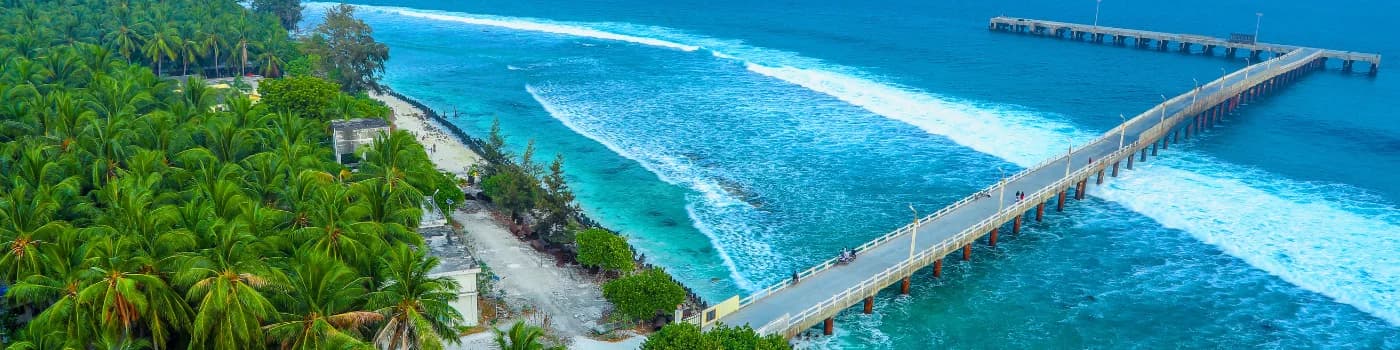
Agatti is a picturesque island in Lakshadweep, set in the Arabian Sea and known for its turquoise lagoon, coral reefs and stretches of white sandy shoreline. Its narrow strip of land is bordered by clear waters, creating a striking landscape that captures the natural beauty of India’s smallest Union Territory. With coconut palms, colourful marine life and a relaxed island atmosphere, Agatti offers a distinctive escape from the bustle of mainland destinations.
The island is particularly popular for its lagoon and opportunities to explore the surrounding marine environment. The clear waters and coastal scenery also make Agatti appealing to those who prefer quiet beach experiences and time spent close to nature.
Agatti is a key gateway to Lakshadweep, as the island is home to the territory’s only airport. It serves as a key entry point for visitors travelling from mainland India and onward to other islands where authorised connections are available. Despite this role, Agatti retains the character of a small island community, with local traditions, fishing and everyday life closely connected to the sea.
The island’s culture reflects the customs of Lakshadweep’s predominantly Muslim communities, alongside a wider maritime heritage shaped by generations of life on the Arabian Sea. Visitors are encouraged to respect local customs, follow environmental guidelines and use authorised operators for water-based excursions. Agatti brings together pristine lagoons, beautiful coastal scenery and local traditions, offering a memorable experience of island life in Lakshadweep.
Places to Visit in Agatti
- Agatti Lagoon: Agatti Lagoon is one of the island’s defining natural features, with shallow turquoise waters, coral formations and a variety of tropical fish. Its sheltered stretches offer opportunities for snorkelling, kayaking and glass-bottom boat rides, subject to weather conditions and authorised operator arrangements. The changing shades of blue across the lagoon make it a memorable spot for appreciating Lakshadweep’s marine environment.
- Agatti Beach: Agatti’s beaches are known for their pale coral sand, coconut palms and clear coastal waters. They provide a peaceful setting for seaside walks, relaxation and watching the changing colours of the sea throughout the day. Visitors should follow local guidance on swimming and avoid disturbing coral fragments or other marine life.
- Agatti Golden Jubilee Museum: The Golden Jubilee Museum offers an opportunity to learn about the history and cultural heritage of Lakshadweep. Its exhibits help visitors understand the islands’ maritime connections, traditional life and material culture. Check locally for current opening hours and access arrangements before planning a visit.
- Juma Masjid: Juma Masjid is an important religious landmark in Agatti and reflects the central role of Islam in the island’s community life. The mosque is also part of the island’s cultural landscape, shaped by longstanding connections across the Arabian Sea. Visitors should dress respectfully, observe prayer times and follow local guidelines regarding entry.
- Agatti Airport: Agatti Airport is a distinctive feature of the island and the principal air gateway to Lakshadweep. The approach by air can reveal striking views of the narrow island, surrounding reef and lagoon. Although the airport primarily serves transport needs, its location illustrates the close relationship between the island’s geography and its connectivity with mainland India.
- Agatti Jetty: The jetty is an important point for boat movements and local maritime connections. From the waterfront, visitors can observe the close relationship between daily life and the sea, including fishing and transport activities. Boat services and access arrangements vary, so excursions should be organised through authorised operators.
- Agatti Coral Reef: The coral reef surrounding Agatti supports a diverse marine environment, including colourful fish and other sea life. Depending on conditions and permitted activities, visitors may explore selected areas through snorkelling or guided diving experiences. Coral ecosystems are fragile, so touching, standing on or collecting coral should be avoided.
- Coastal Fishing Areas: Fishing is an important part of Agatti’s economy and traditional way of life. Observing the island’s fishing areas offers a sense of how local livelihoods remain connected to the surrounding waters. Any visit should respect working areas, private property and the routines of the fishing community.
- Coconut-Grove Settlements: Coconut palms are a familiar feature of Agatti’s landscape, surrounding homes and parts of the island’s settlement areas. Exploring accessible village lanes with respect for residents provides a chance to appreciate the island’s everyday rhythm, local architecture and community life. Visitors should seek permission before photographing people or private homes.
- Island Viewpoints and Scenic Coastal Stretches: Agatti’s compact geography means that lagoon views, open sea and sandy shoreline are often found close together. Accessible coastal stretches offer opportunities for photography, quiet walks and observing the contrast between the reef-protected lagoon and the open Arabian Sea. Visitors should follow local advice about tides, weather and restricted areas.
Best Time to Visit Agatti
The best time to visit Agatti is generally from October to March, when the weather is more comfortable and sea conditions are often suitable for exploring the lagoon and enjoying water-based activities. The island has a tropical climate throughout the year, so visitors should consider rainfall, humidity and boat schedules when planning their stay. As access to Lakshadweep is regulated, permits and transport arrangements should be confirmed well in advance.
- Winter (October to February): Winter is generally the most favourable season to explore Agatti. Temperatures are comparatively comfortable, and the weather often supports beach visits, sightseeing and marine activities such as snorkelling, scuba diving and glass-bottom boat rides.
- Summer (March to May): Summer brings warmer days and higher humidity. Visitors can still enjoy the beaches and lagoon, but outdoor activities are best planned for the morning or late afternoon. Sun protection and adequate hydration are important, particularly during excursions. Water sports may operate during this period, depending on weather, visibility and local arrangements.
- Monsoon (June to September): During the monsoon, Agatti experiences frequent rain, stronger winds and unsettled sea conditions. These may affect boat services and water-based excursions, so travel plans may require flexibility. The island remains appealing for those interested in its quieter atmosphere, but this season requires flexible planning. Check official travel updates, transport schedules and local advice before confirming a visit.
How to Reach Agatti
Agatti is the main air gateway to Lakshadweep and can be reached from mainland India by air, with sea connections available for travel between the islands.
- By Air: Agatti Airport is the only airport in Lakshadweep and receives flights from Kochi, subject to the operating schedule. Kochi is a major mainland connection point, with onward flights available from several Indian cities. From the airport, local transfers can be arranged to accommodation and other parts of the island.
- By Rail: Agatti has no railway station. Travellers arriving by train can travel to Ernakulam Junction in Kochi, then continue to the airport for a flight to Agatti. Kochi has rail connections with major cities across India.
- By Ship: Passenger ships operate between Kochi and Lakshadweep, with services and routes varying by schedule and island. Confirm sailing dates, ticket availability and the relevant port of arrival through official Lakshadweep travel channels before planning this option.


 English
 Chinese (Simplified)
 Dutch
 French
 German
 Hebrew
 Italian
 Portuguese (Brazil)
 Russian
 Spanish
 Arabic