

Maharashtra is a land of numerous wonders. These are forts, bustling cities, coastlines, and some of the most sacred pilgrimage sites in the country. But if you are looking for a journey that touches your soul rather than just your itinerary, a Shirdi tour package is where to begin.
Why Shirdi Draws Millions of Pilgrims Every Year
There are places you visit, and then there are places that visit you back. Shirdi is in the second category.
Located in the Ahmednagar district of Maharashtra, this small town doesn’t announce itself with grand architecture or flashing neon signs. What it offers instead is something far rarer, a quiet, steady sense of peace that settles over you the moment you arrive. The streets hum with devotional chants. The air smells of incense and fresh flowers. And everywhere you look, people have arrived carrying something heavy, worry, grief, hope, and doubt. After visiting Shirdi, they seem, somehow, lighter and happier.
Shirdi is home to the shrine of Sai Baba, one of India’s most beloved and widely revered spiritual figures. His message was beautifully simple: Shraddha aur Saburi (faith and patience). He preached love across religious divides, welcomed Hindus and Muslims alike under one roof, and lived with a humility that put kings to shame.
Sai Baba arrived in Shirdi as a young man of about 16, was first seen sitting under a neem tree, and never really left. He lived in a modest mosque he called Dwarkamai until he passed into samadhi in 1918. More than a century later, his presence in that town feels as alive as ever.
That, in essence, is why a Shirdi tour continues to draw millions of pilgrims and travellers each year, from India and across the world.
Shirdi Sai Baba Temple: The Heart of the Shirdi Tour
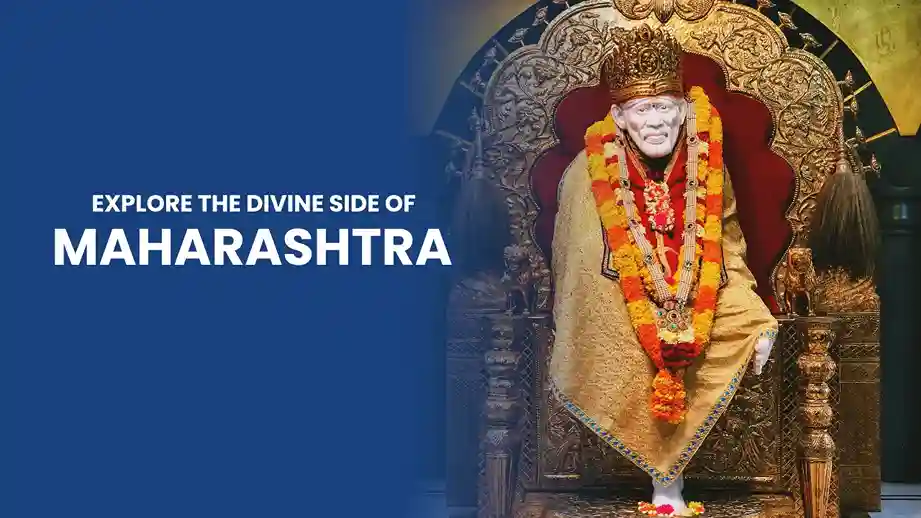
The centrepiece of any Shirdi trip is, of course, the Shirdi Sai Baba Temple complex, more specifically, the Samadhi Mandir. It is where Sai Baba’s final resting place is housed, beneath a stunning marble shrine crafted with devotional care.
The marble idol of Baba seated on a throne, installed in 1954, gazes out at all who enter with an expression that visitors often describe as both warm and searching. It seems Sai Baba sees straight through the surface of things.
The Samadhi Mandir opens at 4:00 AM and remains accessible until 10:30 PM. Four aartis are held daily – at dawn, noon, sunset, and night. Attending even one of these rituals is an experience you won’t easily forget. The Kakad Aarti at 4:30 in the morning, in particular, is something special. The hall fills with chanting, the flames sway, and hundreds of devotees bow in unison. Even if you haven’t slept particularly well, you leave that prayer feeling oddly awake, oddly still.
Dwarkamai: Where Baba Lived and Healed
Dwarkamai lies just beside the Smadhi Mandir. It is the old mosque that Sai Baba adopted as his home. The mosque was a neglected, crumbling building before his arrival. He renovated, named, and turned it into a place where he spent the maximum part of his life, healing his sick, counselling the worried people, and showing that the divine is a companion to ordinary human beings.
Inside Dwarkamai, there is the sacred Dhuni, an eternal fire that Baba kept lit and still burning. Devotees gather here to receive Udhi, the sacred ash from this fire, which Baba distributed freely as a symbol of his blessing. Watching the Dhuni burn in that ancient room, with the portrait of Baba gazing out from the wall, gives you a strong and inexplicable sense that time hasn’t entirely moved on from this spot.
The Other Sacred Stops Within Shirdi
A well-planned Shirdi travel package will take you beyond the main temple to the quieter, equally meaningful corners of this holy town.
Gurusthan
It marks the spot where Sai Baba was first seen as a young ascetic, meditating under a neem tree. The tree still stands, and its leaves are said by many devotees to carry healing properties. It’s a gentle, contemplative space and has fewer crowds than the main temple. Sitting here for a while is worth it.
Chavadi
It is the place where Baba slept on alternate nights and where a Thursday procession recreates that journey each week. Sai Baba’s palanquin is carried from the Samadhi Mandir through the streets to Dwarkamai and on to Chavadi, accompanied by songs and chanting. If your visit falls on a Thursday, don’t miss this.
Lendi Baug
It is a garden that Baba himself tended and watered daily. It’s now a peaceful green space with a small shrine and the Nanda Deep, a lamp that Baba once lit. It is said that the lamp has never gone out since. It’s a lovely place to breathe, reflect, and slow down.
Khandoba Mandir
It is the temple where Sai Baba was greeted with the words “Ya Sai!” when he first arrived in Shirdi. According to tradition, it is how he came to be known as Sai. It’s one of the oldest sites in town and holds a particular significance in his story.
Sai Heritage Village
It offers an engaging and thoughtfully designed recreation of village life from Baba’s era. If you are visiting Shirdi with children and elders, you can make the story accessible for younger visitors by visiting it.
Day Trips That Add Spiritual Depth: Shani Shingnapur
No Shirdi trip package is really complete without a visit to Shani Shingnapur, about 65 to 70 kilometres away. This village is extraordinary for one very particular reason: virtually none of its houses have doors. Not just unlocked doors. No doors at all.
The people of Shani Shingnapur believe that Lord Shani, the deity associated with the planet Saturn, protects their village from harm. The idol of Lord Shani at the temple here sits on an open platform under the sky, no roof, no walls enclosing it. Devotees offer oil and prayers, and the atmosphere carries a striking combination of raw faith and quiet power.
It’s the kind of place that makes you question what protection really means, and where it comes from. Whether or not you’re religiously inclined, Shani Shingnapur is fascinating.
Visit Nashik, Trimbakeshwar, and Beyond to Extend Your Journey
If you are a curious traveller, exploring Maharashtra with customised Maharashtra tour packages can be a rewarding experience. With such one, you can extend your Shirdi tour to Nashik, Trimbakeshwar that are around 100 kilometres away.
Nashik is an ancient city on the banks of the Godavari River. This city is one of the four sacred sites of the Kumbh Mela, the largest religious gathering on earth. The ghats at Panchavati, the ancient Kalaram Mandir, and the dense mythology that clings to every corner of this city make it a deeply rewarding stop.
From Nashik, Trimbakeshwar is a short journey away. This temple is one of the twelve Jyotirlingas and is the most sacred shrine of Lord Shiva in all of India. It lies at the very source of the Godavari River. The architecture is striking, the setting amid green hills is beautiful, and the spiritual atmosphere is profoundly calm.
If time allows, you can include Bhimashankar and Grishneshwar, two more Jyotirlingas, in your trip. With it, you can turn your trip into the most spiritually and culturally rich journeys.
What to Expect from a Shirdi Tour Package
A good Spiritual Shirdi tour package typically covers accommodation close to the temple, local transfers, and sometimes assistance with darshan passes that can help you save time, especially during festivals and weekends.
Most of these packages are designed and curated around two to three nights. Such one gives you ample time to attend multiple aartis, visit the holy sites in and around Shirdi, and make a day trip to Shani Shingnapur without any hurry. The packages of more days (5 to7 days or more) include Nashik, Trimbakeshwar, or even the cave temples. You can request for a customised Shirdi trip package by offering details on the places you want to visit, hotels to stay, and vehicles you ride for local transfers.
Best Time to Visit

The best time to visit Shirdi is from October to March. During these months, Maharashtra heat is manageable and the weather is pleasant. That said, Shirdi is open and welcoming all year round.
Festivals like Ram Navami, Guru Purnima, Vijayadashami, and Dussehra bring an extra dimension of colour and devotion, though they also bring much larger crowds. If peaceful darshan matters more to you than festive atmosphere, the quieter months of the winter season are your best bet.
How to Reach
Getting there is straightforward. Fly to Shirdi Airport, which is about 14 kilometres from the town centre. This airport has flights from Mumbai, Delhi, and Hyderabad.
For a rail journey, board a direct or connecting train to the Sainagar Shirdi Railway Station, which is well-connected to major cities across the country. And by road, Shirdi is around 240 kilometres from Mumbai and 190 kilometres from Pune. With a car rental in Mumbai or Pune, you can explore Maharashtra countryside along with Shirdi.
The Food, the Prasad, and the Small Details That Stay With You
A visit to Shirdi isn’t only about the big spiritual moments. Some of the most memorable parts are quieter, smaller. You can enjoy free meals at the Prasadalaya, a community kitchen run by the Shirdi Sai Baba Sansthan Trust. The meals are served to everyone regardless of religion, caste, or background.
The hall fills with hundreds of people, great vessels of food are carried out, and nobody goes without. It’s an embodiment of Baba’s teachings, playing out in real time, in a dining hall.
The Udhi given at the temple, a pinch of sacred ash in a small packet, is taken home by nearly every visitor. Locals sell simple Sai Baba portraits, small brass idols, and marigold garlands in the markets nearby. You don’t need to spend much. But most people come away with something.
A Journey Worth Taking
Among most spiritually layered states in India, Maharashtra holds a special place. Its holy places include Jyotirlingas, Ashtavinayak Ganesh temples, Shaktipeethas, and the holy towns of saints who reshaped how millions of people understand devotion. Shirdi sits at the heart of all this.
A customised Shirdi tour package is an invitation to slow down, to set aside the noise of daily life, and to sit in a place where faith has been lived quietly, stubbornly, and joyfully.
Whether you come as a devotee seeking Baba’s blessings, as a curious traveller drawn by history, or simply as someone who needs a few days of quiet, Shirdi has a way of giving you exactly what you came for.
Practical Tips for Exploring the Divine Side of Maharashtra
- Dress modestly by covering shoulders and legs. Avoid wearing revealing clothes, especially before entering a sacred place
- Take off your footwear at the temple entrance; carry a small bag for your shoes
- Attend the Kakad Aarti at 4:30 AM
- Book VIP darshan passes in advance to skip lengthy queues
- Carry cash for small donations and local market shopping
- Enjoy the free vegetarian meals served by the Prasadalaya
- October to March is the most comfortable time to travel
Conclusion
Shirdi earns you over quietly without any announcement. Pilgrims come for darshan and leave it carrying something they can’t explain: a stillness, a lightness, a sense of shifting. A Shirdi tour package gets you there; what happens once you arrive is totally its own thing. Go with an open heart. Baba, as his devotees will tell you, takes care of the rest.
FAQs
Q1. What is included in a typical Shirdi tour package?
Usually, it covers accommodation near the temple, transfers, darshan pass assistance, and guided visits to the main sacred sites such as Samadhi Mandir, Dwarkamai, Chavadi, Gurusthan, and Lendi Baug. With a customisation request, it can include flight/train tickets, VIP darshan, and whatever you want.
Q2. How many days are enough for a Shirdi tour?
Two nights and three days is sufficient for the core Shirdi experience – temple visits, two or three aartis, and a trip to Shani Shingnapur. For a more relaxed pace with Nashik or Trimbakeshwar added in, three nights and four days works better. Five or more days suits those covering the full Jyotirlinga or cave temple circuit.
Q3. What is the best time to visit Shirdi?
October to March is the best time, when the weather is mild and comfortable for temple visits. December and January are particularly pleasant. Ram Navami, Guru Purnima, and Dussehra are the biggest festivals – vibrant but very crowded. Summer months (April to June) bring intense heat, though queues are shorter.
Q4. Is Shirdi suitable for first-time pilgrims and non-religious travellers?
Yes, Shirdi welcomes travellers of every type. As Sai Baba’s teachings drew no lines between faiths, so it is open to visitors with any background and faith.
Q5. Can I combine a Shirdi tour with other pilgrimage sites in Maharashtra?
Yes, you can. On your request, we can add sacred places to the itineraries of your Shirdi tour. These places could be Shani Shingnapur (65 km), Nashik (90 km), Trimbakeshwar Jyotirlinga.