

The Jagannath Temple in Puri (Odisha) is a world of faith, tradition, and coastal charm, making it one of India’s most important pilgrimage destinations. This Jagannath Temple Puri Travel Guide will help you explore the temple complex, understand its rituals, and discover nearby attractions in Puri with ease.
In this detailed Jagannath Temple Puri travel guide, learn about:
- An Overview of the Temple
- Why is Jagannath Temple Famous?
- Jagannath Temple’s Brief History and Architecture
- Darshan Timings
- Best Time to Visit Jagannath Temple
- Practical Darshan Tips
- How to Reach Puri and Jagannath Temple
- Nearby Key Attractions
An Overview of Jagannath Temple
The temple lies in the heart of Puri, Odisha. It is one of the four holy Char Dham pilgrimage sites for Hindus. This temple is dedicated to Lord Jagannath, a form of Lord Vishnu. The temple complex also has the idols of Goddess Subhadra and Lord Balabhadra.
The primary temple site that you see today dates back to the rule of Anantavarman Chodaganga Deva of the Eastern Ganga dynasty, who ordered its construction around the 12th century. Over time, many rulers of the dynasty added walls, smaller shrines, and gateways. All these turned the temple complex into a huge sacred city with intricately carved stonework and towering spires.
Puri is a busy but beautiful seaside town. Here, the rhythm of the sea combines with the sound of conch shells and temple bells. For many, a visit to it with the Puri Yatra Odisha Tour is both a pilgrimage and a refreshing coastal holiday.
Jagannath Temple at a Glance
- Location: Puri, Odisha
- Dedicated to: Lord Jagannath, Lord Balabhadra, and Goddess Subhadra
- Built in: 12th century
- Architectural Style: Kalinga architecture
- Famous for: Rath Yatra, Mahaprasad, Char Dham pilgrimage
- Nearest Airport: Biju Patnaik International Airport in Bhubaneswar
- Nearest Railway Station: Puri Railway Station
- Best Time to Visit: October to February
Why is Jagannath Temple Famous?
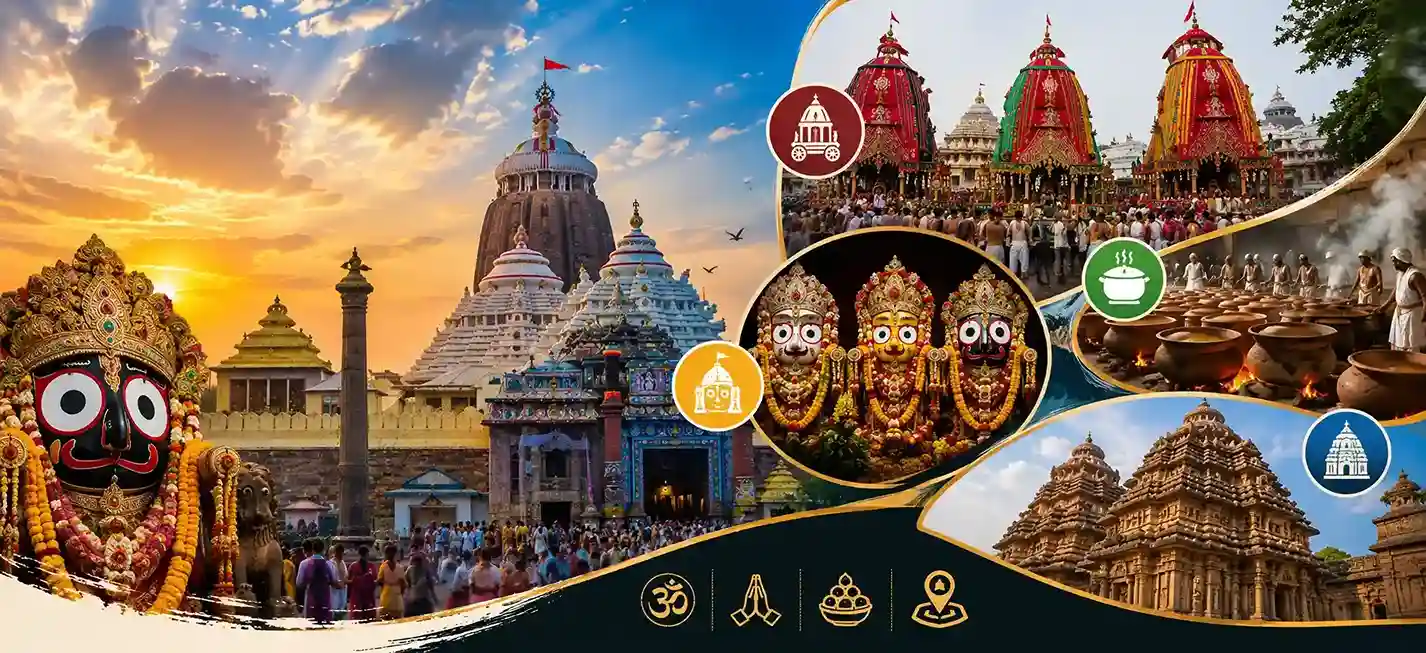
The Jagannath Temple is among India’s most sacred pilgrimage sites. For Hindus, it holds the same spiritual importance as Badrinath, Dwarka, and Rameswaram, which are the four sacred Char Dham destinations. According to belief, visiting these places leads devotees toward salvation.
The Jagannath Temple is famous for:
- The globally known Rath Yatra festival
- Its mysterious traditions and rituals
- The huge temple kitchen
- Ancient wooden idols of the deities
- Remarkable Kalinga architecture
- 800+ years of continued worship
Jagannath Temple: A Brief History and Legends
The Jagannath Temple’s history is a combination of recorded facts and legends passed down from one generation to another. As popular belief holds, the worship of Lord Jagannath in Puri is closely associated with King Indradyumna, a pious ruler of ancient times, who is said to have built the original shrine after receiving divine guidance in a dream.
The temple gained prominence under the kings of the Eastern Ganga Dynasty. Anantavarman Chodaganga Deva, a leading king, began construction of the present structure in the 12th century. Later, King Anangabhima Deva and his successors continued to expand and decorate the complex and construct the surrounding walls, extra shrines, and gateways.
Over the centuries, the temple has seen invasions, plunder, and political change. However, it has always been restored to its former glory. General Kalapahad attacked the temple and destroyed it in 1568. However, priests safeguarded the wooden deities and resumed the rituals as the Afghan invasions ended.
The administration of the Jagannath Temple went into several hands during the Maratha period and British rule. However, its spiritual importance remained intact. At present, the Shree Jagannath Temple Administration (SJTA) manages rituals, festivals, and the millions of pilgrims who visit the temple complex.
Temple Architecture and Layout
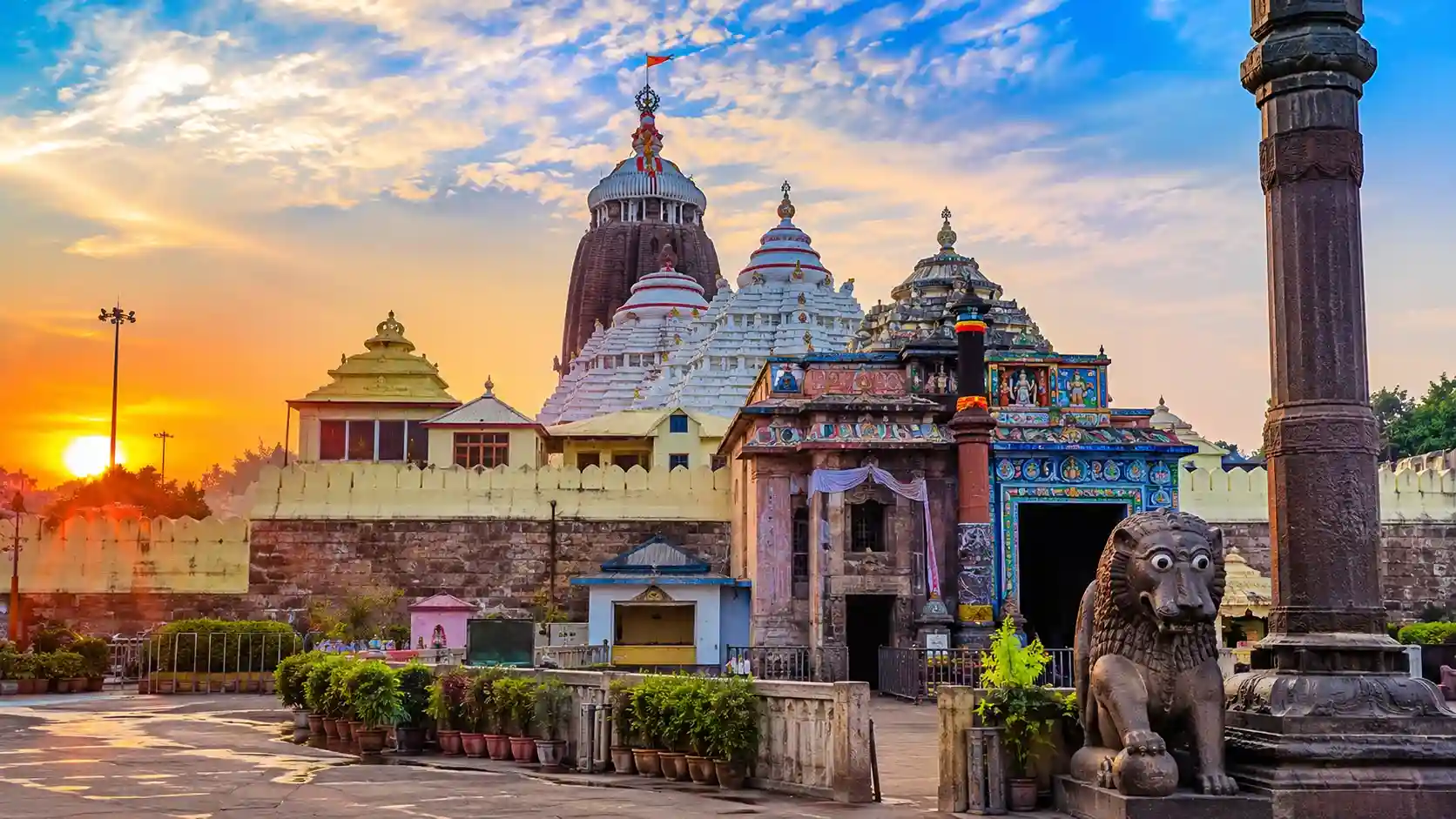
The Jagannath Temple is a good instance of Kalinga-style architecture. It features curving lines and richly carved stone surfaces, along with a tall shikhara (spire). The primary temple complex is enclosed by two walls: the outer Meghanada Prachira and the inner Kurma Prachira.
Entering the temple complex via the eastern Lion’s Gate (Singhadwara) lets you climb the Baisi Pahacha, which is a flight of 22 steps. According to belief, climbing these steps is considered sacred. The key structures are the following:
- Primary sanctum (Vimala and Jagannath shrines)
- Offering hall
- The hall of dance
- Assembly hall (Jagamohana).
Each of these structures aligns along a central axis.
The idols of Jagannath, Balabhadra and Subhadra are made of wood. They are replaced in a special ceremony known as Nabakalebara every few years, unlike the stone idols seen in many other temples. This unique wooden form, with its large round eyes and stylised features, is one of the most distinctive aspects of Jagannath worship.
All around the main shrine, you will find smaller temples, administrative offices and the famous temple kitchen where the Mahaprasad is prepared. The entire complex functions like a small city, with clearly defined routes for rituals, parikramas (circumambulations) and processions.
Opening Hours and Darshan Timings
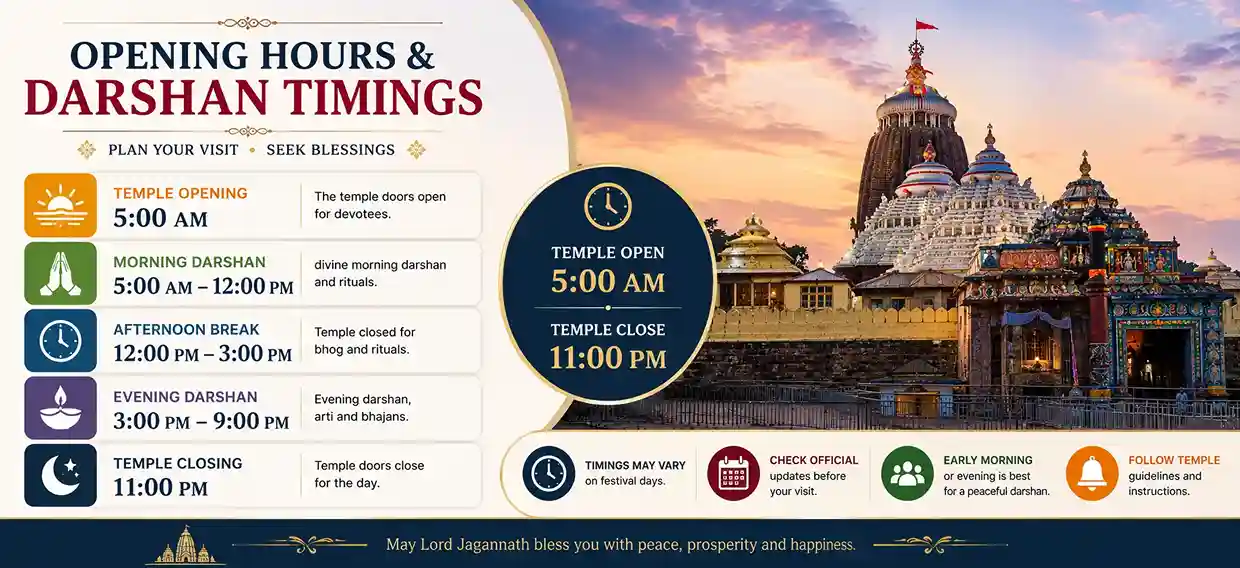
Visiting this temple around the darshan timings is crucial. It has a structured schedule for everything, whatever happens inside.
General Opening Hours
The temple usually opens early in the morning and remains accessible to devotees until late evening. A usual daily opening time is:
- Temple opening time: 5:00 am
- Temple closing time: 11:00 pm
During these open hours, you can do darshan in the following slots:
- Morning darshan: 5:00 am to 12:00 pm
- Afternoon break: 12:00 pm to 3:00 pm
- Evening darshan: 3:00 pm to 9:00 pm
Keep in mind that there might be slight changes in temple darshan timings on special festival days, during critical temple rituals, or for administrative reasons. Therefore, you should check with a local person, the temple’s official website, or recent temple notices before you travel.
Best Time of the Day for Darshan
For a calmer, smoother experience, try to visit the temple very early in the morning, before 9:00 am. Otherwise, you can visit it in the evening around 8:00 pm. During these periods, there are fewer crowds. Morning darshan in Puri’s cool air feels more peaceful, particularly in the summer.
During peak festivals like the globally known Rath Yatra, queues can be long, and the temple surroundings can be extremely crowded. So, take out extra time and follow the police and temple security instructions carefully to make your trip comfortable and hassle-free.
Temple Entry Rules
There are certain norms to enter the Jagannath Temple. As a visitor, you should be aware of the norms before you plan your trip to Puri and the temple. According to the temple’s administration and traditions, which have been followed for generations, non-Hindus are not permitted to enter the main campus. Likewise, foreign tourists can view the temple from outside, usually from the rooftops of nearby buildings, such as Raghunandan Library.
Visitors are expected to wear body-covering clothing and take off footwear before entering the temple’s inner areas. No photography is allowed. So, avoid carrying your camera or smartphone. Put your gadgets and belongings in the designated area before going through security.
As with most temples, alcohol and tobacco are not allowed. You should avoid bringing leather items inside. Always respect the priests and local devotees, follow the queue system, and avoid pushing, particularly during busy darshan times.
Best Time to Visit Jagannath Temple
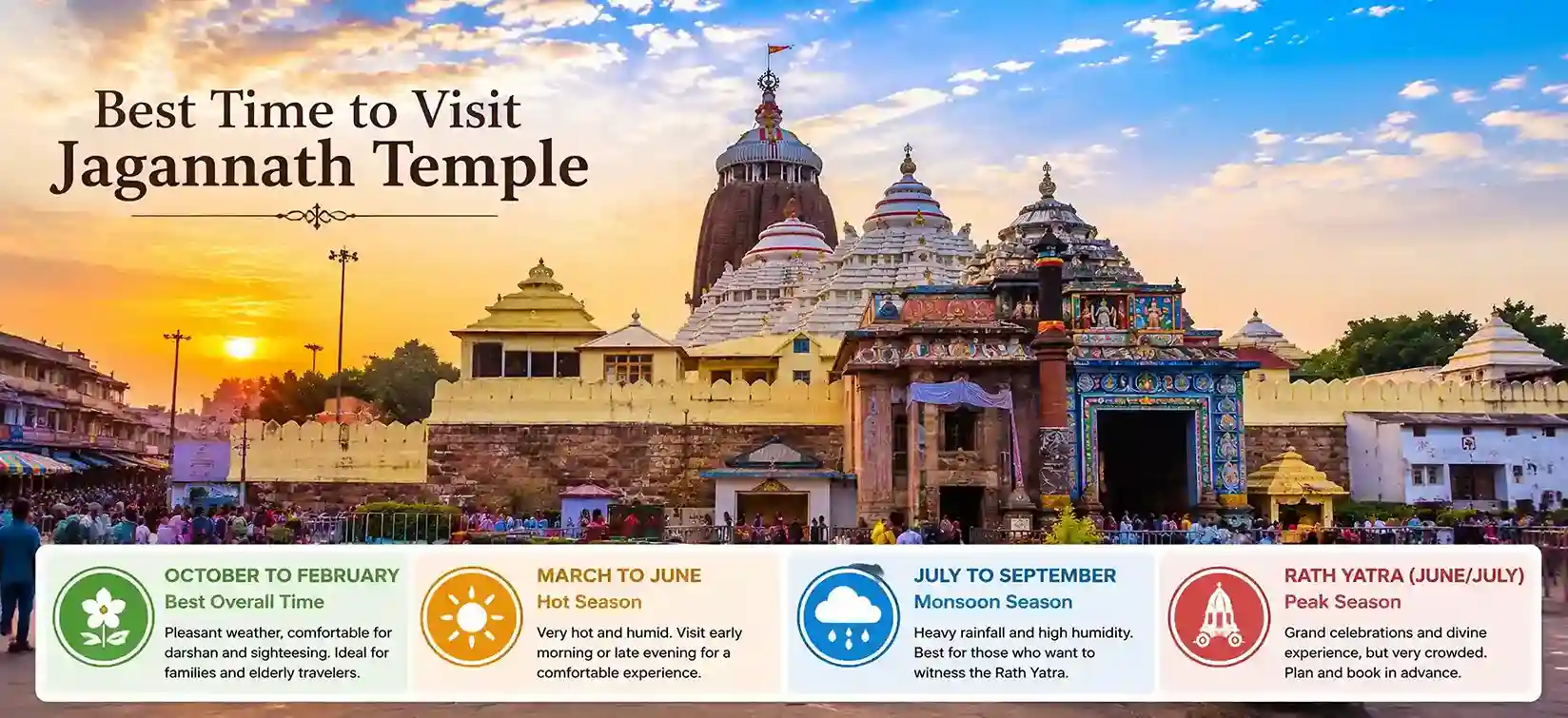
Puri is a seaside town and has a tropical climate. So, weather and crowd levels here vary throughout the year. To make your pilgrimage more comfortable, choose the right time for your Jagannath Temple trip.
October to February: Overall Best
The months from October to February are the best time to visit the Jagannath Temple. The weather during these months is cool and pleasant with lower humidity and milder temperatures. It is easier to stand in queues and enjoy walks around the temple and the beach.
It is also a good time for beach activities and sightseeing. You can easily explore nearby attractions. However, around the New Year and major festivals, there is higher footfall. So, plan your trip and book your accommodation in advance.
March to June: Not Ideal for Everyone
Puri is extremely hot, humid from March to June. Daytime temperatures go up above 40 degrees Celsius. Early morning or late evening hours are ideal if you plan your Puri trip in summer.
July to September: Monsoon and Rath Yatra
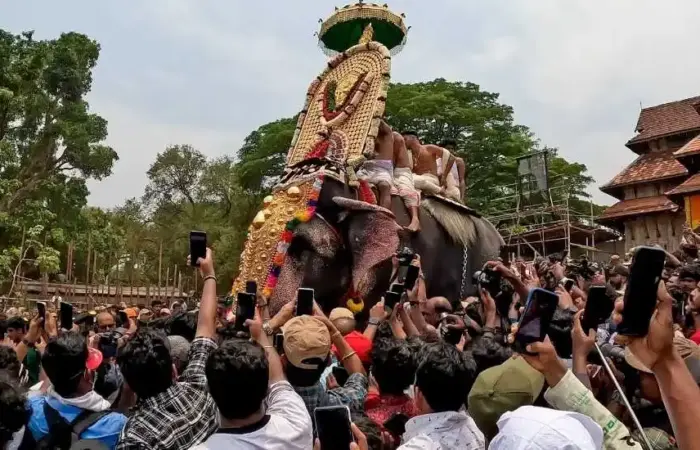
During the monsoon months, Puri receives heavy rainfall and has high humidity. The season is good to visit Puri if you want to witness the globally famous Rath Yatra. Numerous devotees consider the Rath Yatra the most auspicious as the chariots with deities are pulled by thousands of devotees.
During this period, Puri is chaotic and overcrowded with long queues, traffic restrictions, and packed streets. Avoid visiting the Jagannath Temple if you are travelling with children and elders. Choose a quieter month for your trip to Puri.
Key Festivals and Rituals
The temple has a rich festival calendar, which makes the entire town of Puri come alive. Daily rituals are elaborate. However, certain annual events are distinguished and have unique spiritual significance. Here are key festivals and rituals held at the temple complex and in Puri town:
- Rath Yatra (Chariot Festival): It is the most significant festival and usually falls in June or July. In it, the deities are taken from the primary temple to the Gundicha Temple in huge, beautifully adorned wooden chariots.
- Snana Yatra: It is the bathing festival. During it, the idols are given a ceremonial bath. Thereafter, the idols are kept away from public view for a brief period, which is acknowledged as Anavasara.
- Nabakalebara (periodic): It is a rare ritual and usually takes place every 12 to 19 years. During this ritual, the wooden idols are replaced with newly carved ones from sacred neem trees, followed by secret ceremonies.
If you can plan your visit to witness one of these festivals and you are comfortable with crowds, it can be a once-in-a-lifetime experience. Book trains, flights and hotels well in advance and keep your schedule flexible. A customised Odisha tour package can include everything you want in your Puri trip.
How to Reach Puri and the Temple
Puri has good air, rail, and road connectivity. Fly to Bhubaneswar Airport and book a private taxi to reach Puri. Puri is 60 km from the Bhubaneswar airport. You can easily cover this distance in 2 hours.
The temple is located in the old part of Puri town and can be reached easily by auto‑rickshaw, cycle‑rickshaw or taxi from most hotels. Vehicles are typically stopped a short distance away from the main gate, and you will need to walk through busy market lanes lined with shops selling flowers, prasad, brass items and religious souvenirs.
Some roads around the temple may be closed to traffic during major festivals or high‑security days. You may have to walk longer. Keep cash handy for small purchases and tipping porters or rickshaw pullers, as smaller vendors may not accept digital payments.
Practical Darshan Tips for First‑Time Visitors
With proper planning, you can make your trip and temple darshan smooth. Here are some simple, useful tips for your support:
- Arrive Early: Reach the temple before 8:00 to 9:00 am or after 8:00 pm to avoid heavy crowds and hot, humid weather, especially in summer.
- Keep Minimum Essentials with You: Carry only what you truly need, a small purse, some cash, an ID card, and a water bottle. And leave it outside with someone you trust, as bags may be restricted in the inner areas.
- Follow the Queue: Strictly follow the official queues and instructions from temple staff and police. It keeps everything more orderly and safer for everyone.
- Respect Local Customs: Watch what locals do, how they bow, where they stand, when they remove footwear. And follow suit to avoid unintentionally breaking any norms.
- Plan for breaks: If you are visiting with elderly family members, schedule rest breaks and perhaps avoid the steepest steps or longest queues during peak hours.
Many visitors also choose to take a local panda (temple guide priest) to help navigate rituals and offerings. If you do so, agree on the expected dakshina (fee) politely beforehand to avoid confusion later.
Mahaprasad and Temple Food
One of the highlights of visiting Jagannath Temple is tasting the Mahaprasad, the sacred food cooked in the temple’s huge kitchen and offered to the deities before being distributed to devotees. The temple kitchen is believed to be one of the largest in the world, with hundreds of cooks and assistants preparing food daily in earthen pots over wood‑fired stoves.
The Mahaprasad is traditionally rice‑based, accompanied by a variety of lentils, vegetables and simple sweets, all cooked without onion or garlic. After being offered, it is sold in the Anand Bazaar area inside the complex, where devotees can buy it in leaf plates and eat sitting on the floor or carry it away.
Many visitors also try the Abhada (a type of temple meal) served at and around the temple, known for its simple, sattvic taste and spiritual significance. Eating Mahaprasad is considered a form of blessing. So, make time in your itinerary to enjoy at least one such meal in your Puri temple trip.
Where to Stay in Puri
Puri has an extensive array of accommodations. It includes budget lodges, dharmashalas, mid‑range hotels, and beach resorts. Staying near the old town or Grand Road area makes it easier to walk to the temple early in the morning or late at night.
If you want to combine your pilgrimage with a relaxed seaside break, consider staying along Marine Drive or near the main beach and commuting to the temple by rickshaw. Many hotels in Puri are used to hosting pilgrims and can help arrange local transport, guides, and packed meals.
During peak times such as Rath Yatra, New Year’s Eve, and major long weekends, hotels fill up quickly, and prices rise. Book your accommodation in advance. Reconfirm it a few days before arrival, especially if you are travelling from far away.
Nearby Attractions and Short Trips
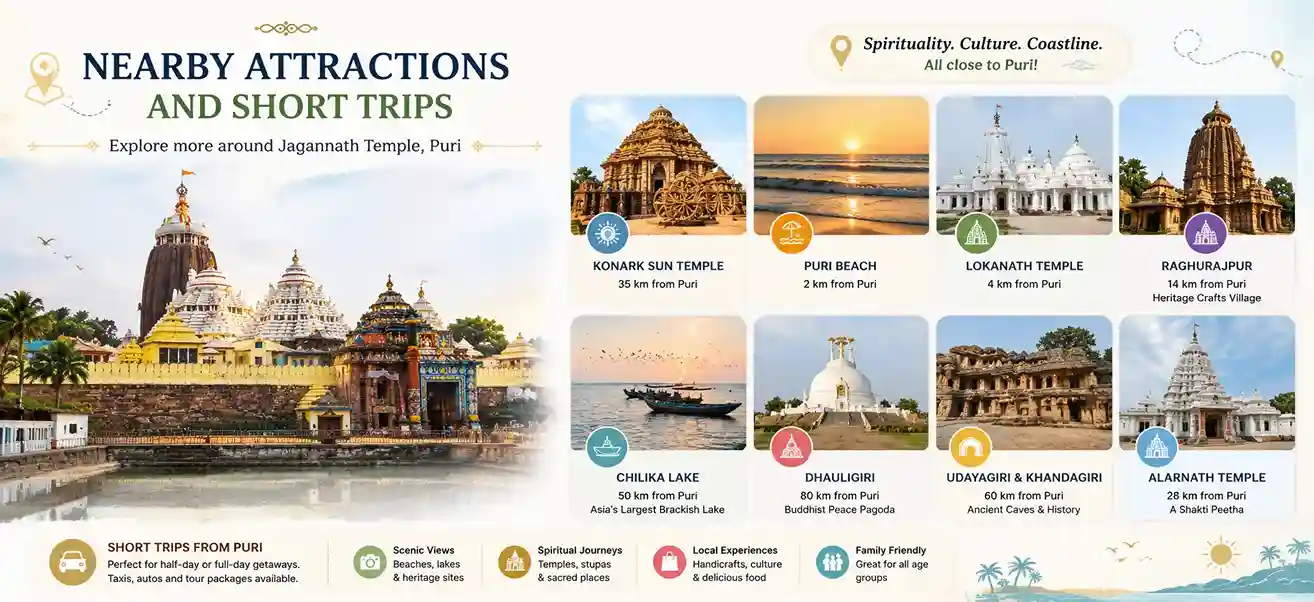
While the temple is the main draw, Puri and its surroundings offer several other places worth exploring. You can easily blend spiritual visits with nature, culture, and coastal relaxation.
- Puri Beach: A wide sandy stretch ideal for sunrise and sunset walks, local snacks, and watching fishermen at work.
- Gundicha Temple: Located about 3 kilometres from Jagannath Temple, this is where the deities stay during Rath Yatra.
- Konark Sun Temple: A UNESCO‑listed 13th‑century temple about 35 kilometres from Puri, famous for its stone chariot architecture and intricate carvings.
- Chilika Lake (Satapada): Around 50 to 60 kilometres away, this lagoon is known for boat rides, migratory birds, and in season, sightings of Irrawaddy dolphins.
Local tour operators or your hotel can easily arrange day trips to these sites, and they add variety to your Jagannath Temple itinerary.
Safety, Health and Responsible Travel
Puri is generally a friendly and welcoming town, but it helps to stay alert and travel responsibly. During crowded festivals, keep a close eye on your belongings and avoid carrying large amounts of cash or flashy jewellery.
The coastal climate can be tiring, especially in summer and monsoon, so drink safe water, use sunscreen, and wear light cotton clothing. If you have health conditions, avoid long stretches in the midday sun and schedule darshan and sightseeing during cooler hours.
Be respectful towards local traditions, avoid littering near the temple or beach, and support small family‑run eateries and shops where possible. Simple acts like using dustbins, refusing plastic where possible, and dressing modestly go a long way toward maintaining the sanctity of the place.
Conclusion
The Jagannath Temple offers a unique blend of living old tradition, spiritual depth, and coastal simplicity. You can make your trip to Jagannath Temple smooth, memorable, and meaningful with proper planning around the season, darshan timings, and simple courtesy.
At Cholan Tours, we can help you visit the temple and the surrounding areas with our customised Odisha tour packages. On your request, we can make all the necessary arrangements, including accommodation, temple visits, and local transfers, to make your trip to Puri easier. Visit our website or contact us to disclose your travel needs.
FAQs
Q1. Why is Jagannath Temple famous?
Jagannath Temple is one of the four Char Dham pilgrimage sites. It is famous for its unique wooden deities of Jagannath, Balabhadra and Subhadra. In addition, it is known for its annual Rath Yatra. During the Yatra, the deities are taken out in huge chariots pulled by thousands of devotees.
Q2. What are the darshan timings at Jagannath Temple, Puri, Odisha?
Generally, Jagannath Temple opens around 5:00 am and closes around 11:00 pm daily. You can do temple darshan from about 5:00 am to 12:00 pm. There is a break from 12:00 pm to 3:00 pm. Again, you can visit the temple and do darshan from 3:00 pm to 10:00 pm. Keep in mind that timings may vary on weekends and festival days.
Q3. What is the best time to visit Jagannath Temple?
The best time to visit Jagannath Temple is from October to February. During this period, the weather in Puri is pleasant and comfortable for temple darshan and sightseeing. On a day, early morning before 9:00 am or late evening around 8:00 pm is the most comfortable time. You will face fewer crowds, or none at all.
Q4. Can non‑Hindus go inside Jagannath Temple?
Traditionally, non-Hindus are not allowed to enter the main temple complex. However, like foreign tourists, they can view the temple from outside, such as from the top of nearby buildings. Consult local or hotel authorities to know the current rules.
Q5. Do I need to follow any dress code for my visit to Jagannath Temple?
There is no strict dress code for visiting the temple. However, you should dress modestly and avoid wearing tight or revealing clothing. It is compulsory for everyone to take off footwear and leather items before entering the primary temple complex.
Q6. How many days do I need to visit Puri and the Jagannath Temple?
One full day is enough for a relaxed visit if your Puri trip is only about temple darshan. You can plan for a 2- to 3-day trip with the right Odisha tour package if you want to visit Konark Sun Temple along with Jagannath Temple.
Q7. Is Rath Yatra a good time to visit Puri?
Yes, it is. The Puri Rath Yatra is a golden time to visit if you want to witness the grand procession and devotional atmosphere. There is a huge crowd and high demand for accommodation and security. So, it might not be an ideal time for many visitors looking for quieter experiences.