
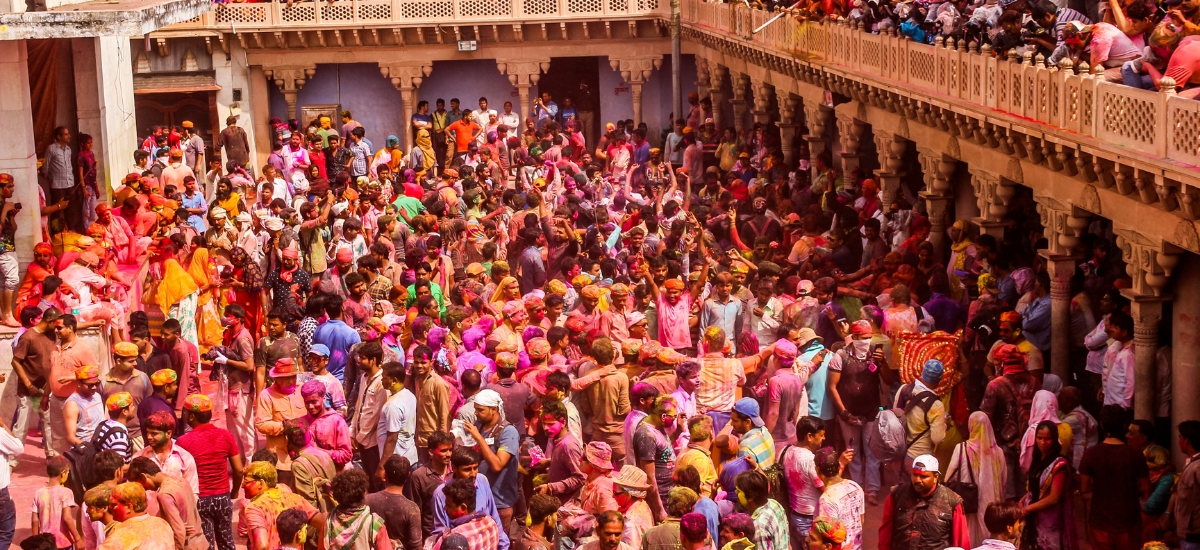
One of India’s most colourful and exuberant holidays is Holi, also known as the Festival of Colours. Holi, a festival that heralds the arrival of spring, is a time when streets are alive with vibrant colours, music, laughter, and community. People congregate to celebrate the spirit of harmony and rebirth, play with coloured powders (gulal), splash water, and share festive candies.
The full moon day (Purnima) of the Hindu month of Phalguna, which typically occurs in March, is when Holi is celebrated. Holika Dahan, a ceremonial bonfire that symbolises the victory of good over evil, kicks off the festivities the night before. A day of vibrant celebrations follows.
Why is Holi Celebrated?
Holi commemorates the legendary story of Prahlad and Holika, symbolising faith, devotion, and the ultimate victory of righteousness over evil. The Holika Dahan symbolises burning away negativity and bringing in positivity.
In many parts of India, Holi is associated with the love of Radha-Krishna. The tradition of applying colours is believed to reflect Krishna’s playful gesture of colouring Radha’s face, making Holi a celebration of love, joy, and harmony.
Along with this, Holi marks the end of winter and the beginning of spring, a season of renewal, harvest, and fresh beginnings. It is a time to forgive, reconnect, and strengthen relationships, embracing a brighter and more colourful future together.
States and their holi celebrations
1. Phoolon Wali holi in Mathura and Vrindavan
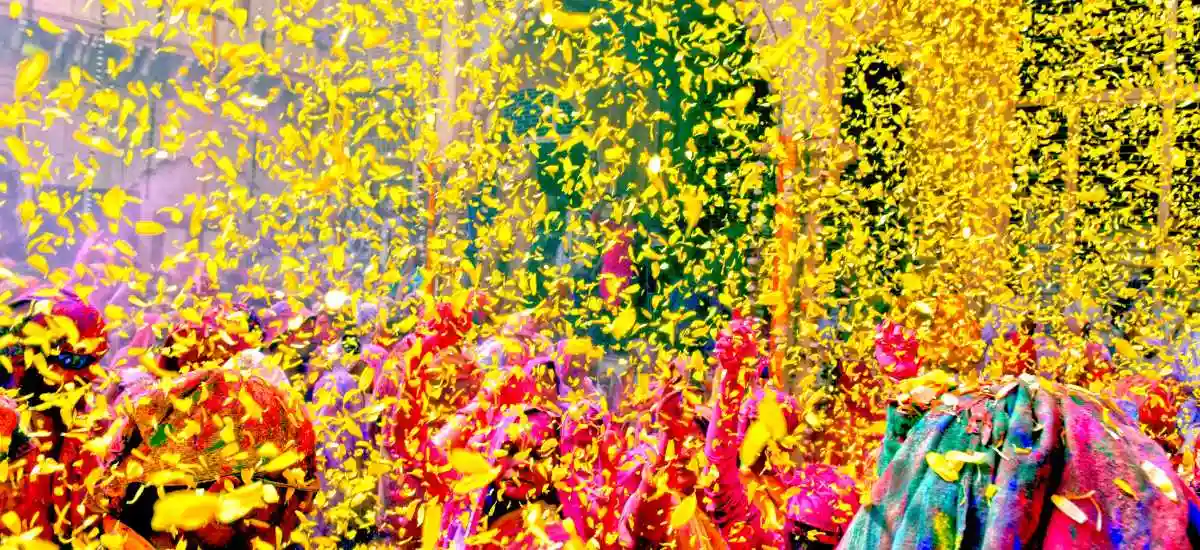
Phoolon Wali Holi in the birthland of Krishna is one of the most beautiful and spiritually uplifting ways to experience the festival of colours. Celebrated in the sacred town of Vrindavan, this unique tradition replaces coloured powders with fresh, fragrant flower petals.
The grand celebration is most famously held at the revered Banke Bihari Temple, where thousands of devotees gather to witness this divine spectacle. During the celebration, priests shower worshippers with vibrant petals of roses, marigolds, and jasmine while devotional songs fill the temple premises.
The air becomes fragrant, and the sight of petals gently cascading over the crowd creates an atmosphere that feels both lively and sacred. Unlike the energetic street celebrations of Holi, Phoolon Wali Holi offers a serene and devotional experience rooted deeply in tradition. The celebration is inspired by the playful and loving tales of Lord Krishna and Radha, as Vrindavan is believed to be the land where Krishna spent his childhood.
Here, flowers symbolise purity, devotion, and divine love. For travellers seeking a meaningful cultural experience, Phoolon Wali Holi in Vrindavan offers a perfect blend of festivity, faith, and timeless tradition.
Explore Mathura Tour Packages With Cholan Tours.
2. Lathmar Holi in Barsana
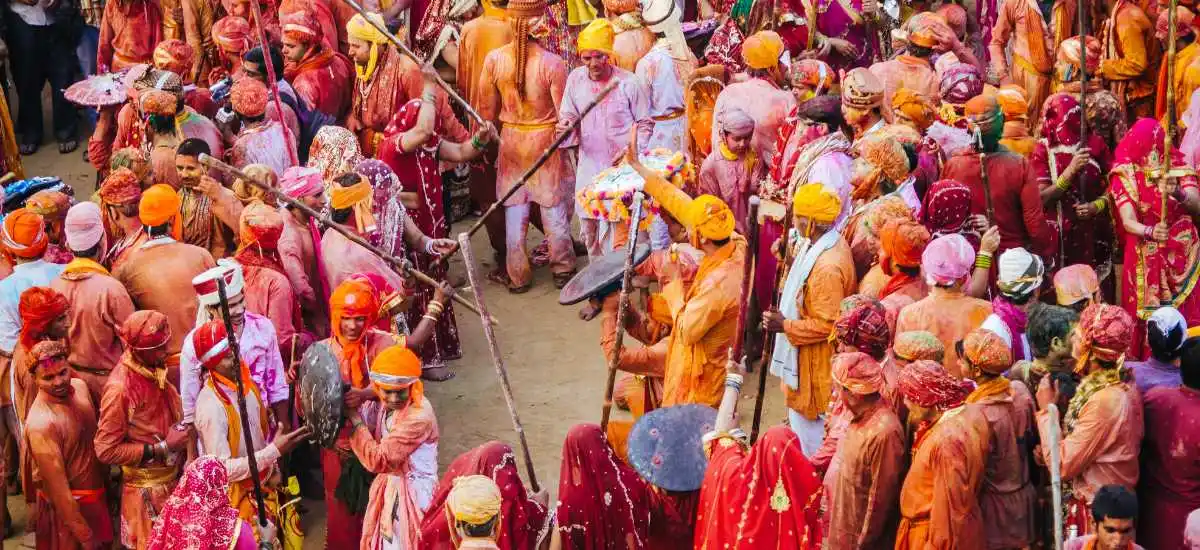
Lathmar Holi in Barsana is among the most meaningful and visually splendid Holi celebrations in India. This event occurs a few days before the actual festival and takes place in nearby Nandgaon, allowing for extensive activity and interaction between the two towns. The story behind Lathmar Holi is based on an ancient Indian tradition: Krishna went to Radha’s village to tease her and her friends; when the women of Barsana saw him, they took out long sticks and chased him out of their village. This all started because ‘Lathmar’ means that they were using ‘lathi’ to hit him, which is how this way of celebrating today began.
The men from Nandgaon come to Barsana for Lathmar Holi dressed in traditional clothing and singing bhajans (devotional songs). The women of Barsana greet them at the gate with lathis, which they use to hit the men who are trying to protect themselves with shields. This event takes place in a very happy, rhythmic folk music atmosphere with songs dedicated to Radha and Krishna.
While Lathmar Holi is a visual extravaganza full of energy, it is also a highly devotional event that brings the community together. It contains elements of divine love, playful competition, and cultural pride. Lathmar Holi is more than a visual treat; it represents a living tradition that continues to help keep Braj folklore and spiritual history alive.
3. Dola Purnima in Odisha
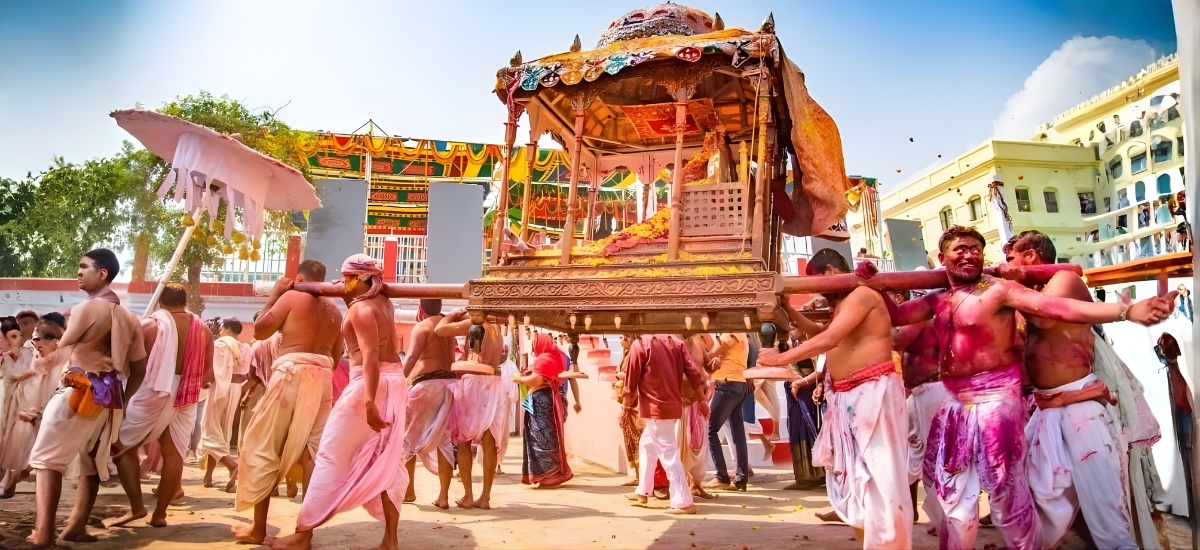
Dola Purnima, which falls on a full moon night in Phalguna in India, is celebrated in various ways but has a unique identity associated with Vaishnavism. Dola Purnima celebrates the deity of Lord Krishna, as represented by the image of Dolagovinda in this part of India.
Dola Purnima is characterised by the use of finely crafted idols of Krishna known as ‘dola’, which are displayed on elaborately decorated swings and taken in colourfully decorated processions between temples. Along the way, there will be large crowds singing bhajans (devotional songs), chanting the deity’s name, and offering flowers and sweets, all while listening to soft music and being showered with coloured powder.
Community gatherings and cultural performances will also occur in many towns and villages, adding to the festive feeling. Dola Purnima is a special occasion that blends spirituality and seasonal happiness, representing love and harmony, as well as new beginnings with the start of spring, thereby strengthening bonds among members of each community.
Explore Odisha Tour Packages With Cholan Tours.
4. Hola Mohalla in Punjab
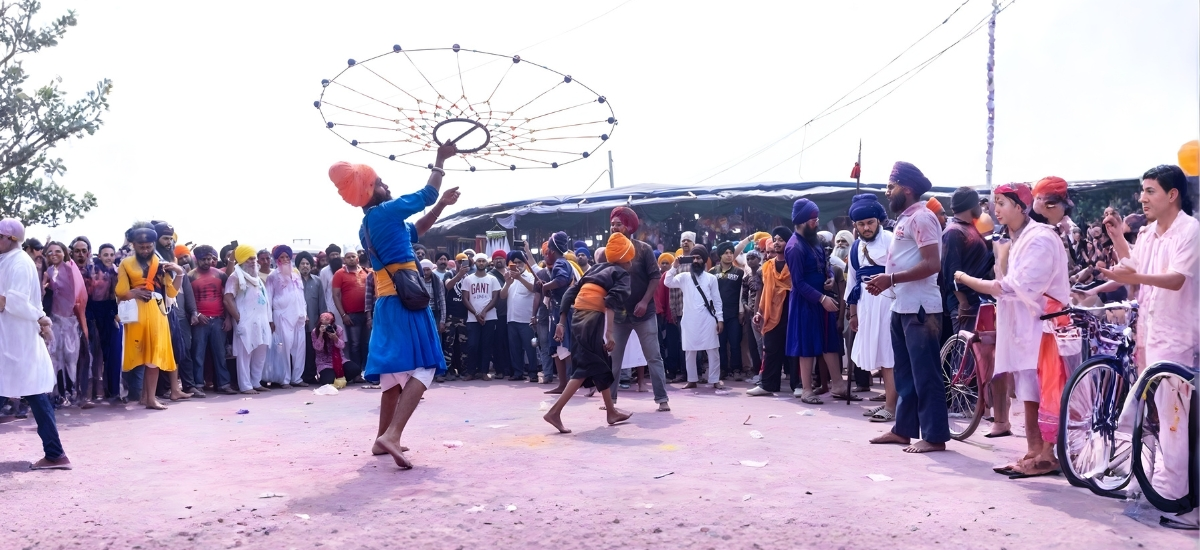
Hola Mohalla is a unique Sikh festival celebrated in Punjab, mainly in the holy city of Anandpur Sahib. It is observed every year in March, usually a day after Holi, and continues for three days. The festival holds deep religious, cultural, and historical importance for the Sikh community.
Hola Mohalla was started by Guru Gobind Singh Ji in the 17th century. Unlike Holi, which focuses on colours and celebration, Hola Mohalla was designed to strengthen discipline, courage, and readiness among Sikhs. The word Hola comes from halla, meaning attack or charge, and mohalla refers to an organised procession. The festival is known for impressive displays of martial skills. Nihang Singhs perform mock battles, horseback riding, sword fighting, and Gatka. These activities reflect the warrior spirit of Sikhism. Along with martial events, there are religious processions, kirtan, poetry recitations, and continuous langars where free meals are served to everyone.
Hola Mohalla is not just a festival but a reminder of Sikh values like bravery, unity, devotion, and selfless service. It brings together thousands of devotees from across India and the world.
5. Shigma Processions in Goa
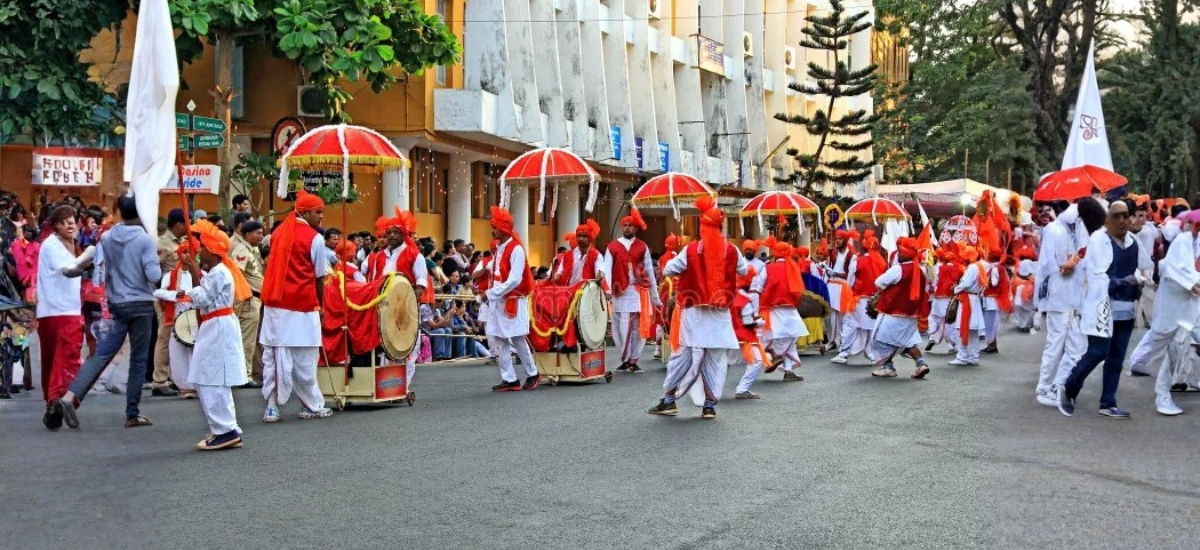
In Goa, the Shigma Procession is a celebration of springtime joy, culture, and the unity of the community. Shishirotsav, the native name for Shigma, is Goa’s version of Holi, celebrated at springtime around March. It is a festival that creates an atmosphere of celebration through spectacular floats, traditional performance, and visually stimulating activities that combine Hindu traditions with a uniquely Goan cultural identity.
Shigma is celebrated throughout March and is very popular in Goa’s agricultural regions as a celebration of the end of winter and the beginning of the harvest. The street procession, held by each group, to showcase their creativity, is one of the festival’s highlights. Among them, there are many intricately designed floats; hundreds of folk dancers; and actors portraying scenes from Indian mythology.
Goa’s unique culture can be found in both forms of music and dance, Ghode Modni and Fugdi, which add much to the enjoyment and excitement of the celebration, along with drum beats and traditional festive music. During Shigma, the cities of Panaji and Margao have a carnival atmosphere. There are large public processions attended by locals and tourists alike. The street processions illustrate the diversity of people from Goa while depicting scenes from local legends and the historic Hindu epics, demonstrating the creative talents of the people from Goa.
Through the display of colour, pride in their culture, and the foundation of their traditions, the Shigma Procession expresses the colourful embodiment of Goa by celebrating joy with others in their community.
Explore Goa Tour Packages With Cholan Tours.
6. Rangpanchmi in Maharashtra
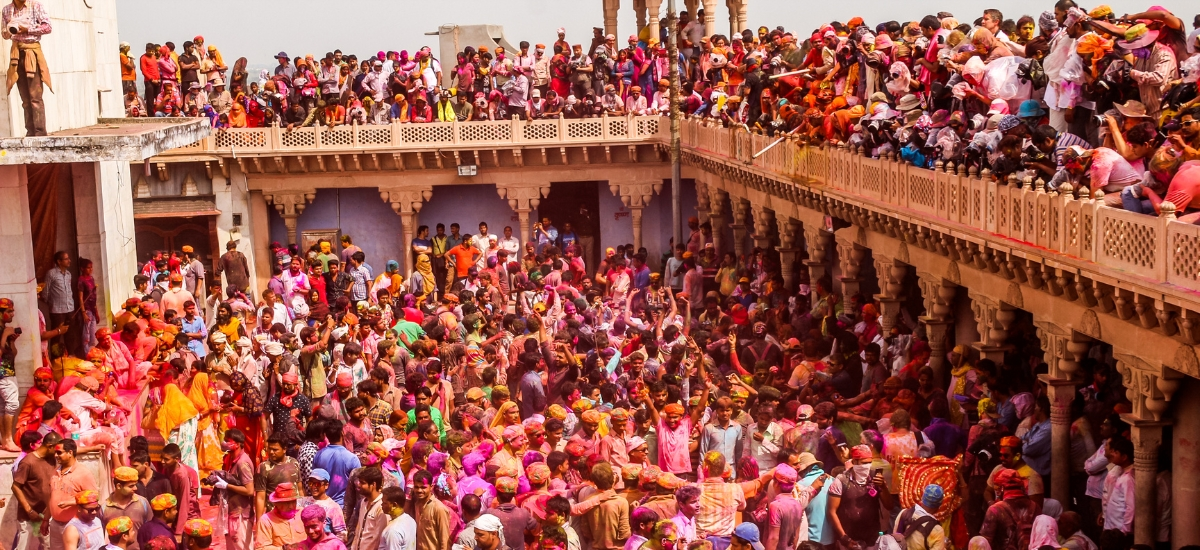
Rang Panchami is the last of the major festivals in Maharashtra, celebrated five days after Holi. Unlike Holi, which has a religious significance (like Holika Dahan and Dhulivandan), Rang Panchami is strictly based on colour and the joy of the people.
In several major cities, like Indore (and other parts of Maharashtra), the celebrations often draw large crowds, yet they all share the same excitement and liveliness across the entire state. People visit each other, share sweets and throw coloured powders and/or coloured water at one another. Music and dancing to the sounds of the traditional dhol (drum) accompany the festivities.
Rang Panchami is said to provide balancing and purifying energy to the environment by utilising positive energies in the forms of colours and celebrations. Therefore, it represents the togetherness of people, the breaking down of social barriers and the triumph of happiness over unhappiness. In addition to the frivolity associated with Rang Panchami, it is a celebration of the spirit of community and the love of celebration that characterises Maharashtra.
Explore Maharashtra Tour Packages With Cholan Tours.
7. Sangla Holi in Himachal Pradesh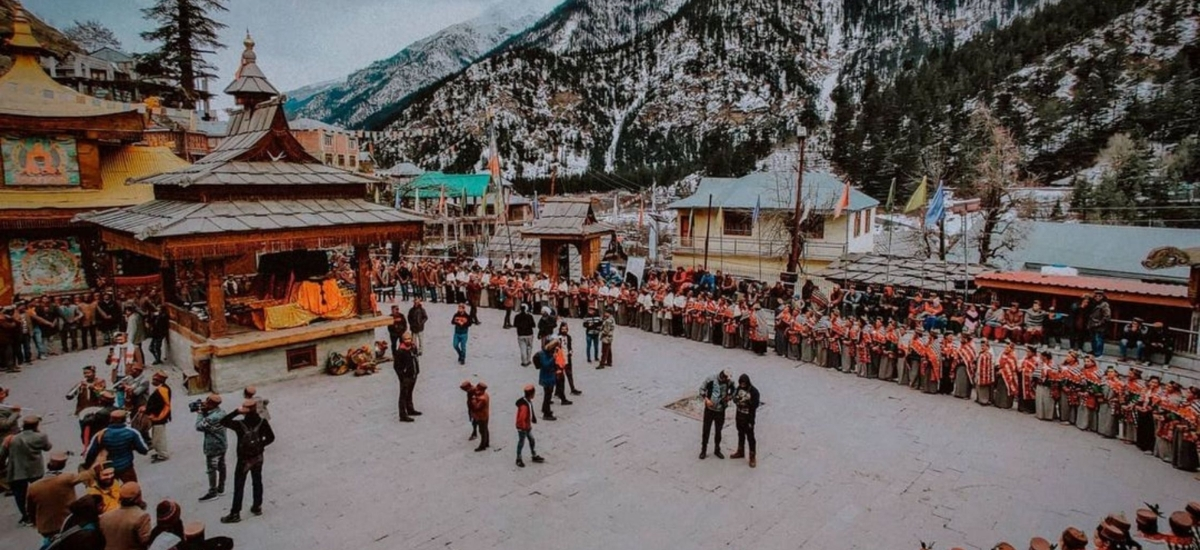
Sangla Holi is a festival held yearly in Sangla Valley, Himachal Pradesh. The festival consists of celebrations of local deities, colour, traditional rituals, folk music and temple processions over the course of several days (unlike most Holi celebrations that take place only on one day) and features the rhythms of drumbeats, Kinnauri folk dances, and the carrying of local deities in decorated palanquins through the village.
The celebration is a manifestation of the spiritual belief system of the people and the community spirit that exists because of the interconnectedness between human beings and each other, as well as their relationship to nature (and God).
Additionally, the entire event represents a celebration of the traditional values and beliefs of the people of Himachal, their devotion to God, and the interconnectedness between them, the natural environment, and the festivals that they celebrate in harmony with each other and all of creation.
8. Khadi Holi in Uttarakhand
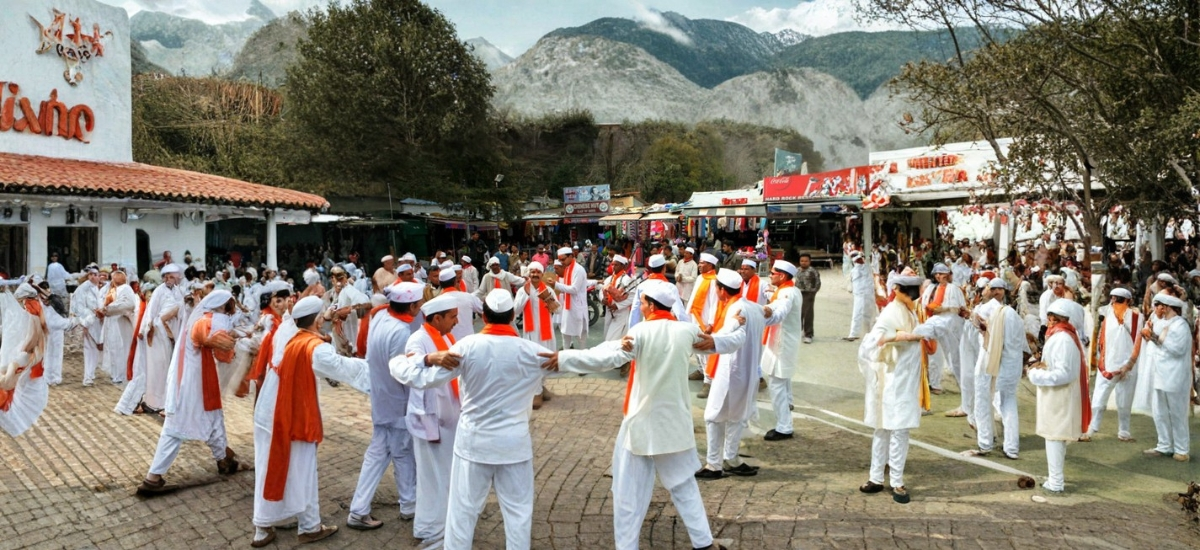
The Holi celebration in the Kumaon area of Uttarakhand has many distinct traditions and a rich cultural heritage. It has also been referred to as Khadi Holi. During this festival, men dressed in traditional white kurta-pyjamas and Gandhi caps gather at both village squares and temple courtyards to sing classical ragas along with devotional songs in honour of Krishna (the Lord of Love).
Khadi means “standing,” and the term “Khadi Holi” implies that participants are in standing positions, singing together and moving in slow circular formations. Thus, Khadi Holi is also a very graceful and respectful way of participating in this sacred celebration.
The three distinct types of Holi celebrations in Uttarakhand are: Baithki Holi, Khadi Holi and Mahila Holi. Baithki Holi is celebrated weeks prior to the actual festival. This type of Holi occurs primarily in homes and temples, where singers render Hindustani ragas and other classical music while seated. Baithki Holi is a reflection of Uttarakhand’s fine musical tradition and heritage. Khadi Holi, the next type, takes place outdoors in common spaces where families and friends gather to perform dance and song together, gradually integrating colour into their Holi celebrations. Finally, Mahila Holi, the last of the three forms, takes place in a women’s only group and consists of singing traditional folk songs that reflect life, relationships and devotion.
These celebrations combined form an elegant, spiritual and community-based Holi celebration. Rather than simply focusing on colour, Holi in Uttarakhand is a rhythm-based festival; it has musical and poetic elements, and it perpetuates traditions. Holi in Uttarakhand is a celebration where music becomes colour, devotion becomes joy, and tradition becomes the spirit of Holi.
Explore Uttarakhand Tour Packages With Cholan Tours.
9. Royal Holi in Jaipur
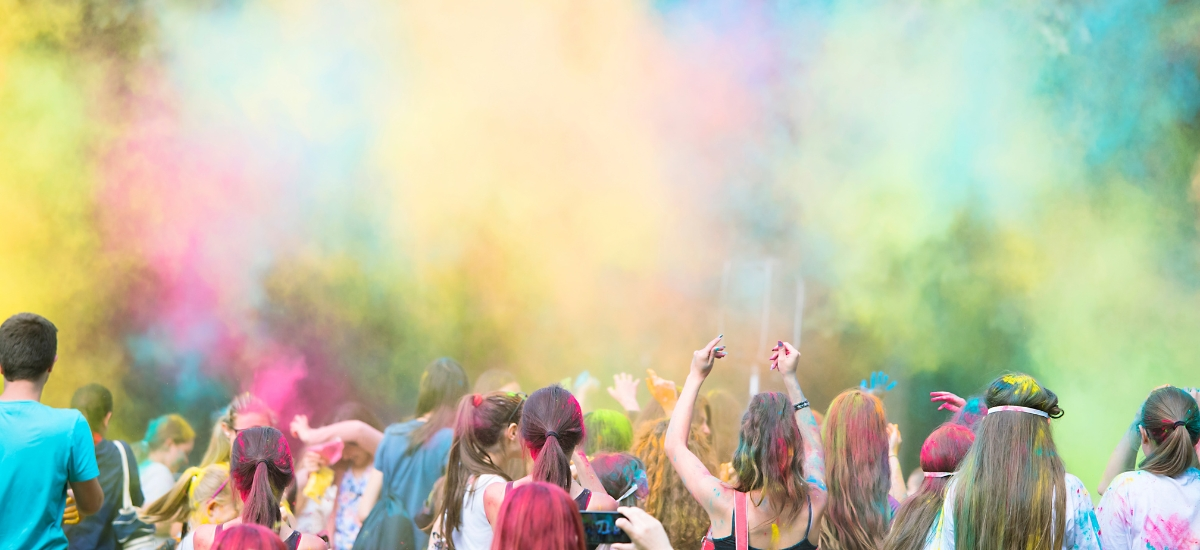
Rajasthan’s rich legacy is reflected in the opulent and majestic Royal Holi celebration in Jaipur. The celebrations, which are frequently held in palace courtyards and heritage hotels, recreate the splendour that Rajput royalty once experienced. In an elegant and joyous setting, guests are greeted with traditional music, folk dance performances, and a sprinkling of colourful gulal.
Cultural performances like Ghoomar and Kalbelia dances, live dhol beats, and ornate décor influenced by royal customs are usually featured at the celebration. Elephants and horses dressed in vibrant costumes enhance the royal atmosphere in certain locations.
In Jaipur, Royal Holi combines luxury and tradition to give guests the opportunity to celebrate the festival in a setting that is both majestic and timeless while retaining the vibrant spirit of the season.
Conclusion
Holi in India can be described as an array of experiences that vary from region to region. For example, Phoolon Wali Holi in Vrindavan is very different from Barsana’s Lathmar Holi, which is different again from Odisha’s Dola Purnima, and so forth. The cultural expression of Shigma in Goa is also different from that of Yaoshang in Manipur, Khadi Holi’s performance in Uttarakhand, or Royal Holi in Jaipur; the fact that there are so many expressions of Holi throughout India is a testament to the diversity found within India’s culture.
The concept of Holi is about the victory of good over evil, the arrival of spring and new relationships. It breaks down barriers of caste, class, and community and invites all people to celebrate together. Holi occurs in different ways throughout villages, in temples, along the streets and at palaces; yet the essence of Holi is the same for all people, it represents the unity of humanity in celebrating life and all of its beauty.
Frequently Asked Questions
1. When is Holi celebrated in India?
Holi is celebrated on the full moon day (Purnima) of the Hindu month of Phalguna, usually in March. The festival begins with Holika Dahan on the first evening, followed by Rangwali Holi (the festival of colours) the next day.
2. What makes Holi unique in different Indian states?
Holi in India varies by region. Punjab celebrates Holi Mohalla with martial displays, Goa celebrates Shigma with grand processions, and Uttarakhand celebrates musical Khadi and Baithki Holi. Each state blends local culture with spring festivities.
3. What are the main traditions of Holi?
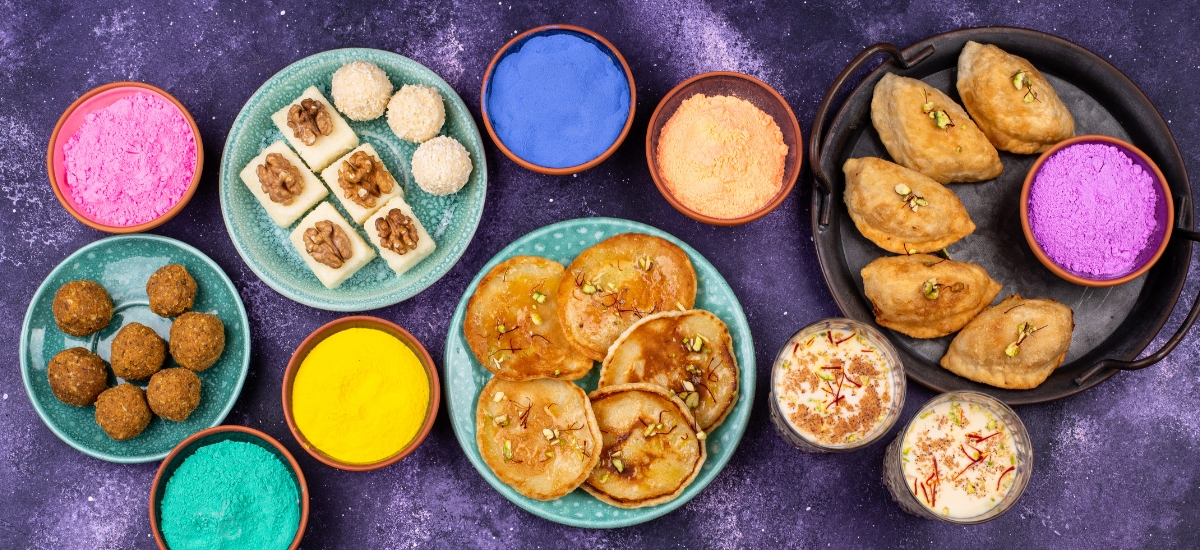
Key Holi traditions include lighting the Holika Dahan bonfire, applying gulal (coloured powder), water celebrations, singing, dancing, and sharing festive sweets like gujiya. In many regions, temple rituals and folk performances are also important parts of the celebration.
4. Why is Holi called the Festival of Colours?
Holi is called the Festival of Colours because people apply bright gulal powders and splash coloured water on each other. The colours symbolise joy, unity, love, and the arrival of spring, making Holi one of the most vibrant festivals in India.
5. What are the reasons behind the celebration of Holi in various parts of India?
Holi is celebrated to commemorate the triumph of good over evil, as described in the story of Prahlad and Holika, as well as to celebrate the playful love between Radha and Krishna, especially in the Braj region. Holi also represents the arrival of spring (i.e., rebirth), harvest time, and new beginnings, and the festival has a message of forgiveness, reconciliation, and unity among people throughout India, where the format differs by region but is always based on a shared theme of celebrating positivity through unity or joy.