


India has strengthened its reputation as one of the world’s most sought-after destinations for medical tourism in 2026. Planning a medical trip overseas is a decision that involves not only choosing the best hospital but also choosing the best healthcare service provider to arrange temporary residence; every minute detail contributes to a comfortable and safe experience. Health Tourism in India has become an ideal choice for global patients. That’s because it combines cutting-edge medical treatments, expert professionals, well-equipped hospitals, and affordable healthcare costs.
India attracts a significant number of international patients every year for diverse medical treatments, such as cardiac surgeries, fertility treatments, organ transplants, cosmetic procedures, orthopaedic procedures, etc. However, proper planning and thorough preparation are important to ensure a smooth medical journey.
In this comprehensive medical tourism guide, we cover everything you ought to know before you travel. It will help you make well-informed decisions so you can look forward to a hassle-free experience in getting yourself treated. This guide will help you every step of the way, whether you are visiting for a specialised consultation, a planned surgery, or a recovery program.
Why is India an Ideal Destination for Medical Treatment?
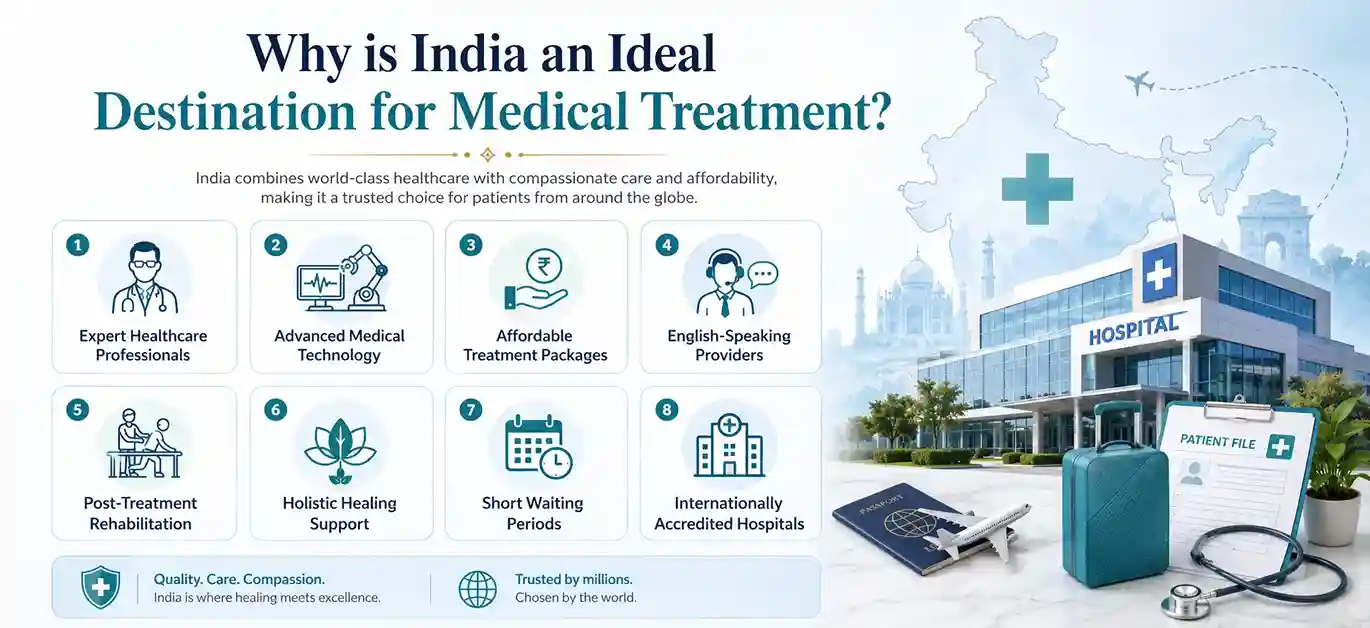
The fact remains indisputable that India has strengthened itself as one of the world’s top-notch healthcare destinations. Patients from every corner of the world look no further than India, as hospitals in this country offer globally recognised medical standards at substantially lower costs than in several developed nations.
Listed below are some factors that make medical tourism in India a compelling option:
- Competent and knowledgeable healthcare practitioners
- Newest diagnostic and surgical technologies
- Competitively priced treatment packages
- English-speaking healthcare providers
- Unparalleled post-treatment rehabilitation services
- Access to holistic healing programs
- Short waiting periods
- Internationally accredited hospitals
The healthcare framework in India has evolved rapidly to provide extensive support for global patients, which makes healthcare tourism in India convenient, trusted, and patient-centric.
Prepare by Understanding Your Health Condition
Understanding your health condition – diagnosis and treatment options – prepares you thoroughly for what lies ahead. Before you book your trip, consulting your local physician will be your best bet. Ensure you gather as much information as possible about your medical condition.
Consider asking the questions listed below:
- What treatment options do I have?
- Is it really necessary to undergo surgery?
- What are the possible complications?
- How long will it take to recover?
- Do I require follow-up treatment?
Having a thorough understanding of your condition lets you interact with healthcare professionals and compare treatment recommendations with effectiveness.
Choose the Best Hospital and Expert
Selecting the best hospital is probably the most crucial decision you will ever make in life.
Consider evaluating critical factors rather than limiting your decision to treatment costs.
Hospital Accreditation
Search for hospitals certified by internationally authorised organisations. Accreditation signifies compliance with stringent quality and safety standards for patients.
Doctor’s Experience
Evaluate the expert’s:
- Qualifications
- Years of relevant experience
- Specialization
- Proven surgical outcomes
- Patient feedback & testimonials
- Research publications
Technology and Infrastructure
Advanced medical equipment improves diagnostic and treatment outcomes. Don’t forget to check if the hospital offers advanced imaging technology or minimally invasive procedures.
Advanced medical equipment significantly improves diagnosis and treatment outcomes. Verify whether the hospital offers revolutionary imaging technology, robotic surgery, and specialised intensive care units (ICUs) if advisable.
International Patient Services
Numerous hospitals have dedicated international patient departments to help with:
- Appointment scheduling
- Airport pickup
- Accommodation support
- Billing assistance
- Language interpretation
- Visa documentation
All these services streamline the entire medical journey.
Select Trusted Medical Tourism Providers
Several patients travelling from abroad benefit from partnering with highly experienced medical tourism providers in India. That’s because they facilitate the planning process from the beginning to the end.
Skilled coordinators usually assist with the following:
- Choosing the hospital
- Doctor appointments
- Cost estimates
- Medical record evaluation
- Hotel bookings
- Local transportation
- Language support
- Recovery planning
- Visa assistance
A trustworthy coordinator serves as a link between patients and hospitals. They ensure clear, thorough communication and help overcome logistical challenges.
Consider the following when analysing healthcare providers:
- Years of appropriate industry experience
- Honest pricing
- Patient testimonials
- Hospital partnerships
- Round-the-clock emergency support
- Continued medical assistance
Working with a top medical tourism company in India not only alleviates stress but also enables patients to focus on what matters most, i.e., recovery.
Prepare and Scan Important Documents
Redundancy plays a vital role when you’re dealing with international healthcare. Relying on physical documents can make things go haywire if you lose your luggage. On the other hand, relying only on digital files is hazardous if there’s no internet access around.
In such a scenario, creating a dedicated travel folder will work to your advantage. It will contain:
- Passport, printed e-Visa ETA, and some passport-sized photographs.
- All physical scans, lab outcomes, and your doctor’s referral.
- Credit cards, proof of funds, and travel insurance.
- Accommodation confirmations, flight itineraries, and the hospital invitation letter.
Apart from scanning every document, make sure you save them to a secure cloud storage device such as Dropbox or Google Drive. Share access to this digital folder with a person you can trust back home and your medical coordinator in India.
Plan Your Budget with Utmost Transparency
One of the most significant advantages of Health Tourism in India is affordability. However, failing to budget for the entire medical journey can lead to financial burden. The hospital’s quote includes the medical procedure, but you must consider the additional travel expenses.
Consider the following in your total budget:
- Round-trip airfare for the attendant and the patient.
- After being discharged from the hospital, you’ll need a place to stay before you’re authorised to take a flight back home.
- You will need local transportation services (cab or specialised medical transport), food, and mobile data.
- Keeping an emergency fund to deal with unexpected expenses during the recovery phase is a smart move. They might require you to extend your stay by a few days or even weeks.
Collect Your Medical Records
Organising all vital medical documents before you travel will work every step of the way.
Your file must include the following:
- Medical history
- Diagnosis reports
- Blood test results
- Insurance documents
- Allergy information
- Vaccination records
- Prescription history
Ensure you don’t only have printed copies but also carry digital copies stored securely.
If any of your medical reports are not in English, don’t forget to obtain certified translations before you leave town.
Understand Visa Requirements
Travelling to India usually requires international patients to obtain a medical visa.
Your medical application must include:
- Completed visa application
- Financial documents
- Hospital confirmation
- Medical invitation letter
- Passport photographs
- Valid passport
If any patient is travelling with their family members, they may require a medical attendant visa.
Avoid last-minute delays by applying for the visa in advance.
Arrange Your Travel Meticulously
Once you have confirmed the doctor’s availability, the hospital admission schedule, and the surgery date, then only book flights to your chosen destination in India.
It pays to arrive a few days before treatment, if possible. You get time for the following:
- Initial doctor appointments
- Diagnostic evaluations
- Overcoming travel fatigue
- Admission formalities
Ensure you avoid scheduling tight connections. This is especially true if your condition does not allow you to travel much.
Book Trusted Car Rental Services
People usually don’t prefer local transportation – a neglected aspect of medical travel. Patients attending diagnostic appointments, consultations, follow-up visits, and hospital admissions can enjoy the convenience of car rental services.
Listed below are some of the biggest benefits of professional transportation:
- Airport pickup and drop-off
- Comfortable travel after surgery
- Prompt hospital transfers
- Well-trained and skilled local drivers
- Stress-free travel
- Flexible travel arrangements
Those who are recovering from surgery must avoid jam-packed public transportation whenever possible. Hygienic, comfortable private vehicles enhance convenience, especially during the recovery phase.
Obtain Relevant Travel Insurance
Not every insurance policy covers medical treatment abroad.
Ensure you analyse your policy carefully to determine coverage for the following:
- Flight cancellations
- Hospitalization
- Lost baggage
- Medical emergencies
- Unforeseen complications
- Medical evacuation
Some patients opt for specialised international travel insurance for an additional layer of financial protection.
Book Recovery-Friendly Accommodation
Not all patients need to be hospitalised throughout their treatment period.
Depending on your recovery plan, you may consider your stay in the following accommodation types:
- Guest houses
- Hotels
- Serviced apartments
- Hospital guest accommodations
- Recovery centres
Opt for accommodation offering the following amenities:
- Convenient hospital access
- Elevator facilities
- Healthy meals
- Spotless surroundings
- Nearby Pharmacies
- Stable internet connection
Choose accommodation appropriate for attendants if you’re travelling with family members.
Pack Essentials for Your Medical Trip
Make your stay comfortable and relaxing by packing wisely.
The following is a list of essential items:
Medical Documents
- Passport
- Visa
- Hospital confirmation
- Medical reports
- Insurance papers
Prescription Medicines
Ensure you carry sufficient medication for your journey, along with copies of your prescriptions.
Comfy Clothing
Choose loose-fitting outfits, easy-to-wear footwear, breathable sleepwear, and compression garments if needed.
Essential Items for Personal Use
Packing various essential items, such as a mobile charger, personal hygiene products, a recycled water bottle, and a travel adapter, will work to your advantage.
Arrange Your Finances
Carrying several payment options will work in your favour.
These payment options may include:
- International credit cards
- Local currency
- Debit cards
- Emergency funds
- International payment apps
Ensure you confirm accepted payment methods with your hospital well in advance.
Some hospitals also accept advance wire transfers.
Understand Recovery Expectations
Not every medical procedure has the same recovery timeline.
What you should discuss with your doctor
- Hospitalisation duration
- Required bed rest
- Pain relief strategy
- Movement restrictions
- Wound treatment
- Prescription schedule
- Work resumption timeline
When you know what to expect, it helps alleviate anxiety and plan suitably.
Discuss Your Recovery Plan Before Returning Home
Recovery does not end after a patient is discharged from the hospital.
Ensure you ask your healthcare team about the following:
- Post-treatment appointments
- Online consultations
- Treatment duration
- Recovery exercises
- Symptoms requiring instant medical attention
Patients can now seek online consultations offered by several hospitals after returning to their home countries.
Maintain Healthy Habits Before Travel
When you prepare your body before undergoing surgery, you achieve better outcomes.
Here’s what doctors typically recommend:
- Eating healthy meals
- Staying hydrated
- Getting sound sleep
- Avoiding smoking
- No alcohol intake
- Adhering to your prescribed medications
- Performing light exercises as advised.
Following your medical practitioner’s specific recommendations will benefit you immensely.
Stay Informed About Local Climate and Culture
India is a geographically distinct country, and weather conditions can vary considerably across regions.
Here’s what you need to research:
- Seasonal temperatures
- Rainfall
- Local customs
- Food preferences
- Language basics
Preparing yourself helps you feel more comfortable during your stay.
Respecting local traditions also elevates interactions with healthcare staff and local communities.
Concluding Remarks
Plan carefully and research thoroughly, as this will make it easier to improve your medical outcomes and overall travel experience significantly. Embark on a successful journey to recovery even before you board the flight to your selected destination in India.
Strategic preparation enables you to focus on what’s more important for you – health, recovery, and peace of mind. It is true regardless of whether you are visiting for advanced diagnostics, rehabilitation, specialised surgery, or wellness care. With accurate planning, medical tourism in India can become a secure, efficient, and satisfying healthcare experience.
If you need complete travel assistance beyond treatment planning, read how a travel partner simplifies medical tourism and helps patients manage hospital visits, transfers, accommodation, and recovery support.
As Health Tourism in India continues to see a major influx of patients from around the world, travellers can access unmatched healthcare, cutting-edge medical technology, and empathetic patient support at cost-effective rates. Partnering with reliable and experienced medical tourism providers in India and following a trusted medical tourism guide can help reduce unnecessary stress.
FAQ’s on Health Tourism in India
Q1. Why is Health Tourism in India becoming increasingly popular among international patients?
India offers competitively priced treatments, experienced specialists, hospitals equipped with the latest technology, shorter waiting periods, and comprehensive care for patients from across the globe.
Q2. What documents are required for medical tourism in India?
Carry documents, including the passport, medical visa, diagnostic reports, prescriptions, medical records, hospitalisation appointment confirmation, etc., for a seamless medical treatment.
Q3. How do medical tourism providers in India assist international patients?
Medical service providers in India assist in arranging hospital appointments and accommodation. Moreover, they provide patients with visa support, treatment planning, and post-treatment coordination to ensure a hassle-free medical travel experience.
Q4. Is it necessary to book car rental services during my medical trip?
Leading car rental services ensure comfortable hospital visits, airport transfers, follow-up appointments, and hassle-free transportation right through your recovery journey.
Q5. How can I choose the top medical tourism company in India?
Make sure you look for proficient, experienced providers with reliable hospital partnerships. A top medical tourism company in India must offer positive reviews, upfront pricing, and comprehensive support.