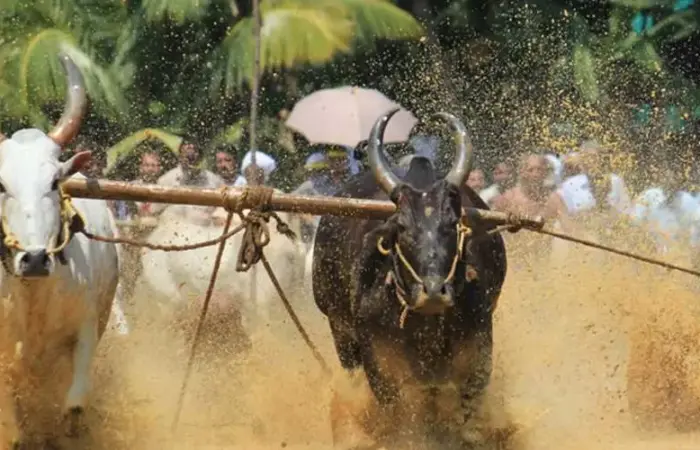



Every January, the villages around Madurai wake up before sunrise. Drums beat, crowds pack onto rooftops and temporary stands, and a powerful bull charges out of a narrow gate into a sea of noise. This is Jallikattu, the bull-taming tradition of Tamil Nadu, and the Madurai district hosts its most famous events.
If you are thinking about seeing Jallikattu 2027 in Madurai, this guide covers the likely dates, the three main venues, how to reach them, where to stay and how to stay safe. It also covers a few things first-time visitors often miss. You can plan your trip without wading through jargon.
Note: The official Jallikattu 2027 schedule had not been announced at the time of writing. Everything below about dates is based on the festival calendar and on how the events were arranged in previous years. Please confirm the final Jallikattu 2027 dates before booking anything you cannot cancel.
What Is Jallikattu And Why Is It Celebrated?
Jallikattu in Tamil Nadu is a traditional bull-taming event held during Pongal, a harvest festival. A bull is released from an enclosure called the vaadi vaasal, and young men try to hold on to its hump and stay with it for a set distance or time. The bull is not killed. Participants win by showing nerve and skill, not by hurting the animal.
The word comes from jalli (silver and gold coins) and kattu (tied). In older times, coins were tied to the bull’s horns as a prize for whoever could take them. Today, winners receive gifts such as gold coins, furniture, motorbikes, and for the best tamer and best bull at the biggest events, a car or a tractor.
The tradition is very old. Many accounts trace it back more than two thousand years to the pastoral communities of the Tamil country. Rural families have raised these bulls for generations, treating them almost like members of the household. Owners feed them well, train them for months and walk them to the arena with real pride.

Why is it celebrated at Pongal? The festival thanks the sun, the earth and the farm animals for the harvest. The day after Thai Pongal is called Mattu Pongal, when cattle are washed, decorated and honoured. Jallikattu grew out of that day, which is why the events cluster around it.
The sport has also been controversial. Animal welfare groups raised concerns about cruelty and injuries, and in 2014 the Supreme Court banned it. In early 2017, huge peaceful protests across Tamil Nadu demanded its return, and the state amended the law to allow it under rules. Since then it has returned each year with registration, veterinary checks, medical teams and insurance cover in place. Whatever your own view, it is useful to know that the debate exists, because locals often feel strongly about it.
Jallikattu 2027 Dates in Madurai

Thai Pongal falls on Thursday, 14 January 2027, with Mattu Pongal on Friday 15 January and Kaanum Pongal on Saturday 16 January. The Madurai events are usually spread over three consecutive days in the same order each year: Avaniyapuram first, Palamedu second and Alanganallur last.
The exact days still move a little from year to year. Here is how the recent pattern has looked:
| Year | Avaniyapuram | Palamedu | Alanganallur |
| 2024 | 15 January | 16 January | 17 January |
| 2025 | 14 January | 15 January | 16 January |
| 2026 | 15 January | 16 January | 17 January |
In 2025, the events began on Pongal day itself. In 2026, they began the day after. So for 2027, there are two sensible possibilities:
14, 15 and 16 January, if the schedule starts on Pongal day.
15, 16 and 17 January, if it starts on Mattu Pongal.
My advice is to plan around 13 to 18 January 2027. That covers both outcomes and leaves a spare day for delays or a change of plan.
The state government publishes the places and dates for Jallikattu in an official notification, usually just days before the festival. The Madurai district administration then opens online registration for bull owners and tamers on its website. Watch the Madurai district website, the Tamil Nadu government announcements and local newspapers from early January.
Events typically start around 7 or 8 in the morning and run until the afternoon. Each bull can enter only one of the three Madurai events, so you will not see the same animals at all three.
Major Jallikattu Locations
All three venues are within an easy drive of Madurai, but each has its own character. If you only have time for one, choose with care.
Avaniyapuram
Avaniyapuram sits on the southern edge of Madurai, close to the airport. It opens the season, and the atmosphere is lively and crowded because it is so near the city. Many local families attend. It is the easiest of the three to reach and a good choice if you are short on time or travelling with someone who is not used to long road journeys.
The event is run mainly by the village and local committees, and the village is packed with narrow lanes, so expect tight spaces around the arena.
Palamedu
Palamedu lies to the north of Madurai, on the way towards Alagar Hills. The event is held on a stretch of open ground near the Manjamalai riverbed. It feels more rural and spread out than Avaniyapuram, with a wide view of the countryside around it.
Palamedu is a good option if you want a village feel and a bit more room to breathe. It is also a nice base for photographers who enjoy open light and background scenery.
Alanganallur
Alanganallur is the big finale and the one most travellers have heard of. It sits to the north-east of Madurai and is known worldwide. It usually draws the largest number of bulls and tamers, and it is formally inaugurated with senior government officials present.
It is also the busiest. Roads fill early, parking can be a long walk away and security is tight. If you want the full spectacle and can handle crowds, Alanganallur is the one. Book your transport and your seat in advance.
Which one should you choose?
First-timer wanting convenience: Avaniyapuram.
Rural atmosphere and more space: Palamedu.
The biggest show and a once-in-a-lifetime feel: Alanganallur.
If you can spare the days, seeing two of them gives you a much better sense of the tradition.
How To Reach Jallikattu Venues From Madurai

Madurai is the hub, and getting there is simple. Getting from Madurai to the villages is where a little planning helps.
By Air
Madurai Airport (IXM) has direct flights from Chennai, Bengaluru, Hyderabad, Mumbai, Delhi and a few other cities, plus some international links in the region. From Delhi, where I know many readers are travelling from, connections are widely available, often with one stop.
By Train/Rail
Madurai Junction is a major station on the southern rail network. Overnight trains from Chennai are popular and comfortable. Book early, as Pongal week fills quickly.
By Road
Madurai is well connected by national highways to Trichy, Coimbatore, Kanyakumari and Chennai. Government and private buses run all day and night.
Approximate distances from Madurai city
| Venue | Distance | Typical Drive Time (non-event day) |
| Avaniyapuram | about 10 km | 25 to 40 minutes |
| Palamedu | about 25 km | 45 to 60 minutes |
| Alanganallur | about 25 to 30 km | 50 to 70 minutes |
On event days, double those times at least. Roads near the venues are often closed to private vehicles or heavily controlled.
Getting to the Arena
- Hire a chauffeur-driven car rental in Madurai. For most visitors, it is the best option. A local driver knows the back routes, where to park and when to leave. Agree the price and pick-up time the evening before.
- Take a bus. Local buses run from Madurai’s main bus stands, with extra services during Jallikattu. They are cheap but crowded, so go early.
- Use a taxi or auto-rickshaw. Possible for Avaniyapuram, harder for the other two on event day, as drivers may refuse long waits.
- Special services. The authorities sometimes run additional buses for spectators. Ask at your hotel or at the tourist information office.
- Leave early. Setting off by 5.30 or 6 in the morning is sensible, because roads are filled and checked well before the first bull appears. Carry your ID, water and cash, since mobile networks can become slow in large crowds.
Where To Stay During Jallikattu 2027
Hotels in Madurai fill up quickly around Pongal. Book at least two to three months ahead, which means now is a good time to start looking. Prices also climb in that week, so earlier booking usually saves money.
Where to Base Yourself
- Near Meenakshi Amman Temple (old city): Best for atmosphere. You can walk to the temple, the markets and plenty of small restaurants. Rooms are mostly simple to mid-range, and the streets are busy and noisy.
- Around Madurai Junction and Bypass Road: Practical and well connected, with many mid-range hotels. Good if you want easy access to the railway station and highways.
- Near the airport side: Handy for Avaniyapuram and early flights, with a quieter feel.
- Heritage and upscale hotels: Madurai has several well-known hotels, including heritage-style properties, ideal if you want comfort, a pool and good food after a long, dusty day.
- Homestays and guesthouses: A good way to meet local families and enjoy home cooking. Check reviews carefully and confirm cancellation terms.
Tips for Booking
- Choose a hotel that offers early breakfast or a packed meal, since you will leave before sunrise.
- Ask whether the hotel can arrange a driver or a seat in a viewing gallery.
- Check the cancellation policy, since the exact dates may change.
- If you want to attend Alanganallur, staying on the north-eastern side of Madurai saves time on the morning of the event.
What International Travellers Should Know Before Attending?
Jallikattu is one of the most vivid cultural experiences in India, but it requires a little more preparation from overseas visitors.
Visas and Paperwork
Most international travellers need a valid visa for India. Many nationalities can apply for an e-visa online before they travel, but rules and fees change, so check the official Indian government visa website for your country. Carry your passport and a copy while you are in Tamil Nadu, because police and organisers may ask for identification.
Foreign Visitors’ Access
At the larger events, particularly Alanganallur, the authorities have in the past set aside seating for foreign tourists. The details change each year, so it is worth asking your tour operator or the district tourism office well ahead of time.
Understand What You Are Watching
This is a cultural and a sporting event, but it also carries real risks for participants. Injuries happen, and sometimes people are seriously hurt. Some travellers find it exciting, others find it uncomfortable. It helps to arrive with an open mind and to read a little about the background beforehand.
Respect Local Customs
- Dress modestly. Light cotton clothes that cover your shoulders and knees are comfortable and polite.
- Ask before photographing people, especially women and elderly villagers.
- Do not touch or tease the bulls. They are valued animals.
- Remove your shoes when entering temples and homes.
Language
Tamil is the main language. English is understood at hotels and by many guides, but in the villages you will manage better with a few words and a smile. “Vanakkam” (hello) and “Nandri” (thank you) go a long way.
Health and Money
- Drink bottled or filtered water, and be careful with raw street food if your stomach is sensitive.
- Carry sun protection, hand sanitiser and basic medicines.
- Take out travel insurance that covers medical care.
- Keep small notes of Indian rupees for tips, snacks and transport. Cards are not always accepted in villages.
Weather
January in Madurai is pleasant. Days are warm, usually in the high twenties Celsius, and mornings are cooler. The sun can still be strong by midday.
Spectator Safety, Entry Rules and Travel Tips
Watching Jallikattu safely matters more than getting the perfect photograph. Here is what I would want any friend to know.
Entry and Seating for Jallikattu 2027
- Entry to the main arena is controlled. Galleries and barricaded areas are for registered or ticketed guests, and officials often check passes at the gate.
- Seating details can change every year. Ask the Madurai district administration or your hotel about passes, and book early where passes are offered.
- Expect metal detectors, bag checks and police at the entrances. Pack light and leave unnecessary items at the hotel.
- Large crowds often watch from rooftops and fields. These spots may not be safe or legal. Stay in properly allowed viewing areas.
Safety Rules to Follow
- Stay behind the barricades. Bulls can jump, swerve or break through when frightened.
- Never enter the arena. Only registered participants wearing official identification are allowed, and even they face real danger.
- Keep away from the exit lane. After a bull runs out, it is led away through a collection area. Stay clear of it.
- Watch your children. Many families bring young ones, but the noise and crowd can overwhelm them. Keep them close, or consider leaving them behind with a trusted adult.
- Follow the announcements and the police. If officers ask you to move, do it calmly and promptly.
- Know your exit. Note where the medical tent and the nearest way out are before the event starts.
Practical Travel Tips for Jallikattu in Tamil Nadu
- Reach the venue early, since the best spots go first.
- Wear comfortable, closed shoes. The ground gets dusty and uneven.
- Bring a hat, sunglasses, sunscreen and a light scarf.
- Carry water, but avoid large bags and anything sharp.
- Keep your phone charged and save the address of your hotel in Tamil or have it ready to show a driver.
- Do not carry expensive jewellery or large amounts of cash into the crowd.
- Avoid driving yourself. Local traffic is unpredictable and event-day restrictions are strict.
- Be flexible. Events can start late, pause for safety checks or end early because of weather or rules.
Places to Visit in Madurai During Pongal

You will not spend every hour at the arena, and Madurai has plenty to fill your afternoons. Pongal is also a lovely time to see the city dressed for the festival, with kolam patterns on the doorsteps and sugarcane stacked at roadside stalls. Here are some key things to do and places to visit in Madurai:
- Meenakshi Amman Temple: The heart of Madurai, with towering gateways covered in colourful sculptures. Go early or late to avoid the heaviest crowds, and allow at least two hours. Dress modestly and be ready to leave your shoes at the entrance.
- Thirumalai Nayakkar Mahal: A grand 17th-century palace with huge pillars and a lovely courtyard. It is one of the best places to see the Indo-Saracenic style of the old Nayak rulers.
- Gandhi Memorial Museum: A calm, informative stop with a collection linked to India’s freedom movement.
- Vandiyur Mariamman Teppakulam: A vast temple tank, particularly pretty when it is lit up for festivals.
- Alagar Koil: A temple set against the Alagar Hills, a short drive from Madurai and a nice contrast to the busy city.
- Pazhamudircholai and Thiruparankundram: Two of the six famous abodes of Lord Murugan around Madurai, both with deep local significance.
- Local Markets: Wander through the flower, spice and textile markets. Pongal week is a good time to try fresh sugarcane, sweet pongal and the famous Madurai jigarthanda, a cold milk-based dessert drink.
- Evening Food Walk. Look for kothu parotta, idiyappam and the local mutton dishes, if you eat meat. Many vegetarian restaurants serve excellent banana-leaf meals.
If you have an extra day, a short Madurai to Kodaikanal trip gives you cool hill air, or you can head to Rameswaram for its temple and coastline.
Explore Madurai and Tamil Nadu with Cholan Tours
Planning a trip to attend Jallikattu 2027 or explore Tamil Nadu around a festival can feel like a lot of work: dates that may shift, hotels that sell out, early starts and crowds you have never met. This is where a local travel company can make a real difference.
At Cholan Tours, a Tamil Nadu-based operator, we can help you explore the whole Tamil Nadu or only Madurai with a personalised trip plan. From transportation to accommodation, venue entry and local transfers, we will handle everything to make your trip smooth and comfortable. Travelling with friends or family? Explore our Tamil Nadu heritage group tour. Contact us today to plan and execute your Tamil Nadu or Madurai trip.
FAQs About Jallikattu 2027 in Madurai
1. When is Jallikattu 2027 in Madurai?
The official dates had not been announced at the time of writing. Thai Pongal falls on 14 January 2027, and the Madurai events are expected within 14 to 17 January, in the order Avaniyapuram, Palamedu and Alanganallur. The final schedule is normally published in an official notification shortly before the festival.
2. Which Jallikattu venue in Madurai is the best to visit?
It depends on what you want. Avaniyapuram is the most convenient and opens the season. Palamedu feels more rural and open. Alanganallur is the biggest and best known, and is usually the finale. If you only have time for one, many visitors choose Alanganallur, but it is also the busiest.
3. Can tourists watch Jallikattu, and do they need tickets?
Yes, tourists can attend, but access to the main viewing areas is controlled. Passes or designated seating are sometimes offered, particularly for visitors from abroad at the larger events. Details change each year, so check with the Madurai district administration, your hotel or a local tour operator close to the date.
4. Is Jallikattu safe for spectators?
Spectators are kept behind barricades and the events have police and medical teams on site, but the sport carries real risk. Stay in the permitted viewing areas, never enter the arena, keep children close and follow instructions from officials. Injuries to participants and, occasionally, to onlookers do happen.
5. How far in advance should I book travel and hotels?
Book flights, trains and hotels two to three months ahead if you can. Pongal is one of the busiest times of the year in Tamil Nadu, and Madurai rooms and train seats sell out early. Choose flexible or refundable options, since the exact event dates may shift slightly.