


Diwali, the festival of lights, is the most widely celebrated festival in India. Most of us, especially Hindus, grow up celebrating it as a home fete. We often celebrate it by lighting numerous diyas on the doorstep, rooftop, drawing rangolis, offering prayers to Goddess Lakshmi, lighting firecrackers, and sharing sweets. However, celebrating Diwali in Ayodhya or participating in it is quite different, as Ayodhya lives in the story behind its celebration.
In this post, learn why Diwali celebration in Ayodhya feels different, what actually happens there, and how you can plan a trip to it without any hassle. So, reading this post till the end will be beneficial.
Why is Diwali Celebrated in Ayodhya and Across India?
In general, Diwali is celebrated for the triumph of light over darkness and good over evil. The celebration is associated with many stories that differ based on the region and community. Here, learn about a few legends behind its celebration:
Lord Rama’s Return to Ayodhya
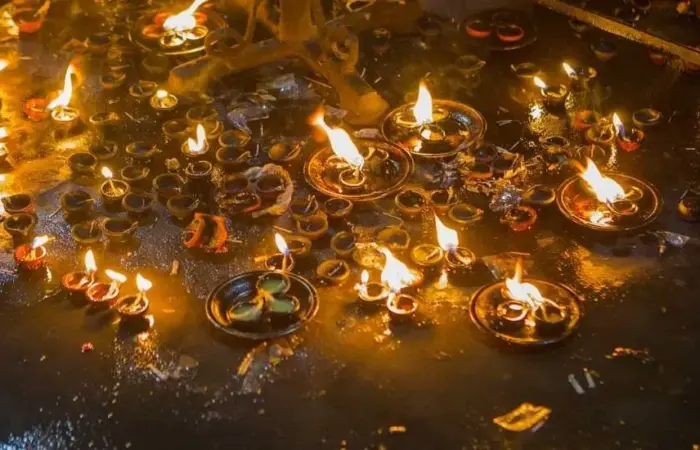
Diwali in Ayodhya and the entire northern India marks Rama’s homecoming. With his wife Sita and brother Laxman, Lord Rama returned to Ayodhya after an exile of 14 years and defeated the demon king Ravana in a victorious battle. The people lit raws of clay oil lamps (diyas) along the dark path to guide their right prince home.
Lord Krishna’s Victory Over Narakasur
The people in southern and western India celebrate Diwali as the victory of Lord Krishna and his wife Satyabhama over demon Narakasur. The demon terrorised the heavens and earth by defeating and imprisoning thousands of people. Lord Krishna freed all the people and restored peace. People celebrate this victory as Naraka Chaturdashi, a day before the main Diwali night (Kartik Amavashya).
Goddess Lakshmi’s Worship
Diwali celebration starts with offering prayers to Goddess Lakshi, the deity of wealth, fortune, and prosperity. According to Hindu mythology, Lakshmi emerged from the cosmic ocean during the Samudra Manthan (divine churning) on this exact night. She chose Lord Vishnu as her consort. Hindus perform Lakshmi Puja on this night and leave their doors and windows open to welcome prosperity. They also light bright lamps during this.
Goddess Kali’s Worship
People in eastern India, particularly in West Bengal, worship Goddess Kali on the festival night or a day after it. Goddess Kali is the fierce symbol of primal energy, time, the destruction of ego, and evil. Hindu devotees worship Goddess Kali to get rid of darkness, inner ignorance, and impurities.
Pandavas’ Return
Another mythological story connects Diwali celebration to the return of the five Pandav brothers in the epic Mahabharata. After a harsh exile of 13 years following a royal deception, they came back to their kingdom of Hastinapur. People became happy and illuminated the kingdom to celebrate the return of Pandavas.
King Bali and Vamana Avatar
The fourth day of the festival (Bali Pratipada) is dedicated to Lord Vishnu’s dwarf incarnation (Vamana) on earth to subdue the generous demon King Bali. In Kerala, the celebration recalls Bali’s rule and his promised annual return.
Why Diwali in Ayodhya Feels Truly Divine?

There are several points that make Diwali celebration in Ayodhya feel different and truly divine. Some of them are as follows:
Ayodhya in the Heart of Diwali
According to the epic Ramayana, Ram, Sita, and Lakshman spent 14 years in exile. In a victorious battle, Lord Ram defeated the demon king Ravana and came back to their home in Ayodhya with his wife Sita and brother Lakshman. It was a moonless night, amavasya in the month of Kartik. Local residents wanted to guide their prince back, so they lit earthen lamps in every window, doorway and lane.
A large number of Hindus take this essence as the main origin of Diwali. As stated above, other traditions and regions add their own layers, and Amritsar, Goa, Kolkata and Udaipur each mark the festival in a distinctly local way, as we have covered in our round-up of the best destinations to celebrate Diwali in India. However, Ayodhya, the homecoming, is the centre of all stories behind the celebration of the festival of lights. So, celebrating Diwali in Ayodhya or visiting the town during this festival is emotionally attached to numerous Hindus. It makes your presence known in Ayodhya, where the story is said to have happened.
Ayodhya Deepotsav
Ayodhya Deepotsav is a UP Government organised annual event. It began in 2017 and has grown enough. The number states how far it has come.
In 2021, people lit around 9,00,000 lamps along the Saryu River. In the 9th edition in 2025, the number of illuminated lamps reached 26,17,215 across 56 ghats of the river, including Ram ki Paidi. Guinness World Records adjudicators used drones to verify the number. On the same evening, 2,128 Vedacharyas performed Maha Aarti together on the bank of the Saryu River. It was another record.
These numbers are big figures. But they do not tell you what it feels like. Being there during Ayodya Deepotsav will make you witness this live event this year or forthcoming ones. Many volunteers step down in the Saryu water and line up small clay lamps filled with oil and fitted cotton wicks in neat rows. And at the designated hour, the lighting takes place, and the dark ghats turn gold. This follows Aarti chanting Ram Siya Ram. The whole event makes you feel like you are at a divine place.
Apart from Deepotsav, several other things happen in Ayodhya. Some of them are as follows:
- The Shobha Yatra
- Ram Leela performances
- Saryu Aarti
- The Symbolic Coronation: A symbolic ceremonial Ram Rajyabhishek
- Laser and drone shows
Ram Mandir Effect
In the contemporary world, you cannot talk about Ayodhya without naming Ram Mandir. After the completion of its primary construction, the temple was opened to the public on 22 January, 2024 after decades of history, debate, and legal process. For many Hindu devotees, it is the most important religious moment in their lifetimes.
This temple adds a second layer to travellers’ visit to Ayodhya during Diwali. Ayodhya Deepotsav is the celebration, and the temple is the destination. Many visitors plan their darshan for the day or after the primary lamp-lighting.
Small Places Feel Special during Diwali
A large number of Hindu devotees gather around Ram Mandir, Ram Ki Paidi, and the Saryu River, which makes these places overcrowded during the festival of lights. There are some quieter places that you can visit on your trip to Ayodhya. These places are as follows:
- Hanuman Garhi: A 70-step hilltop temple dedicated to Hanuman, the closest disciple and devotee of Lord Ram. Many traditional visitors prefer to offer prayers at this temple before going to Ram Mandir.
- Nageshwarnath Temple: It is located on the bank of the Saryu River and dedicated to Lord Shiva. Locals narrate that Ayodhya’s story is not only associated with Ram; this temple backs it.
- Kanak Bhavan Temple: According to mythology, it is the palace for Lord Ram and Goddess Sita. It offers a calm atmosphere and faces fewer crowds than the main temple.
- Guptar Ghat and Saryu Ghat: The main ghat is totally packed during this Diwali event. You can visit it the next morning to experience the soft light, cool air, and morning river bathing.
Ayodhya sits close to several other pilgrimage centres, so many travellers combine it with a wider Uttar Pradesh circuit. Varanasi is a common pairing for Ganga Aarti and Kashi Vishwanath darshan, Prayagraj adds the Triveni Sangam, and Chitrakoot carries its own Ramayana connection. Lucknow, roughly 135 kilometres away, works well as an arrival or departure city.
How to Plan and Execute Your Diwali Trip to Ayodhya
Visiting Ayodhya during the festival of lights requires careful early planning and necessary booking as this city gets overcrowded. Here is how you can plan your trip to and celebrate Diwali in Ayodhya:
- Start planning in the first half of September or earlier and make all essential bookings, like Ayodhya tour packages.
- Book flight/train tickets and Ayodhya car rental in advance if your trip plan does include transportation and local transfers.
- To reach Ayodhya, fly to Maharishi Valmiki International Airport Ayodhya Dham (AYJ). You can take a flight to Chaudhary Charan Singh International Airport if direct flights are not available from your nearest airport. For a rail journey, you can board a direct/connecting train to Ayodhyadham Junction (formerly called Faizabad Junction) or Ayodhya Cantt.
- Be ready to face road restrictions and heavy traffic in Ayodhya during Diwali.
- Carry light luggage with essential things and light woollen clothes.
- Stay safe and help each other during the trip.
Diwali falls on 8 November 2026, so your Ayodhya trip lands in peak travel season across the country. If you have leave in hand and want to extend the journey, look at the other best places to visit in India in November before you lock your return date.
Participate in Diwali Celebration in Ayodhya with Cholan Tours
Are you ready to celebrate this Diwali in Ayodhya or participate in it? If yes, Cholan Tours is the right tour operator to contact. Based on your travel style, preferences, and allied shared details, we will help you execute it smoothly by curating an exclusive Ayodhya tour package. Consult us today to plan and execute your Ayodhya trip during this festival of lights.
FAQs
Q1. Is Ayodhya crowded during Diwali?
Yes, it is. A large number of Hindu devotees come for the Diwali celebration in Ayodhya. You may face heavy footfalls and road restrictions throughout this holy city.
Q2. Why is Diwali celebrated in Ayodhya and other parts of India?
Diwali in Ayodhya and other parts of India is celebrated for Ram’s homecoming after an exile of 14 years and the victory of light over darkness and good over evil.
Q3. Why is Diwali in Ayodhya different and feels truly divine?
Diwali in Ayodhya recalls the lively story behind its celebration: Ram’s return home after an exile of 14 years. Further, Ayodhya has got a huge dedicated temple at Ram’s exact birthplace and has several associated sites like the Kanak Bhavan Temple, Hanuman Garhi, Ram Ki Paidi, and the Saryu River.
Q4. How many days do I need for my trip to Ayodhya during Diwali?
You need 3 to 5 days for your trip to Ayodya during the celebration of the festival of lights.
Q5. Is Ayodhya safe to visit during Diwali?
Yes, Ayodhya is safe to visit during Diwali. Security around all key religious places is highly tight. However, you need to be careful and stay away if you notice anything unnatural or suspicious.