
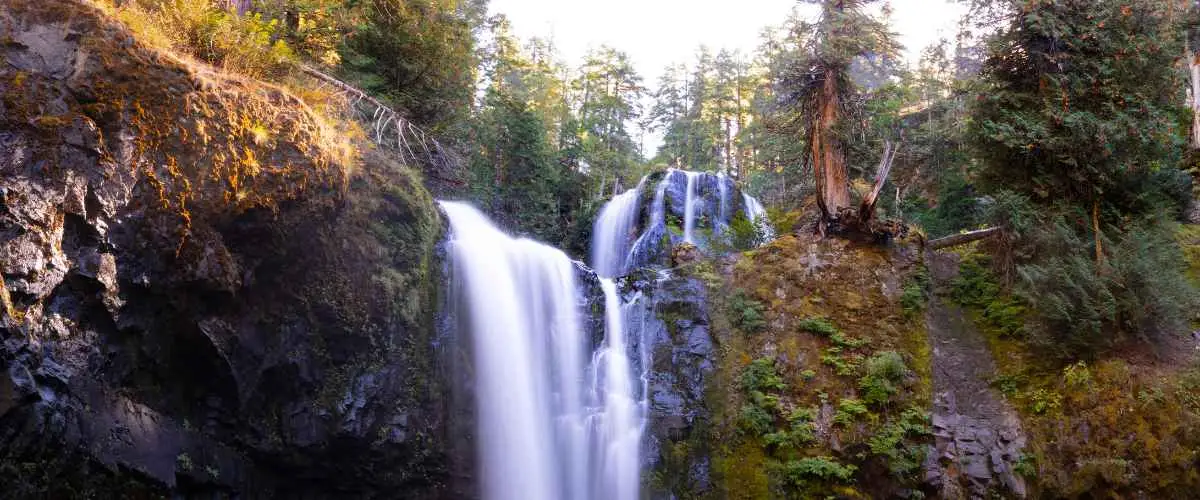
Do you want to experience the sounds of water crashing against rocks? If so, visiting the highest waterfalls in India is an ideal option.
India features stunning biodiversity. Around 25% of its land is covered with fascinating flora and fauna. Its waterfalls are spectacles of raw and uncontrolled power. From the lush Western Ghats of Karnataka to Meghalaya’s misty cliffs, these waterfalls draw the attention of Indian and foreign travellers.
If you are willing to witness India’s highest waterfall, this post is helpful to you. In this blog post, learn about:
What Do You Mean by the Highest Waterfall of India?
10 Highest Waterfalls in India
What Do You Mean by the Highest Waterfall of India?
Before learning the list of waterfalls in India, it is crucial to understand the meaning of ‘highest’ in geography. Keep in mind that not all waterfalls are equal, and the measurement method changes their ranking. Here are some measurement methods or classifications of India’s waterfalls:
Total Height – The vertical drop from the top of the falls to the base.
Plunge Waterfalls – Termed as the classic falls. The water of such a waterfall drops vertically and does not touch the cliff face during the fall. Nohkalikai Waterfall is an ideal example in this regard.
Multi-Step or Tiered Waterfalls – Such waterfalls have a series of steps or drops before touching the base. The total height of such a waterfall may be massive, like Kunchikal Falls, even if it does not fall directly.
Segmented Waterfalls – These falls are characterised by water that splits into several parallel streams as it falls and reaches the base. Seven Sisters Falls is an ideal example in this regard.
Being familiar with these terms will help you comprehend why a 400-metre waterfall is different from a plunge fall or a 300-metre waterfall.
10 Highest Waterfalls in India
Here are ten waterfalls of India with their brief descriptions in descending order as per their height:
1. Kunchikal Falls, Karnataka
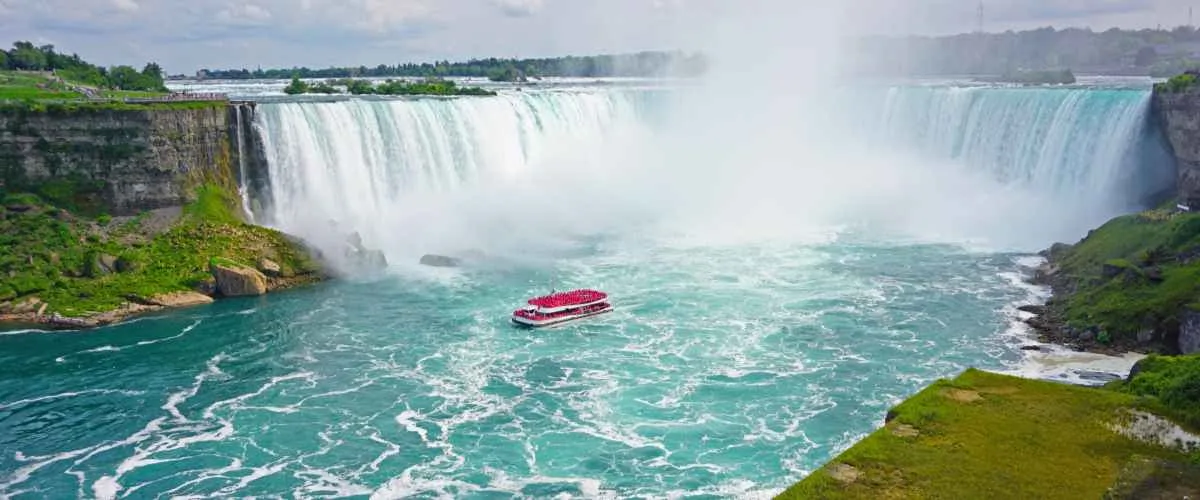
The Kunchikal Falls, the highest waterfall in India, lies in the Shimoga district of Karnataka. It falls down the Varahi River. This waterfall is a major tourist attraction in Karnataka’s Shimoga district. In addition, it is a primary source of hydroelectricity and is surrounded by lush greenery.
- Height – 455 metres.
- Location – It is located close to Masthikatte in Nidagundi village, Shimoga, Karnataka.
- How to reach the Kunchikal Falls – Take a private taxi or bus after reaching Udupi or Shimoga. You can access it from the Udupi Railway Station.
- Ideal time – Monsoon season (July – September).
2. Barehipani Falls, Odisha
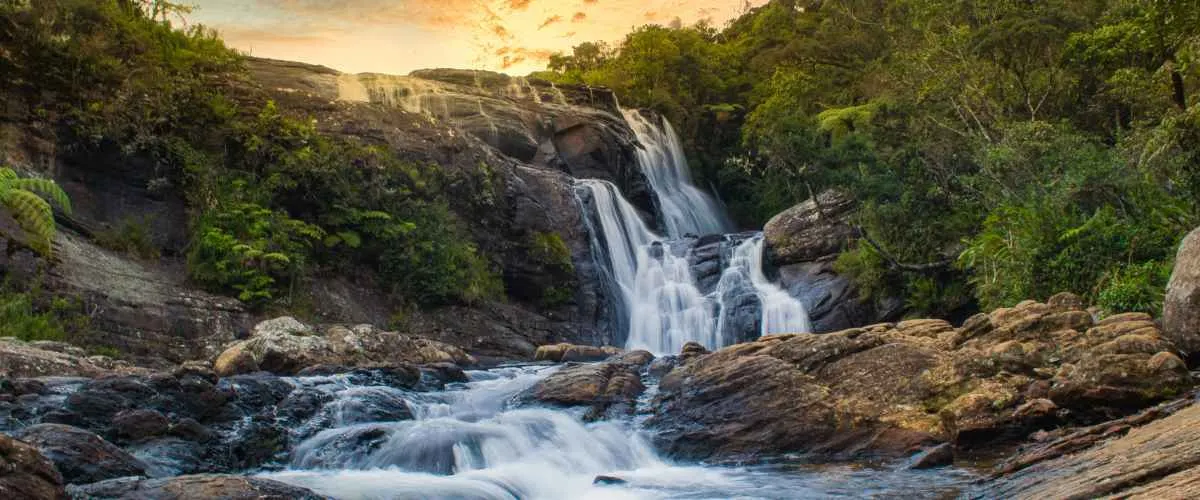
It flows down from the Meghasuni mountain of the Eastern Ghats. Located in the Mayurbhanj district of Odisha, it is the 2nd-highest waterfall in India. The powerful, uninterrupted water flow of the Budhabalanga River descends with extreme force, forming this two-tiered waterfall.
- Height – 399 metres.
- Location – It lies in Odisha’s Mayurbhanj district.
- How to reach the Barehipani Falls – Take a private taxi from Baripada or a bus from Bhubaneswar to access this waterfall.
- Best time to visit – Visit it from early November to the end of February.
Explore Odisha Tour Packages With Cholan Tours.
3. Nohkalikai Falls, Meghalaya
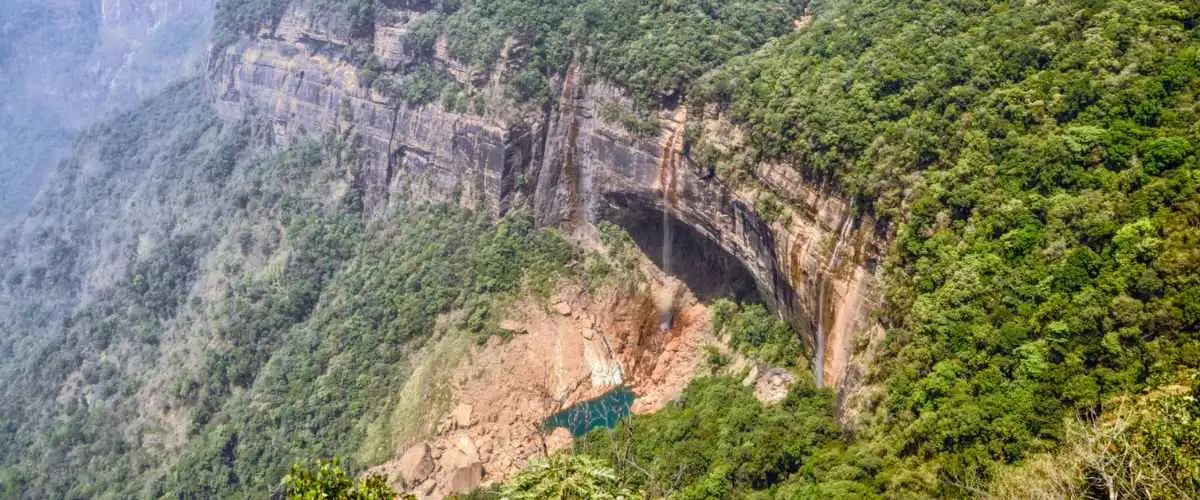
It lies in the untouched corner of Cherrapunji in Meghalaya. The Nohkalikai Falls is set amid serene landscapes and is among the largest waterfalls in India. It is a rainwater-fed waterfall and draws inbound and outbound tourists during the monsoon season.
- Location – Sohra, Cherrapunji, Meghalaya.
- Height – 340 metres.
- How to reach the Nohkalikai Falls – After reaching Cherrapunji, take a private car or taxi to access this waterfall.
- Ideal time to visit – Explore this waterfall from October to December or from March to May.
4. Mawsmai Falls, Meghalaya
The Mawsmai Falls is another waterfall to visit in Meghalaya. It lies in Mawsmai Village, East Khasi Hills district. Due to its descent into 7 distinct segments, it is known as the Seven Sisters Waterfalls. While exploring the falls, witness the abode of clouds on a sunny day.
- Height – 315 metres.
- Location – It is located in Mawsmai village, East Khasi Hills district, Meghalaya.
- How to reach the Mawsmai Waterfalls – Take a bus or private taxi from Shillong, the capital city of Meghalaya.
- Ideal time to visit – Explore it from October to the end of February.
5. Dudhsagar Falls, Goa
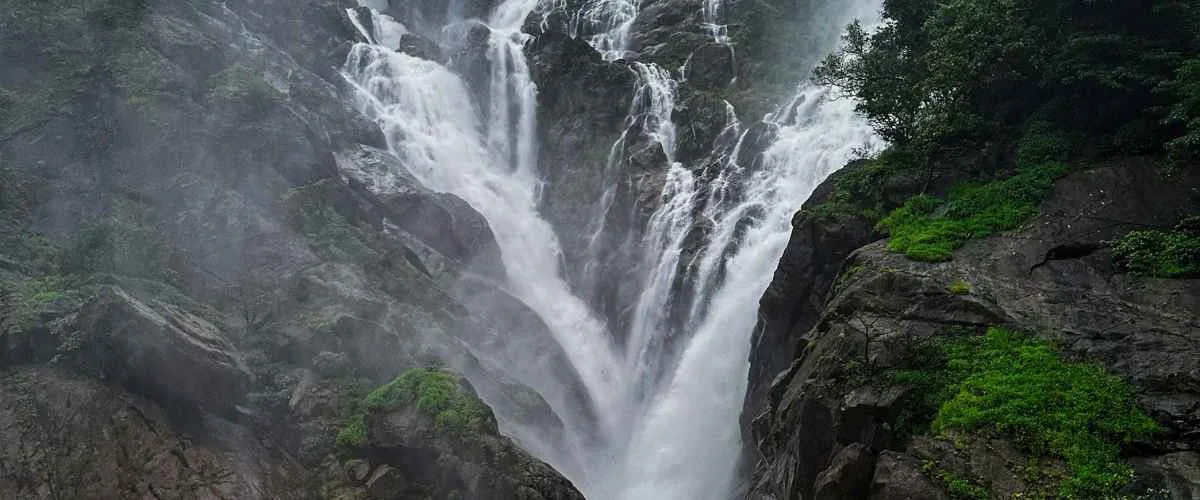
The Dudhsagar Falls, meaning the Sea of Milk, ranks 5th among India’s highest waterfalls. It is formed from the Mandovi River’s immaculate waters and lies in Goa. The fall of white waters from a height of around 310 metres makes it appear like milk.
- Location – It lies at Sonaulim on the Madgaon-Belgaum railway route in Goa.
- Height – 310 metres.
- How to reach the Dudhsagar Falls – After landing at the Goa airports or reaching Kulem Railway Station, take a private taxi or car to reach the Dudhsagar Falls.
- Best time to visit – Visit this waterfall from June to September or from November to December. The weather remains comfortable.
6. Kynrem Falls, Meghalaya
Without the Kynrem Falls, the list of the largest waterfalls in India is not complete. It is a three-tiered waterfall and lies at the outskirts of Cherrapunji in Meghalaya. If you are eager to experience the extravaganza of Mother Nature, you must visit the Kynrem Falls.
- Height – 305 metres.
- Location – East Khasi Hills District, Meghalaya.
- How to reach Kynrem Falls – After landing at any of the two airports in Goa, take a train from Madgaon to Kulem or a direct car/taxi to the falls.
- Ideal time to visit – Explore this waterfall from October to February to experience it at its best.
7. Meenmutty Falls, Kerala
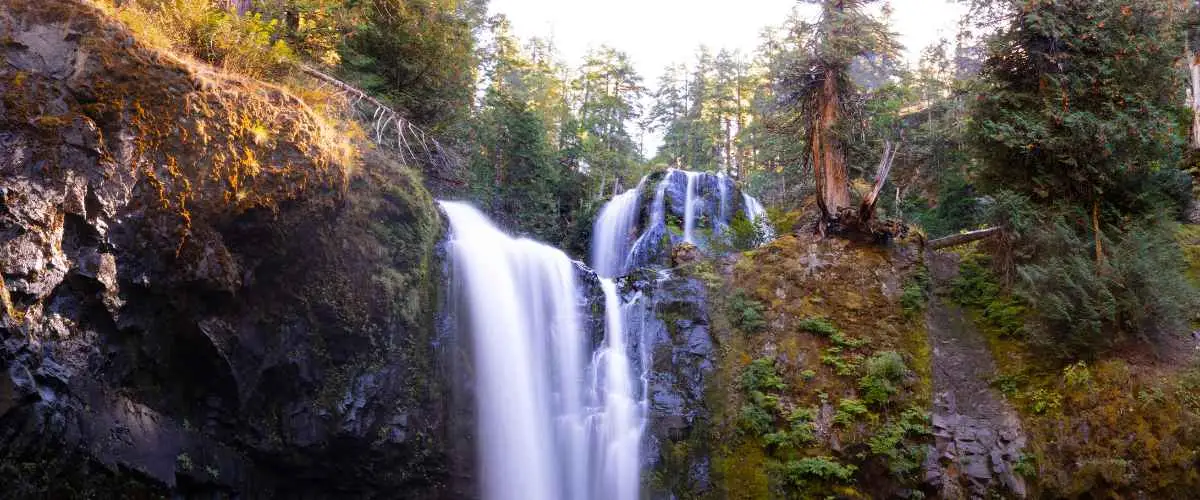
It lies in the Wayanad district of Kerala, nicknamed ‘God’s Own Country’. Vibrant tea plantations surround the Meenmutty Falls. You can trek for 2 km to witness the ecstatic view of this waterfall.
- Location – Padinjarathara in Kerala’s Wayanad District.
- Height – 300 metres.
- How to reach Meenmutty Falls – It is only 2 km from the bus station in Wayanad. Take a private car or a taxi to reach this waterfall in Kerala.
- Best time to visit – The best time to visit the Meenmutty Falls is from October to the end of February.
8. Thalaiyar Falls, Tamil Nadu
The Thalaiyar Falls flows down from the steep slopes of the Palani Hill. It lies in Kodaikanal, Tamil Nadu. Due to road closures, this waterfall is inaccessible. To explore it, you need to trek. The sound of the steep waterfall and calm atmosphere make it a weekend getaway for people in this state.
- Height – 297 metres.
- Location – Kodaikanal, Tamil Nadu.
- How to reach the Thalaiyar Falls – Take a private auto or taxi from Kodaikanal to reach this waterfall.
- Ideal time to visit – You can explore it from July to September or from October to March.
9. Barkana Falls, Karnataka
Although not counted among the highest waterfalls in India, it is a captivating waterfall in Karnataka. Formed from the mighty waters of the Seetha River, the Barkana Falls attracts domestic and international tourists during the monsoon season.
- Location – It lies at Agumbe in the Shimoga district of Karnataka.
- Height – 260 metres.
- How to reach Barkana Falls – Take a private taxi from Shimoga or Agumbe. The Agumbe Bust Station is just 7 km away from this waterfall.
- Ideal time to visit – The best time to visit this waterfall is from September to December/January.
10. Jog Falls, Karnataka
Jog Falls is a hidden gem, located in the unexplored corners of Karnataka. This rain-fed waterfall is the longest waterfall in India and draws tourists from across India and the world during the monsoon season.
- Height – 253 metres.
- Location – It is located in Siddapur taluk of Karnataka’s Uttara Kannada district.
- How to reach the Jog Falls – Take a private auto or taxi from the airport or railway station in Shimoga.
- Best time to visit – The best time to visit the Jog Falls is from November to February.
Explore Karnataka Tour Packages With Cholan Tours.
Conclusion
The highest waterfall in India is Kunchikal Falls. Apart from it, you can explore several other waterfalls like Berihipani, Nohkalikai, Dudhsagar, Jog, and Thalaiyar Falls. You can explore them one by one, as you choose. The ideal time to visit them is usually from July to February.
Frequently Asked Questions
Q1. What is the highest waterfall in India?
The Kunchikal Falls is the highest waterfall in India. It falls from a height of 455 metres.
Q2. Which is the 2nd highest waterfall in India?
The Barehipani Falls is the 2nd highest waterfall in India. Its height is 399 metres.
Q3. Where is Jog Falls located?
The Jog Falls is located in Siddapur Taluk of Karnataka’s Uttara Kannada district.
Q4. Which state in India has the maximum number of waterfalls?
Tamil Nadu has the maximum number of waterfalls in India. This state is home to 544 magnificent waterfalls.
Q5. Where does the highest waterfall in India rank in the world?
The highest waterfall in India, Kunchikal Falls, ranks 116th in the world.
Q6. How to reach India’s highest waterfall?
India’s highest waterfall, Kunchikal Falls, is easily accessible from the airport and railway station in Shimoga. Shimoga’s airport and railway station are well-connected to major airports and railway stations across India. Take a private taxi or auto to access the waterfall after reaching Shimoga.