
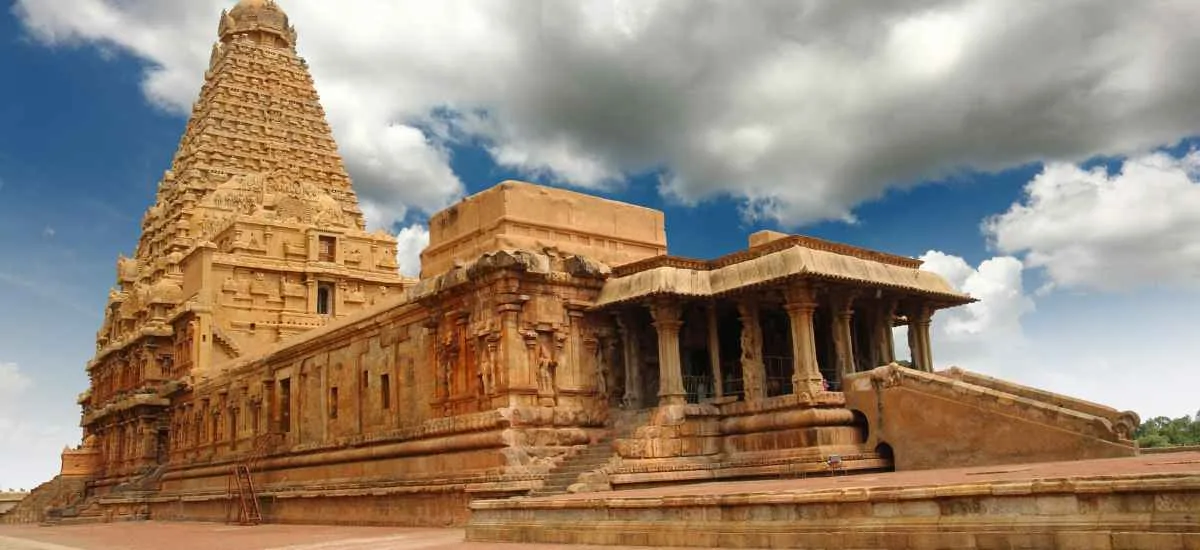
The Tanjore Big Temple, also known as the Brihadeeswarar Temple, is a towering testament to the grandeur of the Chola Dynasty and is one of the finest examples of Dravidian architecture.
The temple is located in the ancient city of Thanjavur in Tamil Nadu. This UNESCO World Heritage Site is a masterpiece of engineering, art, and a living centre of spirituality and tradition.
The temple is highly inspiring by day and turns mystical at night. It is known for a night ceremony ritual, the “Ardhajama Pooja.” The ritual is a spiritual event and has been practised for centuries. It connects the present to a rich history of devotion and worship.
In this blog, explore the historical significance of the Tanjore Temple, the architectural marvels that define it, and the enchanting night ceremony ritual that continues to draw devotees and visitors from around the world.
The Historical Significance of Tanjore Temple
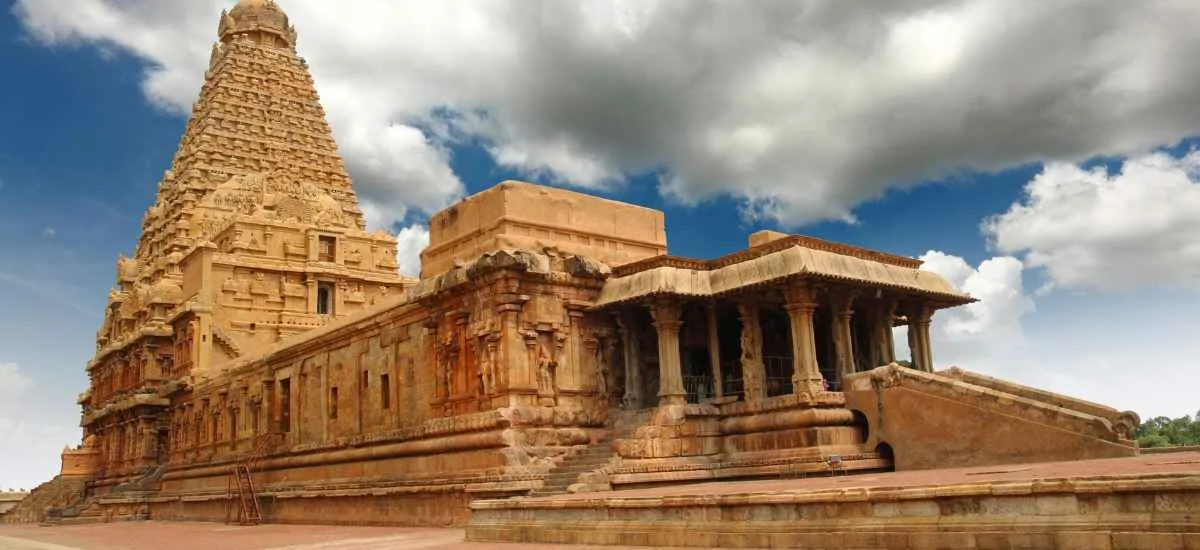
The mighty Chola emperor Raja Raja Chola I constructed the Brihadeeswarar Temple in 1010 AD. He built this temple to honour Lord Shiva. The temple displays the Chola Dynasty’s wealth, power, and cultural superiority. It stands as one of the most important landmarks of medieval South India and reflects the zenith of Chola architectural prowess.
Raja Raja Chola I envisioned the temple as a symbol of his empire’s devotion to Lord Shiva. The temple served as a place of worship and a centre for art, culture, and learning. It was designed to inspire devotion, with its towering Vimana (temple tower) and colossal Shiva Lingam – both of which remain unmatched in their grandeur.
The temple’s construction involved the efforts of thousands of artisans and labourers, who worked tirelessly to bring Raja Raja Chola I’s vision to life. The precision with which the temple was built remains a marvel of ancient architecture.
Architectural Marvels of the Tanjore Big Temple
The Tanjore Temple is a masterpiece of Dravidian architecture, characterised by its towering structures, intricate carvings, and massive scale. Its complex spans 44.7 acres and has a central sanctum dominated by the towering Vimana, which is 216 feet high.
This Vimana is capped by a single granite block, which weighs around 80 tons. It is an engineering feat that has puzzled historians and architects alike.
Key Architectural Features:
- Vimana – The towering Vimana is the temple’s most iconic feature. It is adorned with intricate carvings of deities, celestial beings, and mythological scenes, each one a testament to the skill of the Chola artisans.
- Nandi Mandapam – In front of the main sanctum, the Nandi Mandapam houses a massive statue of Nandi, which is a sacred bull and Lord Shiva’s vehicle. This statue is carved from a single stone and is over 16 feet long and 13 feet high.
- Wall Frescoes: The inner walls of the temple are adorned with frescoes. These frescoes depict varied aspects of life and Hindu mythology during the Chola period. They are remarkably well-preserved and offer a glimpse into the artistry of the Chola painters.
- Sculptures and Reliefs – The temple’s exterior and interior walls are covered with thousands of sculptures and reliefs, each one depicting a deity, a scene from Hindu mythology, or a figure from the Chola court. These sculptures showcase the Chola’s artistic excellence.
The Night Ceremony Ritual – Ardhajama Pooja
As the sun sets and the day draws to a close, the Tanjore Big Temple undergoes a transformation. The Ardhajama Pooja, the night ceremony ritual, is the final ritual of the day, marking the end of the temple’s daily activities.
This ceremony reflects tradition and has been practised for centuries. It bridges the gap between the temple’s ancient past and present.
The Ritual
The Ardhajama Pooja begins around 8 pm at night. Temple priests chant Vedic hymns and mantras to invoke the blessings of Lord Shiva. The Shiva Lingam, the temple’s central deity, is bathed in holy water, milk, and other sacred offerings. The deity is then adorned with fresh flowers, sandalwood paste, and other sacred items, while incense and lamps are lit to create an atmosphere of divine energy.
The highlight of the ceremony is the procession of the Utsava Murthy, which is Lord Shiva’s more petite, portable idol. Priests keep the idol in a beautifully decorated palanquin. Further, they carry the idol around the temple complex. The whole ceremony is followed by drum beating, conch shells’ sound, and hymn chanting. This procession symbolises the deity’s journey through the temple, blessing all those who have gathered to witness the ritual.
As the procession makes its way around the temple, the air is filled with a sense of reverence and devotion. The flickering oil lamps cast long shadows on the ancient stone walls, creating a surreal, almost magical atmosphere. The ceremony concludes with the distribution of Prasadam-sacred food offerings-to the devotees, who receive the blessings of Lord Shiva before leaving the temple.
The Spiritual and Cultural Significance
The Ardhajama Pooja is a live tradition, which has been practised for thousands of years. It helps devotees to establish a deep spiritual connection with Lord Shiva. In addition, it reminds the temple’s importance as a centre of cultural heritage and a place of worship.
This ceremony highlights the significance of the temple’s rituals and traditions. The participation in this pooja or ceremony makes a devotee a part of the unbroken chain of devotion. It links the profound past with the vibrant present in a meaningful way.
Conclusion
The Tanjore Temple holds a rich history and architectural significance. It is a testament of the Chola dynasty. Ardhajama Pooja, a night ritual, is a living tradition. The ritual helps devotees connect with Lord Shiva and offers a spiritual experience that transcends time.
Witnessing this ritual is a must for anyone visiting Tamil Nadu. It gives a chance to step back in time and experience the temple’s ancient traditions. The experience is both unforgettable and profound.
The temple and its night ceremony ritual leave a long-lasting impression, whether you’re a history enthusiast, traditional lover or a spiritual seeker. So, ensure to witness the night ceremony when you visit Thanjavur. It will enrich your understanding of India’s rich cultural heritage.
Explore Grand South India Heritage, Hills & Backwaters Journey Tour Package.
Frequently Asked Questions
1. What time does the night ceremony ritual at Tanjore Temple start?
The Ardhajama Pooja, or night ceremony ritual, starts around 8 pm. Visitors arrive at the temple earlier to get a good spot and experience the ceremony fully.
2. Is the night ceremony ritual open to non-Hindus?
Yes, it is open for non-Hindus too. However, non-Hindus may not enter certain areas of the temple. It is crucial to respect the sanctity of the rituals and the temple’s traditions.
3. Can visitors take photographs during the night ceremony?
As a visitor, you can click images of most parts of the temple complex. Photography or videography is not allowed during the night ritual. So, avoid clicking the moments of the ritual to maintain the sanctity of the event.
4. Is there any dress code for attending the night ceremony?
Yes, visitors need to follow a dress code. Dress modestly and follow the rituals during the ceremony. You can put on traditional Indian attire, such as sarees or dhotis. However, you should avoid wearing revealing clothing.
5. What is the significance of the Utsava Murthy in this night ceremony?
The procession of the Utsava Murthy symbolises the deity’s journey through the temple complex, blessing devotees and the temple. It is a central part of the night ceremony and represents the divine presence moving among the worshippers.