
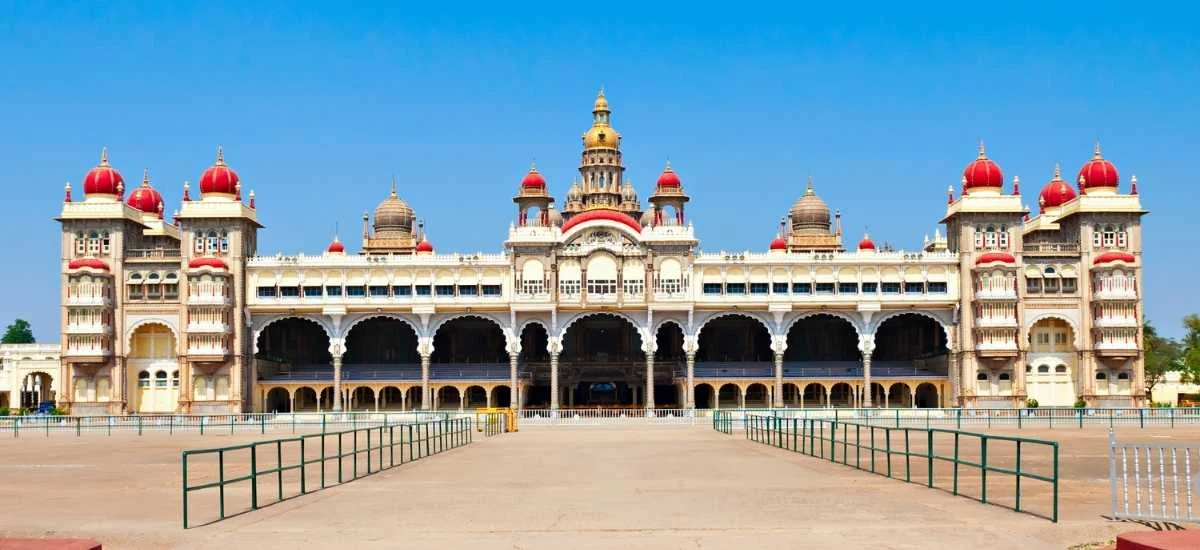
Are you planning to visit the southern tip of India? If so, there is a landmark that you cannot ignore to include in your itinerary. We are talking about the Mysore Palace, which is also known as Amba Vilas Palace.
Situated in the heart of Mysore (Mysuru), this palace is an architectural masterpiece in Karnataka and one of the most renowned royal residences in the world. It attracts millions of visitors each year and is one of India’s most visited monuments.
The Mysuru Palace, also known as Amba Vilas Palace, features Indo-Saracenic architecture, ornate interiors, royal artefacts, and grand festivals. It narrates the story of the Wodeyar Dynasty and displays ancient artistic excellence. Further, it brings the rich traditions of southern India to life.
Whether you are an architecture enthusiast, a history lover, or a photographer willing to click the perfect shot, this palace offers an experience that is nothing short of magical. In this blog post, learn about –
- History of the Mysore Palace
- Key Attractions of the Mysore Palace, Karnataka
- The Temples Inside the Mysuru Palace
- Experiences & Events to Witness
- Mysore Palace Entry Timings
History of the Mysore Palace
The history of the Mysore Palace closely relates to the rise and fall of the Wodeyar Dynasty. This dynasty ruled over the Kingdom of Mysore for more than 500 years (five centuries). According to the historical proofs and local beliefs, Yaduraya Wodeyar built the original palace. He was the founder of the Wodeyar Dynasty.
Early Beginnings
In the early days of the Wodeyar Dynasty, the palace was built using only wood and served as the royal residence. It underwent numerous renovations and reconstructions to repair damage from wars, fires, and invasions.
Reconstruction and Rebirth
In 1896, fire destroyed this wooden palace. It caught fire when the royal family was busy with Princess Jayalakshammanni’s wedding celebrations. After this tragedy, Maharaja Krishnaraja Wodeyar IV ordered the construction of a new palace at the same site.
The Present Palace (Amba Vilas Palace)
Henry Irwin, the British architect, designed and completed the current structure of the Mysore Palace in 1912. This palace was built with grey granite and pink marble domes. It is the perfect example of Indo-Saracenic architecture, which is the right combination of Hindu, Rajput, Islamic, and Gothic styles.
Today, the Mysore Palace stands as a royal residence. It still partially belongs to the Wodeyar family. However, it is also a living museum and showcases Karnataka’s glorious past.
Explore Mysuru Tour Packages With Cholan Tours.
Key Attractions of the Mysore Palace, Karnataka
Stepping inside the palace feels like walking into a different era. Each room is more opulent than the last and showcases the incredible craftsmanship of Indian artisans.
Amba Vilas (Private Durbar Hall)
Also known as the Private Durbar Hall, the Amba Vilas is one of the most opulent sections of the palace. This hall was reserved for meetings between the Maharaja and his closest advisors.
The interiors are adorned with –
- Ornate ceilings decorated with gold leaf
- Stained glass windows that were imported from Belgium
- Rosewood doors
The glory of Amba Vilas reflects the Mysore royal court’s sophistication and authority.
Golden Throne
The Golden Throne is the most sacred and famous attraction of the Mysore Palace. It was used exclusively during the Dasara festival. The throne symbolises divine authority and royal power.
- Crafted from solid gold and embellished with precious stones, it features –
- A majestic canopy
- Intricate carvings depicting mythological scenes
- Artistic excellence is rarely seen elsewhere in India
When displayed during Dasara, the Golden Throne becomes the spiritual and cultural centrepiece of the celebrations.
Kalyana Mantapa
The Kalyana Mantapa, or marriage hall, is an architectural marvel featuring a stunning octagonal design. It was the centre for the royal ceremonies and weddings.
Highlights include –
- A glass ceiling with colourful floral motifs
- Belgian crystal chandeliers
- Mosaic floors with semi-precious stones
The Kalyana Mantapa beautifully combines European elegance with Indian craftsmanship.
Dolls’ Pavilion (Gombe Thotti)
- The Dolls’ Pavilion is locally known as Gombe Thotti. It houses a remarkable collection of conventional dolls and figurines. A visitor can explore.
- The collection of dolls brought from several Indian states
- It hosts Dasara festivities
- Miniature royal processions
This section is particularly famous and offers a glimpse into conventional folk art and cultural storytelling.
Wrestling Courtyard
The Wrestling Courtyard reflects the palace’s focus on discipline and physical strength. Royal wrestlers used this area and were trained. The highlights of this courtyard –
- Traditional Indian wrestling practices
- The importance of sports in royal life
- Mysore’s long-standing wrestling heritage
The Elephant Gate
The Elephant Gate is a grand entrance used during royal processions. It is large enough to allow elephants to pass through comfortably and symbolises royal dignity and strength.
The gate played an important role during –
- Ceremonial parades
- Dasara processions
- State celebrations
The scale and design of the Elephant Gate leave a long-lasting impression on visitors.
Portrait Gallery
The Portrait Gallery displays life-sized paintings of Mysore’s rulers and members of the royal family.
The gallery offers –
- Historical context of each Maharaja’s reign
- Artistic representations of dresses worn by royal family members
- A deep insight into the political and cultural milestones the dynasty achieved
The Temples Inside the Mysuru Palace
The palace complex isn’t just a home; it’s a spiritual hub. There are 12 temples within the walls, ranging from the 14th to the 20th century. Here are the most significant ones –
Kodi Bharravasvami Temple
Dedicated to Lord Shiva, the Kodi Bharravasvami Temple is one of the oldest shrines within the palace premises. It is believed to have been established by the early Wodeyar rulers.
Sri Shweta Varahaswamy Temple
The temple belongs to Lord Vishnu in his Varaha (boar) avatar. Its deity is closely associated with the royal families. They worshipped at this temple during crucial ceremonies.
Sri Trinayaneshvara Swami Temple
This temple is dedicated to Lord Shiva. It is known for its simple but powerful spiritual importance.
Sri Prasanna Krishanswami Temple
Dedicated to Lord Krishna, this temple holds special importance during Janmashtami and other Vaishnavite festivals that royal families celebrate.
Sri Bhuvaneshwari Temple
This temple is located near the palace grounds and belongs to Goddess Parvati. It is a peaceful place for worship.
Experiences & Events
The Mysore Palace offers unforgettable experiences to its visitors. For this, it hosts several events like –
Dasara Festivities
The Mysuru Dasara Festival is the most celebrated event at the palace and one of India’s grandest cultural festivals. Spanning ten days, it marks the victory of good over evil.
Key highlights include –
- Royal processions with decorated elephants
- Cultural performances and exhibitions
- Display of the Golden Throne
During Dasara, the palace is illuminated with over 100,000 lights, creating a breathtaking spectacle.
Light & Sound Show
The Light and Sound Show held in the evenings narrates the history of Mysuru and the Wodeyar dynasty.
This immersive experience includes –
- Dramatic lighting effects
- Storytelling in English and Kannada
- Musical accompaniments
It is an excellent way to understand the palace’s legacy in an engaging format.
Royal Museum
The Royal Museum is situated within the palace complex. It showcases an impressive collection of royal artefacts.
Exhibits include –
- Traditional weapons
- Royal costumes and jewellery
- Ancient photographs
Mysore Palace Entry Timings
The Mysore Palace has different entry timings for different things. You should know about them in detail. Tour operators like Cholan Tours offer all types of support to make your experience convenient.
- General visiting hours – 10:00 AM to 5:30 PM
- Illumination on Sundays and public holidays
- Light & sound show timings – Evening hours that vary by season
Arrive earlier to avoid crowds, particularly on weekends or during festivals.
Conclusion
The Mysore Palace is a historical monument. In addition, it is a live example of India’s glorious past and cultural traditions. The palace showcases the Wodeyar Dynasty’s architectural excellence.
The Mysore Palace leaves a lasting impression on every visitor, whether you are exploring its majestic halls, witnessing the splendour of Dasara, or simply admiring its illuminated beauty at night. A visit here is not just a sightseeing experience, it is an immersion into the soul of Karnataka.
Frequently Asked Questions
Q1. Who built the Mysore Palace?
Yaduraya Wodeyar built the original palace with the use of wood. Maharaja Krishnaraja Wodeyar IV ordered the construction of the current palace when the earlier one faced damage.
Q2. What is the Mysore Palace opening time?
The opening time of the Mysore Palace is from 10 am for all days. It shuts its main entrance for visitors at 5:30 pm.
Q3. What is the Mysore Palace illumination time?
The Mysore Palace illumination usually occurs on weekends and public holidays.
Q4. What are the Mysore Palace Light and Show timings?
The Mysore Palace Light and Show occur during evening hours, especially after the sunset. The show hours vary from one season to another. Contact us, Cholan Tours, before planning your visit to the palace.
Q5. What are the attractions inside the Mysore Palace?
The attractions inside the Mysore Palace are Amba Palace (Private Durbar Hall), Golden Throne, Kalyana Mantapa, Doll’s Pavilion, Wrestling Courtyard, Elephant Gate, Portrait Gallery, temples, and varied events like Light and Sound Show.