
We have shifted beyond a period where travel was defined only by sightseeing and exploring destinations. Currently, culinary curiosity has stolen the limelight. It is surprising to think that what was once just a mode of survival for past generations has turned into a major universal trend, inspiring people to travel, particularly to experience the authentic flavors and traditional food that offer meaning to the region’s identity.
This change proves that food has become such a dynamic force that it has fundamentally revolutionized global travel trends, bridging different cultures together.
At Cholan Tours, we believe that to profoundly know a destination, you must taste its history, its distinct characteristics, and the multiple layers of tradition waiting to be discovered under the surface.
So, let’s take a glimpse into the popular foods of the South India where every bite narrates the tale of heritage and heart.
An Introduction to South Indian Culinary Tourism
While South India is globally celebrated for its majestic temples and ancient history, your journey here is truly completed through its cuisine. As you travel through the diverse landscapes of Tamil Nadu, Kerala, Karnataka, Andhra Pradesh, and Telangana, you will discover how the land shapes what arrives on your plate.
With aromatic spices, creamy coconut, and seasonal harvests at peak ripeness, you are not just eating a meal; you are participating in a culinary legacy traced back to 4,000 years ago that thoughtfully balances “Six Tastes”- sweet”, sour, salty, bitter, astringent and pungent.
This balance is to ensure that your meal is never over-engineered but a natural source of nourishment for your body and your senses.
1. Tamil Nadu – Where Full Is Just a Suggestion!
- You might have embarked on “daycations” to many popular destinations around the globe, where sunrise to sunset seamlessly fits into a single day’s itinerary. Now imagine taking a one-day food trip to Tamil Nadu. From the first sip of morning coffee to a late-night dinner, this destination becomes a sunrise-to-sunset celebration of taste.
- During the dawn, if you set foot in any part of Tamil Nadu, specifically either in Kumbakonam or Madurai, you’re welcomed by the rhythmic, metallic clink of stainless-steel dabarah sets (a two-piece South Indian coffee vessel). Here, filter coffee is not just a drink; it’s a power button to begin the morning in South India.
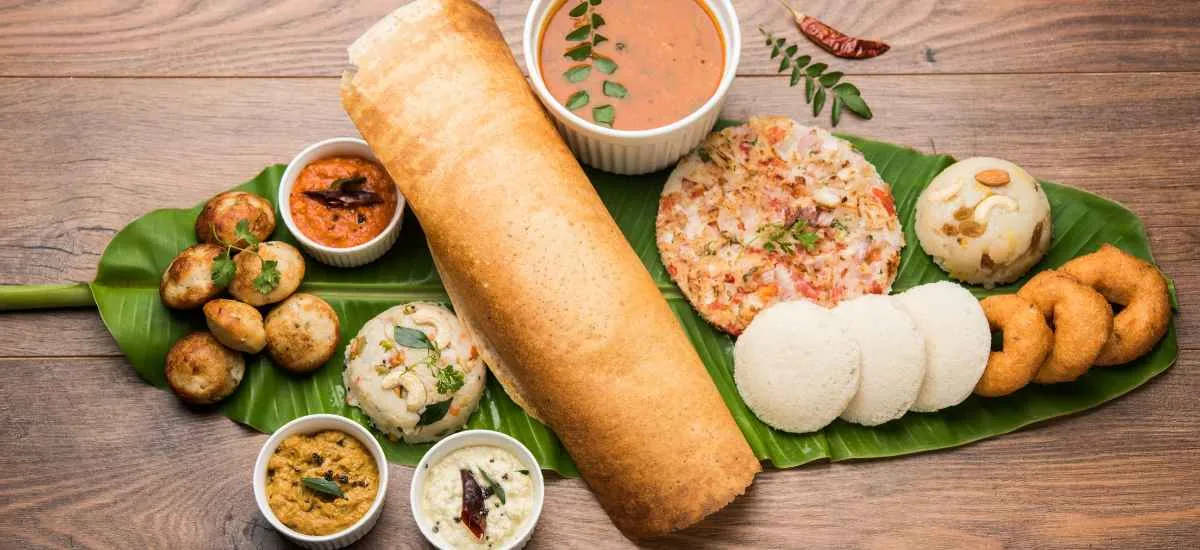
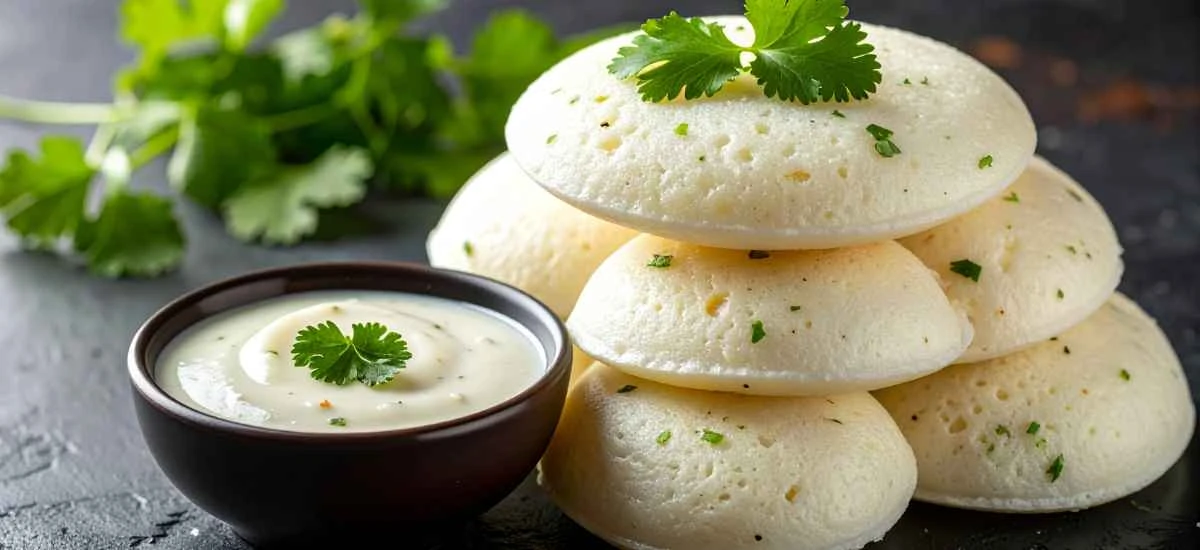
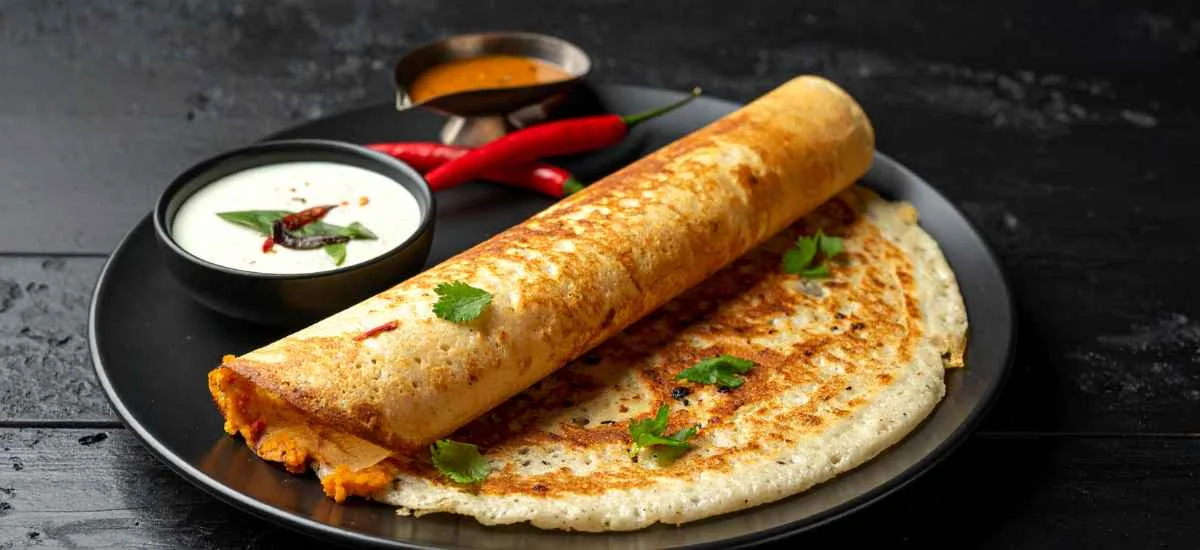
- That being so, you can witness people traveling miles for that very first sip of frothy, chicory-infused perfection. As the sun rises, you might also feel a rise in your appetite. This is the hour when the bustling city’s air begins to teem with the aroma of steaming idlis (rice cakes), golden dosas (crispy rice-lentil crepes), buttery pongal (savory rice-and-lentil porridge), piping hot sambar (lentil curry), fresh coconut chutney (coconut-based condiment), and the tempting crunch of medu vada (crispy lentil doughnuts). These are the essential staples that fuel the morning of a South Indian.
- Do you know that there are secret culinary experts in Tamil Nadu? They are none other than its temples. Mid-morning is the perfect time to experience temple prasadam (sacred food offering) featuring dishes like puliyodarai (tamarind rice) or Sakkarai Pongal (ghee-and-jaggery rice pudding). Prepared in vast temple kitchens and guided by prayer and tradition, each ladle holds as much devotion as flavor. As you step into cool, stone-pillared halls,
you may find a long queue holding a dried leaf bowl to receive the offerings—not because people skipped breakfast, but because this is nourishment steeped in faith. - And by noon comes the best part of your foodcation! This is the time to experience a culinary masterpiece: the Grand Banana Leaf Meal. In Tamil Nadu, lunch is a gracefully choreographed sequence of flavors. You’ll watch in awe as servers move with refined precision, placing little portions of different freshly cooked vegetable poriyals (seasoned vegetables), crunchy appalams (crispy lentil wafers), and tangy pickles at precise corners of the leaf. Then comes the heart of the feast: a steaming mound of white rice, partially drenched with a spoonful of golden ghee and flavorful sambar (lentil curry).
- Then a parade of traditional favourites follows, from the bold Vathal Kuzhambu (dried vegetable tamarind curry) to the digestive kick of Rasam (tamarind pepper broth) and the soothing curd rice. The meal feels complete through the final touch of a dessert, payasam (vermicelli pudding).
Here’s a pro tip for eating: Eat with your hands. Your fingertips sense texture and temperature, signalling the brain to prepare for digestion.
- However, if you are a non-veg lover, your foodcation must take a tour to the land of the Nattukottai Chettiars—Chettinad, where the architecture is grand, but the flavors are the grandest! In Chettinad, cooking is a significant matrilineal art. The secret to this world-famous cuisine does not just lie in a kitchen but in the hands of the ‘Achis’—the matriarchs of the Chettinad home. Because their culinary traditions remain so deeply rooted, they own the title of the world’s most aromatic and flavorful cuisine.
- Their home itself is designed to honor the craft; every kitchen remains a ‘spice-laden laboratory’ where granite grinding stones are used even now to create hand-blended masalas. Here, globally celebrated dishes like the fiery Pepper Chettinad Chicken and hot, tangy Fish Curry were born. Chettinad people are aware that once you taste their flavors, you can never let them go. To ensure you carry this heritage with you, they offer cooking classes and sessions. Several hotels and tour operators in the region, especially around Karaikudi, provide these hands-on sessions so that you can take their signature taste wherever you go.
- Craving seafood? Along the coast of Tamil Nadu—from Kanyakumari to Thoothukudi—freshly caught fish from the ocean swim straight to your plate. After the spice and heat, your palate automatically seeks relief, and Madurai answers with Jigarthanda—a rich, chilled dessert drink made with milk and soaked badam pisin, which acts as a natural cooling agent for your body.
- If you’re looking for something different, maybe a dark chocolate? Well, Tamil Nadu suggests a “dark shop” that offers a dessert even tastier. Tirunelveli’s Iruttu Kadai, meaning ‘The Dark Shop,’ is named for its famously dimly lit interior. This spot offers you silken wheat halwa (wheat pudding loaded with cardamom and nuts), crafted from a century-old secret recipe.
- As evening falls, you are drawn to multiple street food stalls that locals affectionately call the “People’s Five-Star Hotels,” as the flavors often eclipse even the most top-tier, star-rated restaurants. There is also a significance in beauty to Tamil Nadu’s street food that surpasses taste alone. It is a lifeline for the community and a powerful engine for women empowerment. The majority behind the carts are homemakers who turn their private kitchens into shared treasures by preparing handmade snacks.
- What you are tasting here is the motherly care poured into every morsel. From steaming Kuzhi Paniyaram (fermented batter dumplings) to global fusions like creamy brownies or Korean cheese buns, each stall caters to people craving different tastes. As the clock strikes 9, you may wonder where to find a late-night feast. The answer is simple: in Tamil Nadu, the kitchen never closes.
- In fact, there’s a local suggestion that dinner will be served even as the following day’s breakfast is being prepared. Welcome to Madurai, nicknamed Thoonga Nagaram (Sleepless City), where food is celebrated 24/7. Strolling through the streets of Madurai at night feels like walking into a live music studio.
- You’ll hear the “tin-tan”—the rhythmic clanging of metal blades hitting the scorching griddle. This is the heartbeat of the night: the making of Kothu Parotta (chopped flatbread stir-fry). Of course, no trip to Madurai is complete without the must-try Bun Parotta (soft, layered flatbread bun). Unique for its soft, airy texture, the dough is enriched with coconut milk and then puffed up like a golden bun.
- When paired with a piping hot bowl of aromatic Salna (spicy gravy), you are truly eating a culinary masterpiece that defines the spirit of Madurai.
You might be wondering, “If Madurai is this magical even at night, what treasures does it carry by day?”
At Cholan Tours, we believe the right way to answer that is to bring you there in person and let you experience it firsthand. We organize exclusive Madurai Food Safaris & Heritage Walking Tours that allow you to explore every nook and corner of Madurai on foot. Imagine starting your morning by witnessing the soul of the city.
On our tours, you’ll come across women drawing intricate Kolams (delicate rice-flour art) on their doorsteps to welcome their day, while milkmen tend to their cows in the soft morning mist. As we guide you through bustling bazaars and beautiful alleyways, you’ll hear the heartbeat of the city through tales narrated by the locals themselves.
We unveil the living history and heritage of this ancient city into an immersive, beyond-‘4D’ experience.
2. KERALA – Experience God’s Feast in God’s Own Country
- Popularly known as God’s Own Country, Kerala also holds the menu card crafted by God himself. The specialty of Kerala cuisine lies in its strong connection to nature, tradition, and balance. Molded by spice plantations, scenic backwaters, and an extensive coastline along with coconut groves, Kerala’s food culture is closely knit with the coconut palm. Coconut plays a versatile role and is used in cooking, skincare, and Ayurveda—making it the core hub of the Malayali lifestyle.
- Aromatic spices such as cardamom, black pepper, cloves, and ginger add fragrance and warmth without overpowering the palate, curating flavors that feel both refined and comforting. Puttu with kadala curry (steamed rice cake and black chickpea curry) remains a top-notch staple combo among locals every day. Another staple, Appam and Stew (bowl-shaped pancake and milk curry), narrates a more global story.
- Also known as “Ishtu,” this culinary legacy is from the English traders who arrived in search of “Black Gold” (pepper), carrying with them the European concept of slow-stewing meats and vegetables. This was artfully adapted by Kerala’s St. Thomas Christian and ancient Jewish communities, who seamlessly substituted dairy with fresh coconut milk, creating a dish that perfectly bridges East and West.
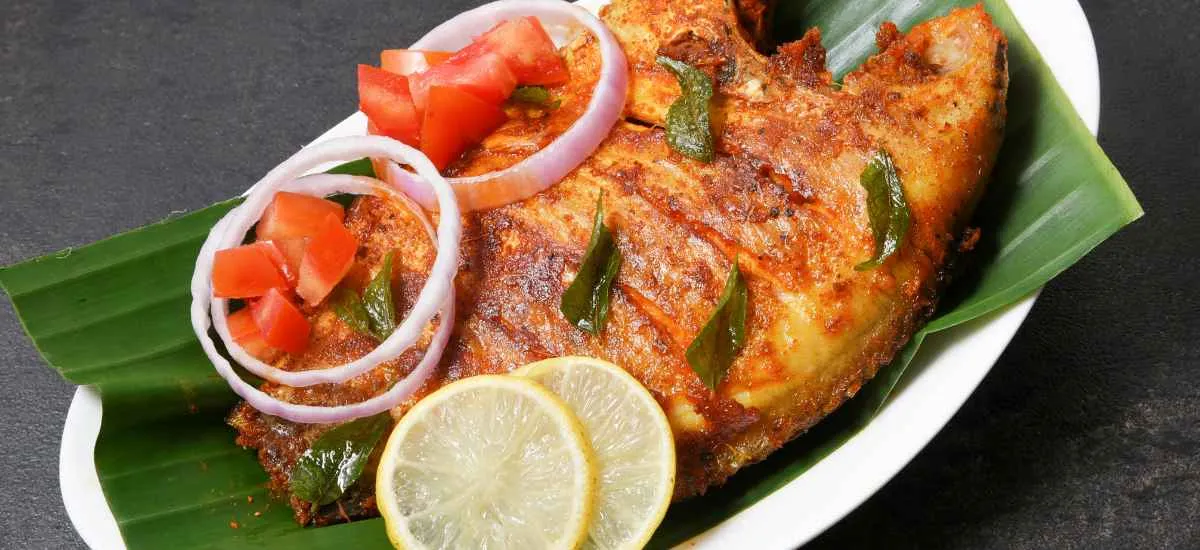
- While Varutharacha Mutton Curry (roasted coconut masala mutton curry) remains the residents’ favorite, the traditional Karimeen Pollichathu (Roasted Pearl Spot Fish wrapped in a banana leaf) has gained widespread popularity through social media, becoming the popular choice of travelers. In Kerala, it is basically hard to differentiate between food cooked at home and that served in restaurants, as both carry the same depth of essence.
- This is mainly because many households grow their own spices, both commercially and domestically in home gardens, preserving Kerala’s time-honoured title as the “Spice Garden of India.” This dependence on locally sourced ingredients enhances the economy, supports community well-being, and reinforces a healthier way of life, making Kerala’s cuisine nourishing.
- One experience you simply cannot miss in Kerala is the “Feast of the “Gods”—Onam Sadhya. This traditional, grand vegetarian banquet is served during the Onam festival on a fresh green banana leaf. The feast offers over 20 to 30 unique dishes, ranging from decadent mains to sumptuous desserts, each arranged in a specific place on the leaf.
- Deeply rooted in Ayurvedic principles, the Sadhya follows a carefully balanced sequence of flavors—sweet, sour, bitter, salty, spicy, and astringent—turning the process of eating into a profound immersion into Kerala’s culinary philosophy, where health, tradition, and hospitality blend seamlessly.
Kochi is very popular for street foods. At the iconic thattukadas (roadside eateries) of Fort Kochi and Mattancherry, you’ll find the city’s boldest culinary experiments, like the sweet-and-savory masterpiece of Pazham Pori (banana fritters) and Beef Curry.
Soft, flaky, layered Malabar parottas (flatbreads) with spicy beef are also a must-try combo. Kottayam is focused on the clay-pot cooking tradition, offering duck and kappa (tapioca) and fish curry with kudampuli (Garcinia cambogia).
Next time, let your Kerala travel itinerary contain iconic food spots, not just the conventional sight locations!
3. KARNATAKA – Where grains become unpaid doctors
- Karnataka is literally the “Land of Bahubali.” Just as the legendary statue of Gommateshwara stands tall and strong, the cuisine of Karnataka is built on a foundation of muscle strength, bone health, and incredible stamina. As the concept of a millet-based diet is now becoming popular globally, it has served as a nutritional powerhouse of the Kannada diet for centuries. The key food is Ragi Mudde (finger millet balls), a staple loaded with iron, calcium, and protein that strengthens bone density and maintains blood sugar.
- Jowar Mudde (gluten-free cereal grain) adds another layer of health, offering high fibre supporting heart health. These ancient grains confirm that Karnataka’s traditions have been dominating science long before modern wellness trends stole the spotlight.
- Social media has turned Karnataka’s kitchens into a global culinary destination, and Bisi Bele Bath proves it true. This is an updated version of the sambar rice from Tamil Nadu. Bisi Bele Bath is a one-pot harmony of rice, lentils, vegetables, and tamarind that stands as a masterpiece in balanced spicing. Then arrives the iconic Davangere Benne Dosa—a crispy, golden crepe bountifully coated with fresh butter—a mandatory dish on the bucket-list experience for food vloggers.
- For those who wish for lighter fare, Akki Roti and Ragi Roti (millet breads) infused with fresh herbs and onions satisfy the appetite. In the digital age, these once-local delights have found a global audience, proving that traditional food has the power to inspire journeys across borders. While your Karnataka itinerary may include the magnificence of the royal Mysuru Palace, it still remains incomplete until you add perfect spots to taste the legendary Mysuru Masala Dosa (spiced potato crepe).
- Spread with a secret, spicy red garlic and potato stuffing and drenched with white butter, every crunch of the dosa is heaven. Never exit Karnataka without trying the iconic Mysore Pak (buttery, dense cookie), which originated in the royal kitchens of the Mysore Palace during the rule of Krishna Raja Wadiyar IV. Witness it being prepared where the hot ghee meets chickpea flour and sugar, offering the taste of royalty.
4. Andhra Pradesh and Telangana – Hot, spice and everything nice!
- Though separated by borders, Andhra Pradesh and Telangana stay inseparable through their cuisine. This togetherness is crafted in bold, spicy masalas. On a random day, if you see “Spicy Andhra Curry” on a menu, it is not a promotional tactic—it is a promise. Both states are characterized by a generous use of chilies handpicked directly from Guntur, the “City of Chillies.”
- This fiery heat gave birth to globally popular dishes like Guntur Chicken, the hot Mirchi Bajji (chili fritters), the tangy-spicy Gongura specialties (tangy, sour leafy green), and Gutti Vankaya (stuffed eggplant curry). In both states, the “tanginess” of a dish enjoys the same esteemed status as its spices. Pappu Annam (Lentil Rice) is a Telugu Identity on a Plate and remains a comfort king amid all spicy dishes.
- Historically, Andhra Pradesh was a land shaped by heat, rigorous travel, and long-standing temple traditions. Centuries before refrigeration, tamarind played a vital role. Its natural acidity acted as a natural preservative. Pulihora (tamarind rice) stayed unspoiled for many hours, even an entire day, making it the best staple for farmers, long-distance travelers, and pilgrims experiencing the scorching heat.
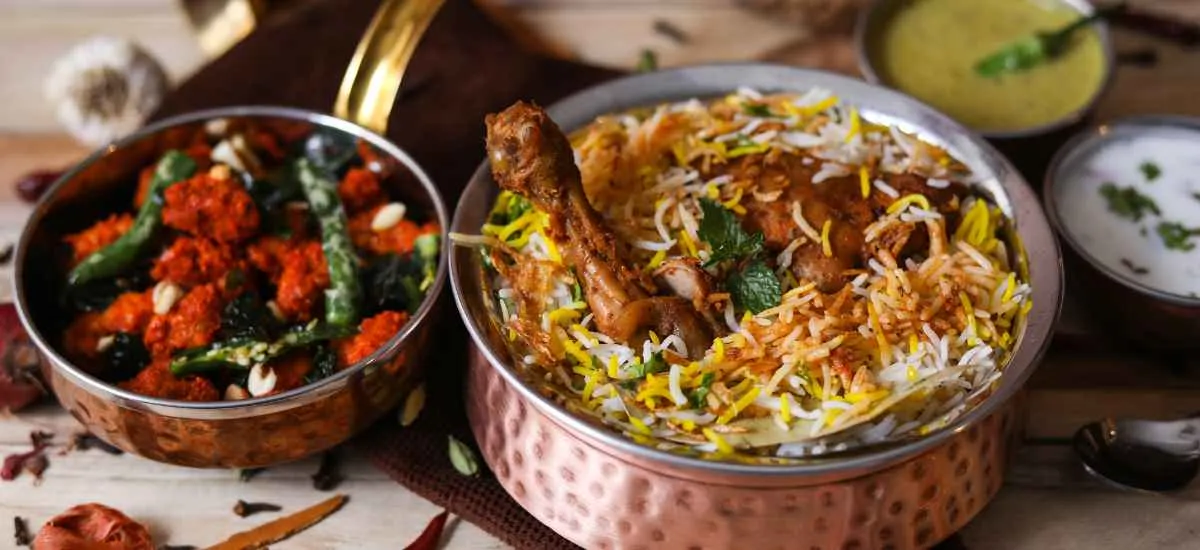
- In Telangana, you will start your day in the bustling heart of Hyderabad’s Old City. Here, the culinary journey revolves around the Laad Bazaar and the vibrant pearl markets. The centerpiece of your journey is, of course, the Hyderabadi Dum Biryani. This is not just a meal but a tendency of patience and an ultimate example of how a dish can travel beyond oceans, take root in a new place, and become the most beloved icon of a nation’s heritage. The roots of the biryani trace back to the ancient feasts of Persia. Even before the recipes could go “viral,” flavors traveled through the silk route.
- During the 18th century, the Mughal Emperor Aurangzeb assigned Nizam-ul-Mulk Asaf Jah I as the Deccan’s governor. The Nizam came with a team of Persian chefs, carrying with them sophisticated techniques such as aromatic slow-cooking and the generous use of saffron. In the royal kitchens of Hyderabad, these Persian influences seamlessly blended with the bold, blazing spices of the Telugu and Deccani heartlands.
Unlike most biryani flavors in India, this is crafted in the Kachhi (raw) style – where lusciously marinated meat and partially cooked basmati rice are layered in a thick copper pot. The dish is sealed and slow-cooked through a process called “Dum” over a gentle charcoal fire.
When the seal is finally released, one can experience the authentic taste of the 400-year-old secret recipe. The journey of biryani is unquestionably legendary.
From its Persian roots, it has grown into a global favorite, giving rise to renowned variations like the Basmati biryani, the short-grained and south’s popular seeraga samba, and the smoke-infused Arabian mandi.
5. Pondicherry – Little France in South India
- Strolling in Pondicherry feels like walking between two worlds, divided by only a channel but anchored by the salt of the Bay of Bengal. On one side, the French Quarter (White Town) welcomes you with bougainvillea-draped walls and mustard-yellow colonial villas, and on the other side, the Tamil Quarter (Heritage Town) buzzes with the vibrant energy of traditional courtyard houses and the scent of jasmine.
- Your journey begins in White Town, where bougainvillea-draped walls and mustard-yellow villas set a Mediterranean landscape. Here, the custom of the morning is uniquely European. At a local boulangerie, you’ll see the scent of freshly baked baguettes floating through the salty air. This dish is a remnant of the French colonial heart, a tradition of craftsmanship that has been sustained for over three centuries.
- As you cross the canal into the Tamil Quarter, the landscape changes to vibrant courtyard houses and the mesmerizing scent of jasmine. Here, the lifestyle is rooted in heritage homes where the “Achi,” or the matriarch, governs the kitchen. This is the birthplace of Pondicherrian Creole cuisine—a seamless blend of traditional South Indian flavors with French culinary techniques.
The Creole Ritual: A Marriage of Spice and Silk
At Cholan Tours, we link your stay in restored heritage mansions with an exploration of the Goubert Market. Strolling through this bustling spot at dawn, you will witness the “Market-to-Home” tradition in its purest form.
You will see the local chefs select Vadavam—a unique, sun-dried spice blend of shallots, cumin, and mustard seeds that acts as the “soul” of Pondicherry cooking.
- The Heritage Food: Experience the Fish Assad, a creamy, coconut-milk-based curry. It carries the silkiness of a French sauce but the bright yellow of Tamil turmeric.
- The Global Bridge: Try the Mutton Sambar, (Lentil mutton curry) where the French preference for clear, refined bouillons changed the traditional, thick Tamil lentil stew into something lighter and tastier.
6. Lakshadweep – Lunch by the Lagoon
- Freshness defines Lakshadweep’s cuisine, shaped by those who live close to the rhythm of the sea. Simplicity emerges through meals built on what the tides provide daily. A journey through Lakshadweep with Cholan Tours changes the focus from land to sea, guided by water’s quiet pulse. The shape of the islands emerges slowly—framed in light blue shallows and steady waves.
- What grows here determines what is eaten: coconut appears in many forms, central yet unspoken. Alongside it, tuna arrives daily, caught close and handled with routine care. Movement between the island and the ocean becomes a pattern, not a plan.
- Beginning in Kochi, a short trip leads to island destinations such as Agatti or Bangaram. The open water becomes your marketplace here. Fishing takes place using wooden poles and simple lines, an ancient way of harvesting skipjack tuna. This practice avoids harm to coral habitats, unlike large-scale netting operations. Preservation of marine life across time stands at the core of this approach.
Life in village settings turns closely around the coconut palm. Amid coastal stretches, people lay tuna under sunlight to prepare Masmin – an essential smoked food anchoring daily meals. Visuals of these routines shape much of what visitors observe during their stay.
Imagine dining where the water reaches just above your ankles. The “Lagoon Lunch” experience adds magic to your South Indian culinary tourism.
Let’s conclude here. The question is: which story will you bite into first?